





Constitutional Convention President George Washington Thanks the Continental Congress for News on the Public Reception of the Convention’s Work to Craft the Constitution, as Well as His Election as President
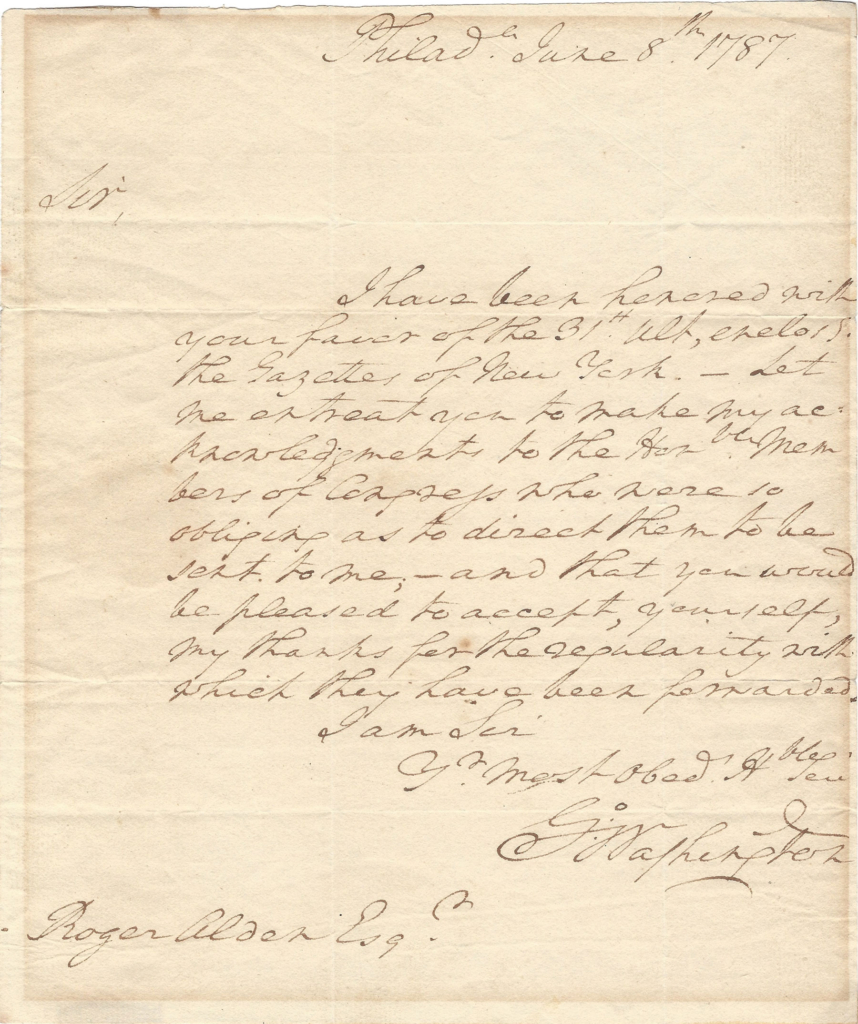

A rare letter between Washington as Presiding Officer of the Constitutional Convention and the representative of Congress, then seated in New York
By order of Congress, Washington would receive updates on debates, as well as news on the public reception to the acts and debates of the Convention
Just two weeks after the Convention opened, Members of Congress kept him abreast of newspapers’ opinions, which would have included those on his election as...


By order of Congress, Washington would receive updates on debates, as well as news on the public reception to the acts and debates of the Convention
Just two weeks after the Convention opened, Members of Congress kept him abreast of newspapers’ opinions, which would have included those on his election as president of the Convention and their hopes for the Convention’s accomplishments
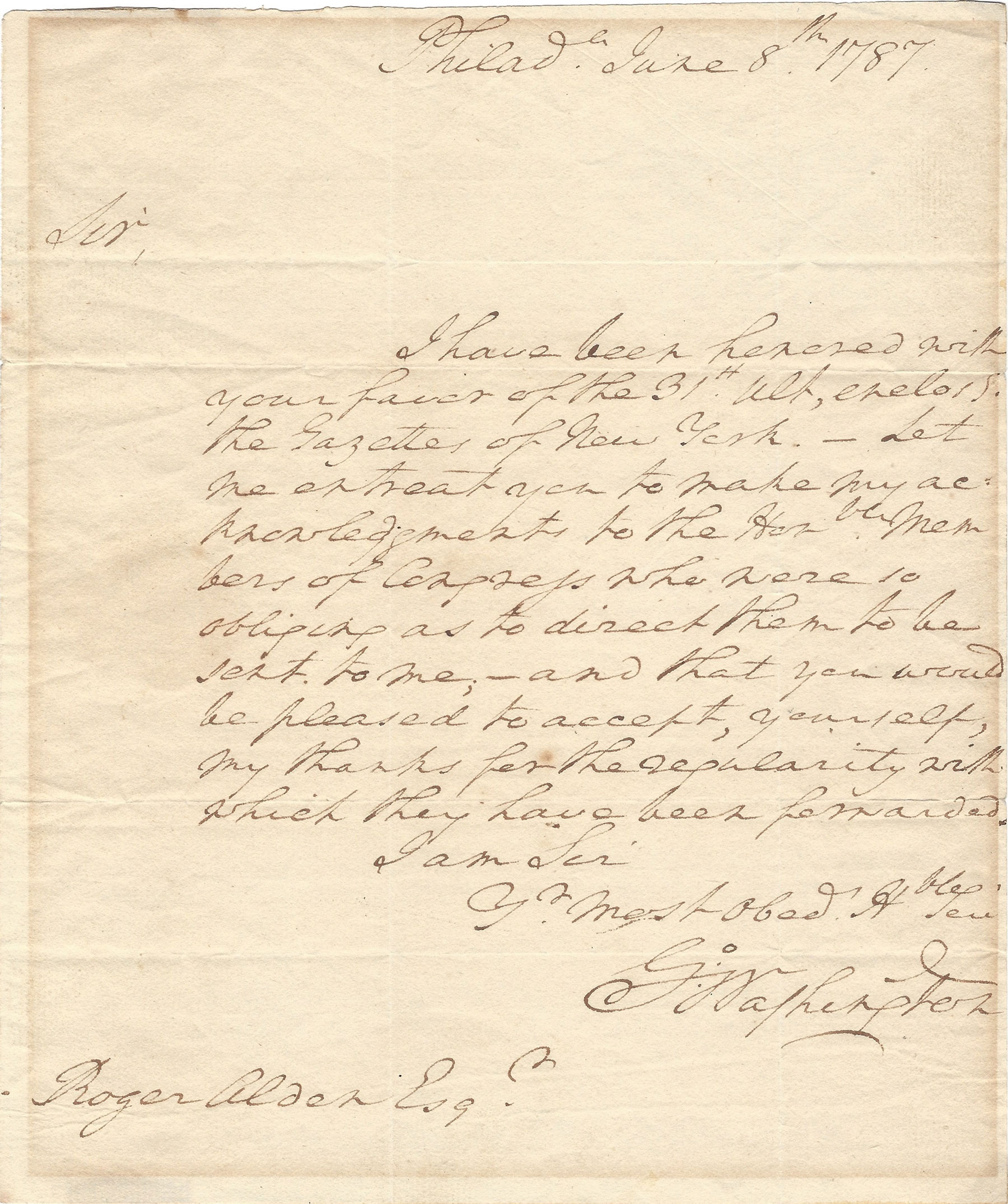
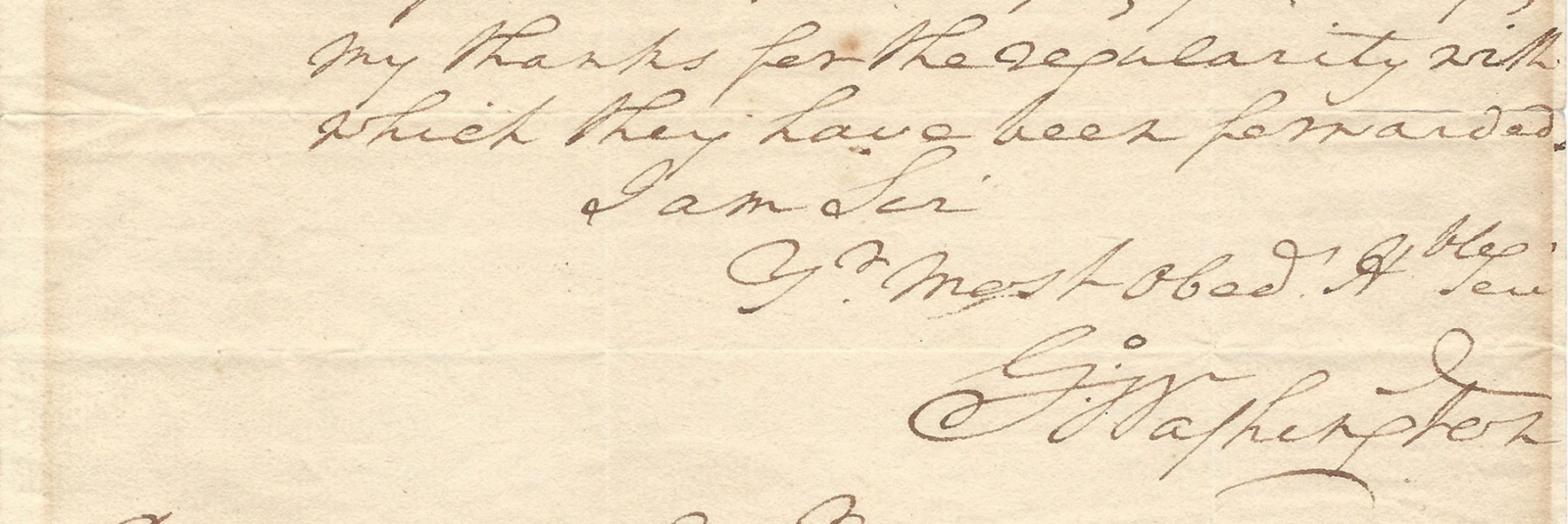
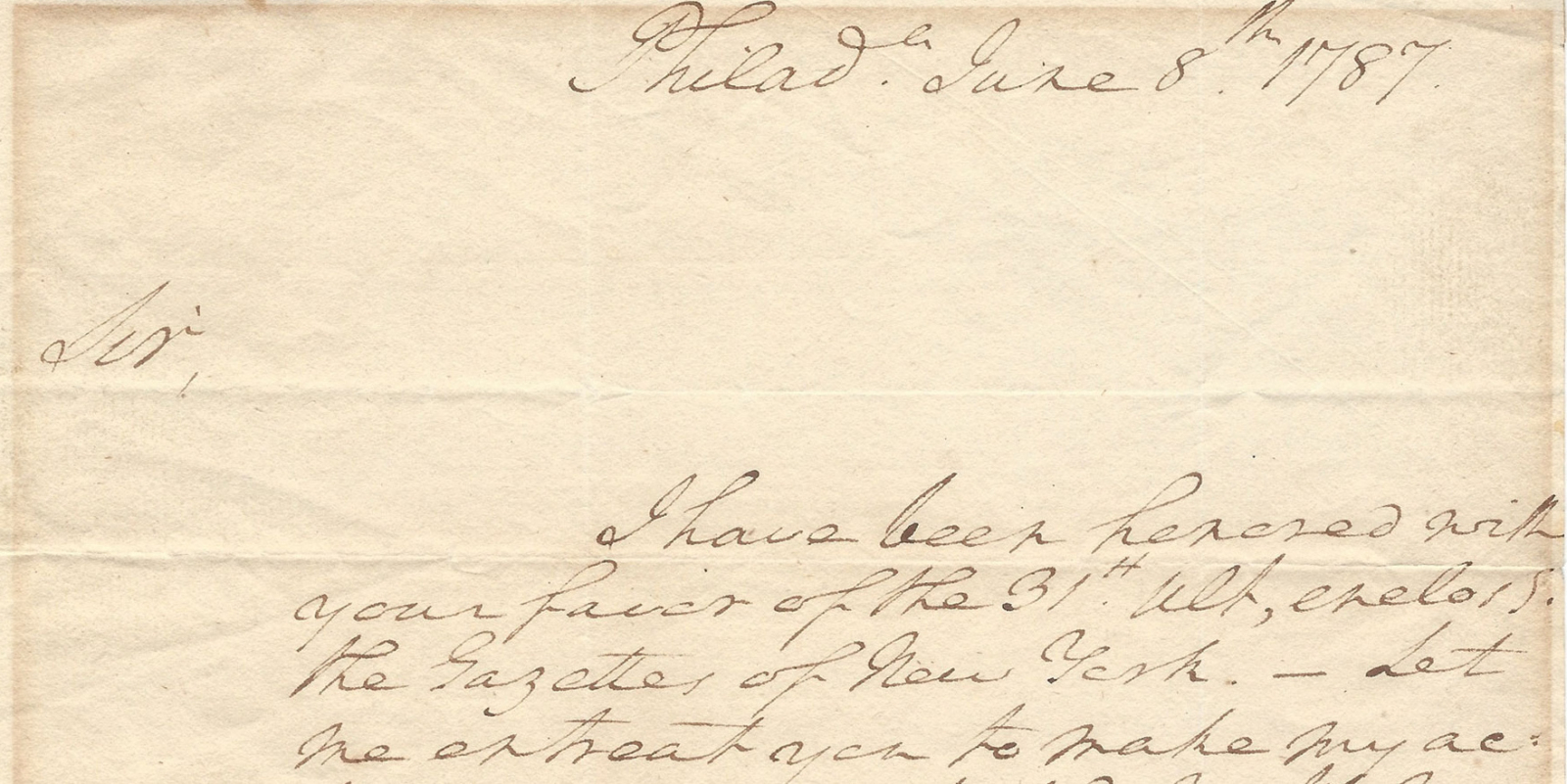
Washington wrote, “The Gazettes of New York – let me entreat you to make my acknowledgements to the Honorable members of Congress who were so obliging as to direct them to be sent to me.”
Washington letters as President of the Constitutional Convention are scarce
In May 1787, the states sent delegates to Philadelphia to meet in convention and correct the problems that had arisen while the newly-independent nation was operating under the Articles of Confederation following independence from Great Britain. The historic result of the convention was not the envisioned revision of the Articles of Confederation, but the crafting of the United States Constitution, which created a centralized federal government. When learning about the call for a convention, George Washington believed “That a thorough reform of the present system is indispensable, none who have capacities to judge will deny—and with hand and heart I hope the business will be essayed in a full convention.” But though he favored the Convention, he was initially hesitant to be a delegate. However, Washington eventually agreed.
Washington arrived in Philadelphia on May 13, 1787, one day before the scheduled opening of the Convention (which we now call the Constitutional Convention). The Light Horse Troop of Philadelphia escorted Washington into the city, and people lined the streets to see him. He was greeted by several military figures, including Secretary of War General Henry Knox, and found his friend, financier Robert Morris, waiting for him. The Convention, though meant to begin on May 14th, was delayed by spring rains that made some delegates late.
On May 25, 1787, just twelve days after Washington arrived in Philadelphia, freshly spread dirt covered the cobblestone street in front of the Pennsylvania State House (Independence Hall), protecting the men inside from the sound of passing carriages and carts. Guards stood at the entrances to ensure that the curious were kept at a distance. Robert Morris of Pennsylvania, the “financier” of the Revolution, opened the proceedings with a nomination–Gen. George Washington for the presidency of the Constitutional Convention. The vote was unanimous. With characteristic ceremonial modesty, the general expressed his embarrassment at his lack of qualifications to preside over such an august body and apologized for any errors into which he might fall in the course of its deliberations. To many of those assembled, especially to the 36-year-old delegate from Virginia, James Madison, the general’s mere presence boded well for the convention, for the illustrious Washington gave to the gathering an air of importance and legitimacy.
Washington presided over the convention until its conclusion on September 17. As the delegates argued he observed, while sitting on a tall wooden chair on an elevated platform in front. Wearing his old military uniform, Washington participated little in the debates, seeing his function as nonpartisan, to maintain or restore order when debate became too boisterous. He described the creation of the document as a composition for a “diversity of interest which were to be reconciled.” In presiding over the Constitutional Convention, he worked to forge consensus, as the delegates set about the controversial task of not just revising the Articles of Confederation, but scrapping them all together. Rising above conflicts between individual states, Washington created an atmosphere in the Convention that allowed members to reach the compromises necessary to create a bold, new government.
While Washington held the belief that America should have a strong central government and a single executive leader, he did not allow his bias to sway the other delegates. Washington mainly participated to keep order and provide a deciding vote on a variety of proposals. After four months of intense debate, the delegates finally came to an agreement, and on September 17, 1787, the Constitution as we know it was born. The important role Washington’s commanding presence played in achieving this outcome cannot be underestimated. Perhaps James Monroe summarized this role best when, in a letter to Thomas Jefferson, he said that “Be assured, [Washington’s] influence carried the government.”
As the Convention first got underway, members of the Continental Congress, who were very much involved in the Constitutional Convention, were receiving newspapers from home chronicling the attitude of the public in their states to the Convention and Washington’s leadership of it. Congress voted and thought it was important to keep Washington abreast of public sentiment and on an ongoing basis and had the secretary of Congress send him copies of the newspapers in New York. Washington was grateful for the information, received just two weeks into the Convention.
On May 31, Deputy Secretary of the Continental Congress Roger Alden wrote to Washington: “I have the honor to enclose to Your Excellency the news papers of this day, published in the city of New York – and I am directed by the Members of Congress present to transmit them daily – with the greatest respect…” The Gazette of New York, or New York Journal, was a prominent paper in circulation and would have carried news of Washington’s election, as well as updates on the actions of Congress and reaction of the public to his own work in Philadelphia.
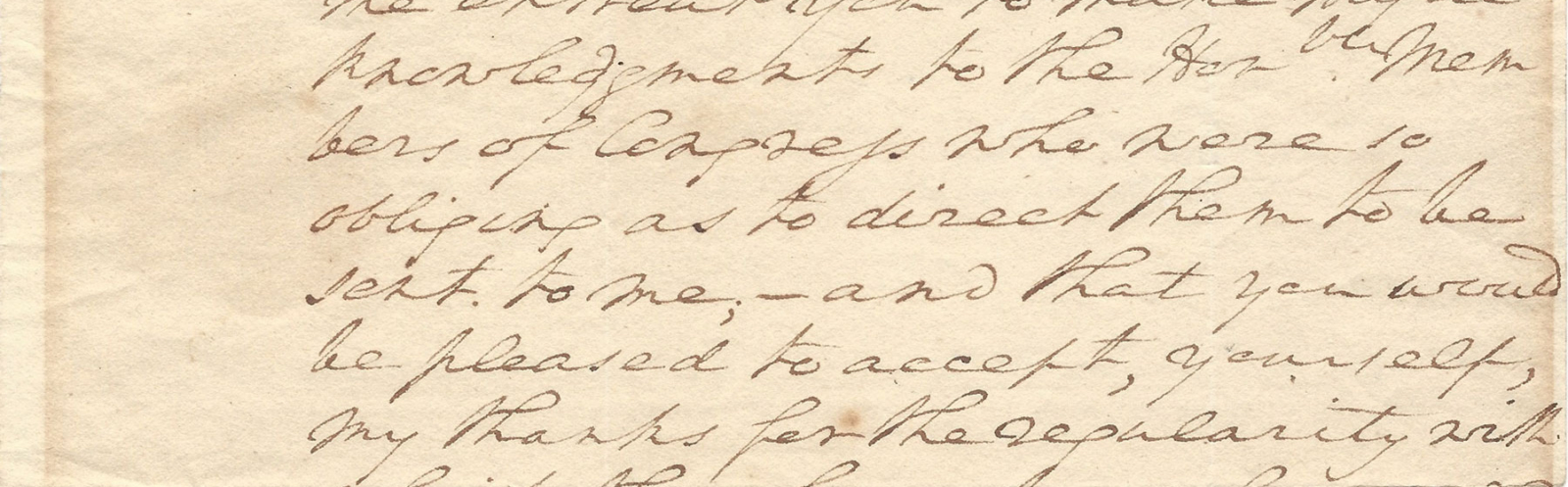
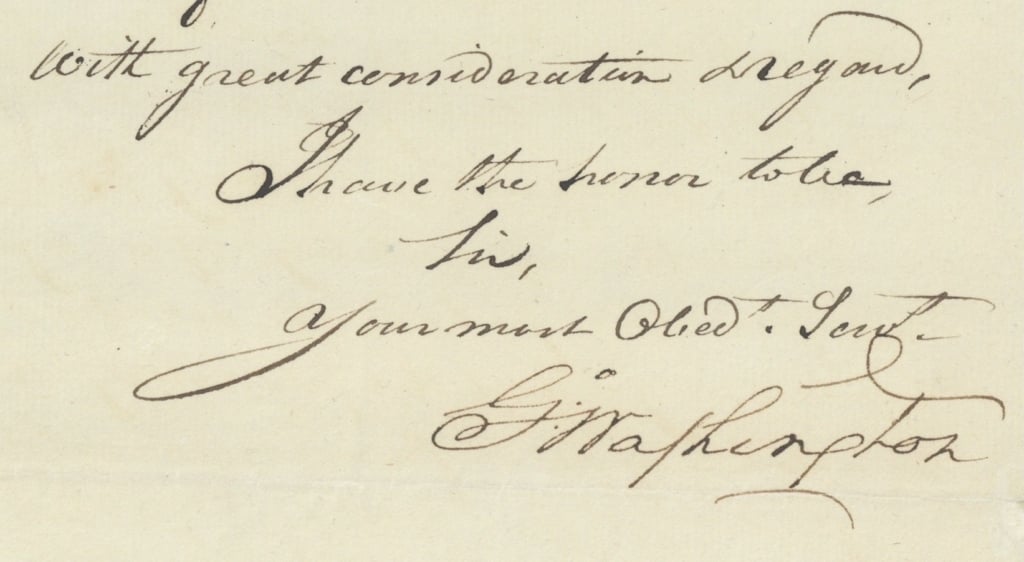
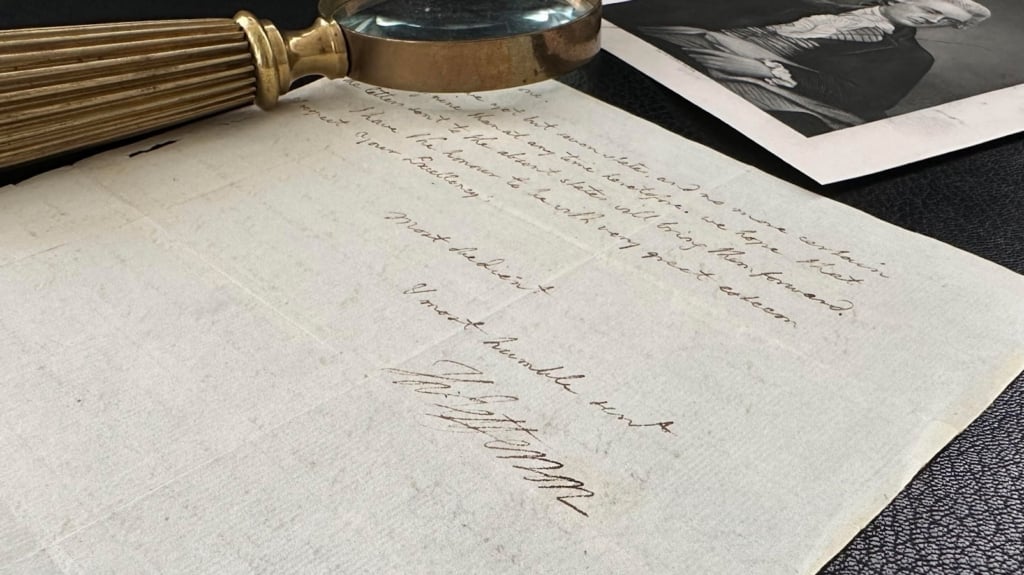
Autograph letter signed, from Philadelphia during the Constitutional Convention, June 8, 1787, to Roger Alden, Deputy Secretary of the Continental Congress, thanking him for sending the enlightening newspapers on behalf of members of Congress. ”Sir, I have been honored with your favor of the 31st ult, enclosed. The Gazettes of New York – let me entreat you to make my acknowledgements to the Honorable members of Congress who were so obliging as to direct them to be sent to me; – and that you would be pleased to accept, yourself, my thanks for the regularity with which they have been forwarded. / I am Sir / Yr. Most Obed. H’ble Serv. / Go: Washington”. The newspapers, which would have been dated just after the Convention opened, were surely filled with talk about the Convention and Washington himself. After the Convention successfully created a new government, Washington became the first President of the United States.
This letter, showing Washington’s gratitude for being kept informed at a key time in the country’s history, is our first letter of his from during the Constitutional Convention.

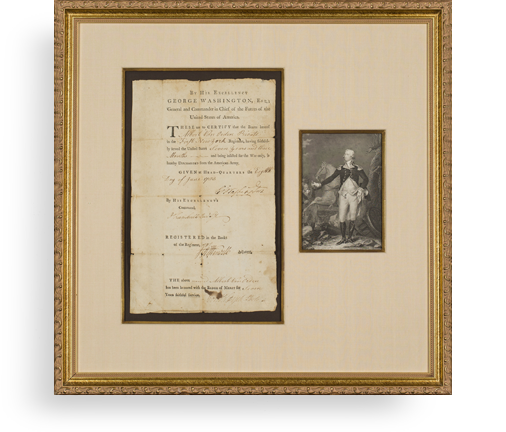
Frame, Display, Preserve
Each frame is custom constructed, using only proper museum archival materials. This includes:The finest frames, tailored to match the document you have chosen. These can period style, antiqued, gilded, wood, etc. Fabric mats, including silk and satin, as well as museum mat board with hand painted bevels. Attachment of the document to the matting to ensure its protection. This "hinging" is done according to archival standards. Protective "glass," or Tru Vue Optium Acrylic glazing, which is shatter resistant, 99% UV protective, and anti-reflective. You benefit from our decades of experience in designing and creating beautiful, compelling, and protective framed historical documents.
Learn more about our Framing Services