






President George Washington on His Dedication to Duty in Office: “To execute promptly whatever is entrusted to me.”


A very uncommon articulation of his presidential duties, from the man who set American precedents
He receives an update from his Secretary of War, and conveys his satisfaction on the progress of the construction of the frigate Crescent, a peace offering to the Algerian Dey
One of the first instances where the U.S. used its limited naval power as a tool of diplomacy, signaling that it...


He receives an update from his Secretary of War, and conveys his satisfaction on the progress of the construction of the frigate Crescent, a peace offering to the Algerian Dey
One of the first instances where the U.S. used its limited naval power as a tool of diplomacy, signaling that it could combine negotiation with the potential for military enforcement.
By the end of 1793, Algerian corsairs had captured ten American merchant ships and had taken 105 prisoners. Seeking to liberate these men and ships, and end future attacks, on September 5, 1795, the United States and Algerian Dey Hassan Bashaw signed a treaty of peace, The Treaty of Algiers. Under the treaty, the United States agreed to a one-time payment of $600,000, an additional $200,000 payment for the release of the prisoners, as well as another $21,000 in annual tribute. By the spring of 1796, however, following several delays in payment, the Dey had become irritated and gave the United States 30 days to make payment, otherwise he would declare them in violation of the treaty and would resume attacks on its commerce. To buy more time and appease the Dey, American negotiators offered a gift of a 36-gun frigate in exchange for a three-month extension, which the Dey accepted.
Designed by Josiah Fox and constructed by John Hackett, who both oversaw the construction of the original six frigates for the new United States Navy, the frigate going to Algeria was just the seventh U.S. frigate built for naval purposes. The Algerian frigate was named the Crescent by Secretary of War James McHenry. Initial confusion over which executive department should oversee the ship’s construction led President Washington to write to McHenry in early July 1796 to voice his concern over the lack of progress, stating firmly to him “to execute promptly & vigorously. And not to put things off until the morrow which can be done, and require to be done, to day.” A letter from McHenry to Washington on July 18 included plans for the frigate, indicated that progress was already under way, and that the initial departmental confusion had been overcome.
Interestingly, the gift of a quality vessel played a crucial role. In the 1790s, the United States was a very young country with a tiny navy, and its ships were vulnerable to pirates in the Mediterranean. Paying tribute alone might keep ships safe, but it didn’t show that the U.S. could enforce its interests if necessary. So this was not just a gift; it was one of the first instances where the U.S. used its limited naval power as a tool of diplomacy, signaling that it could combine negotiation with the potential for military enforcement.
General and President Washington’s leadership style strongly connected character with faithful and timely execution of responsibility. He believed that doing so was essential to personal honor and the success of the nation, emphasizing that neglect or delay could endanger both character and country.”
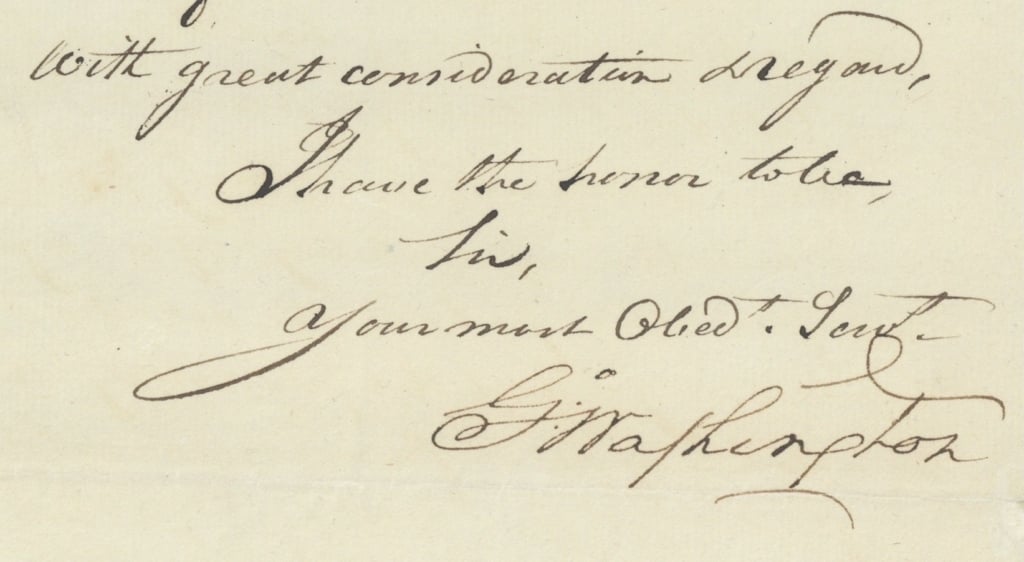
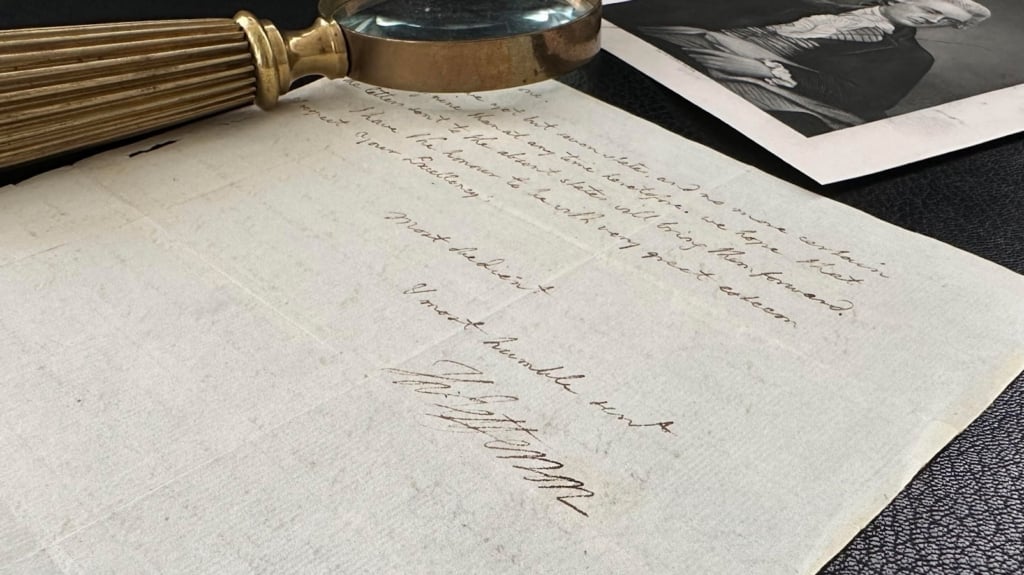
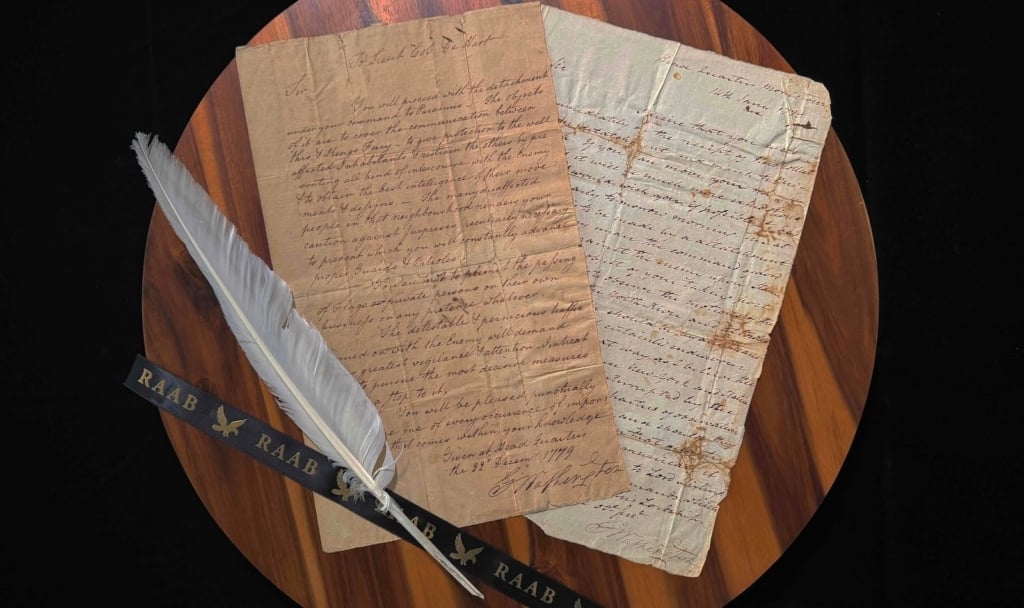
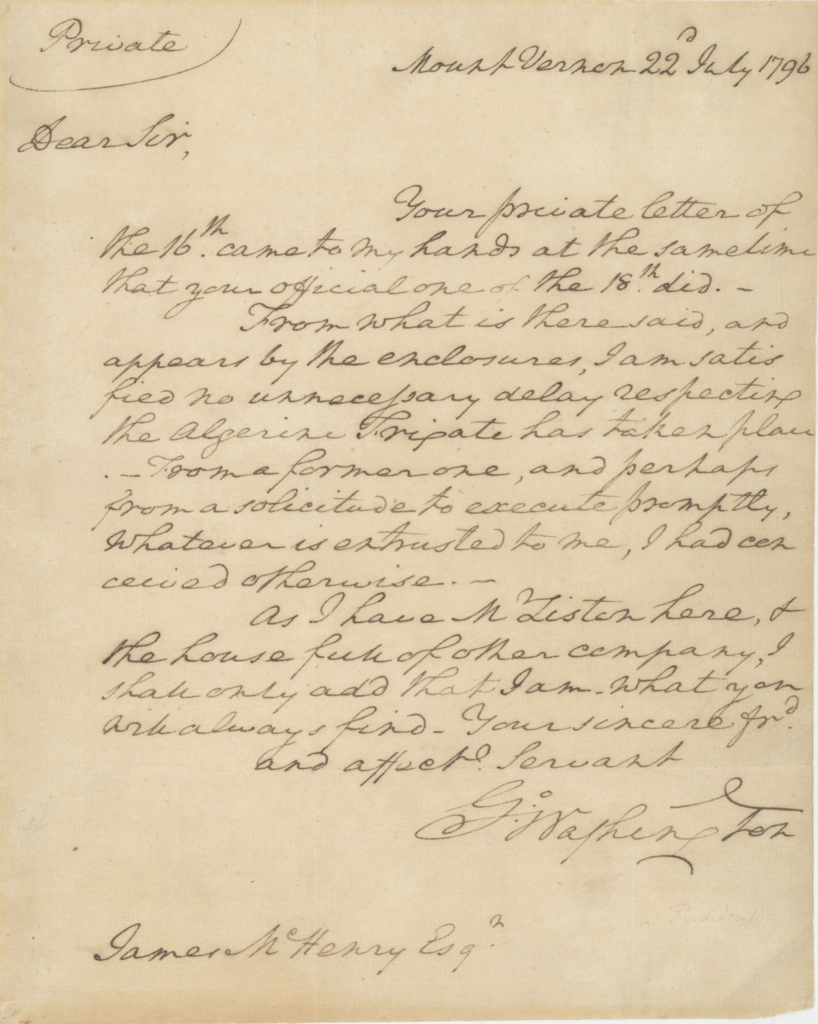
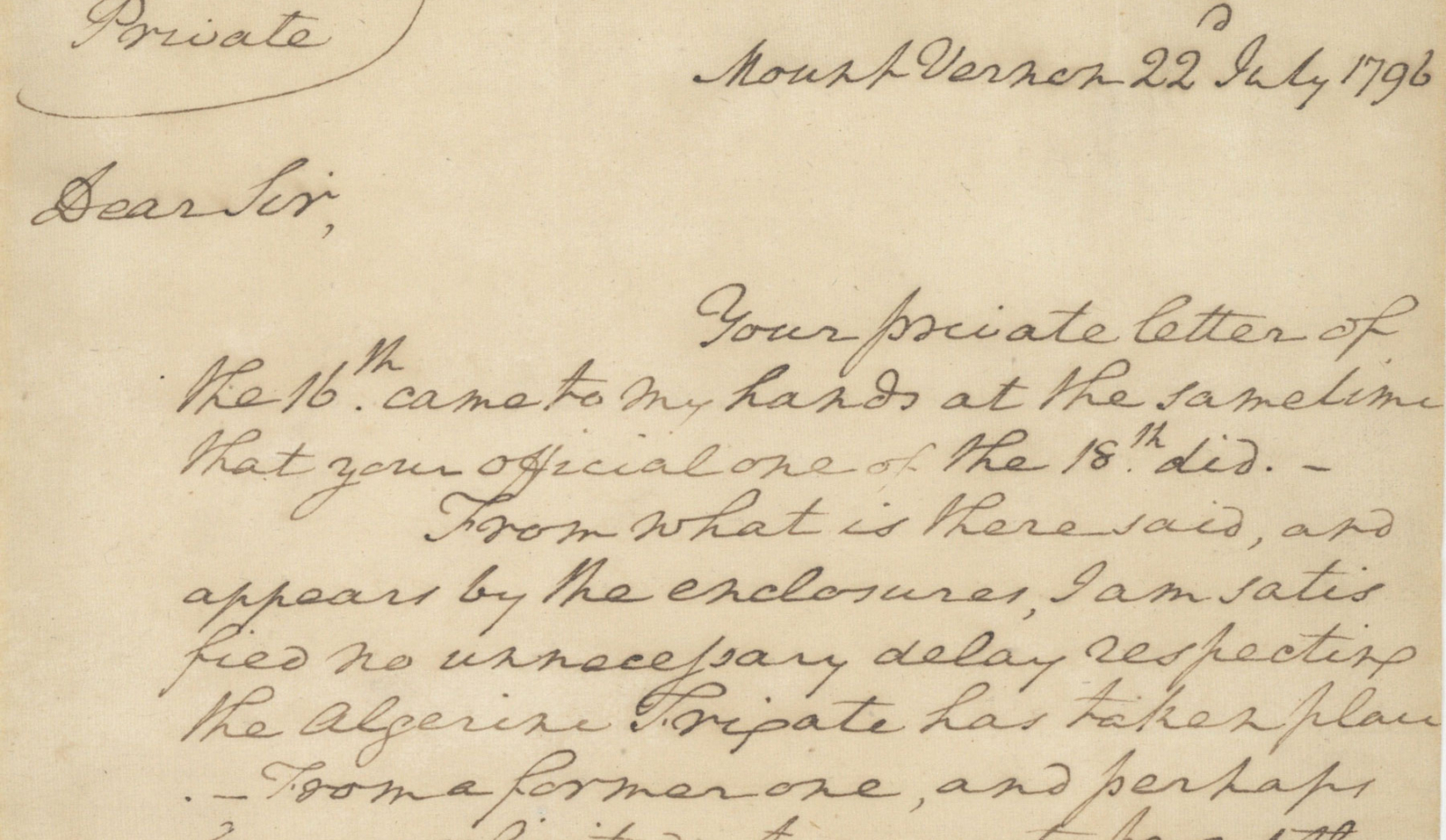
Autograph letter signed by Washington as President and marked “Private” by him, Mount Vernon, July 22, 1796, to Secretary of War James McHenry, regarding the construction of the frigate Crescent, and more importantly, expressing his view on handling his responsibilities as President. “Your private letter of the 16th came to my hands at the same time that your official one of the 18th did. From what is there said, and appears by the enclosure, I am satisfied no unnecessary delay respecting the Algerine Frigate has taken place. From a former one, and perhaps from a solicitude to execute promptly whatever is entrusted to me, I had conceived otherwise.
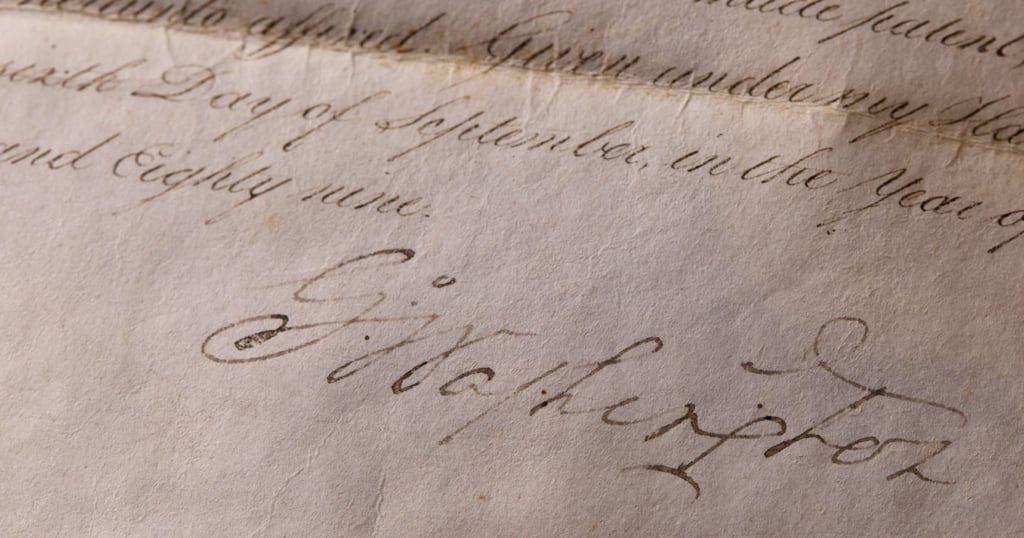
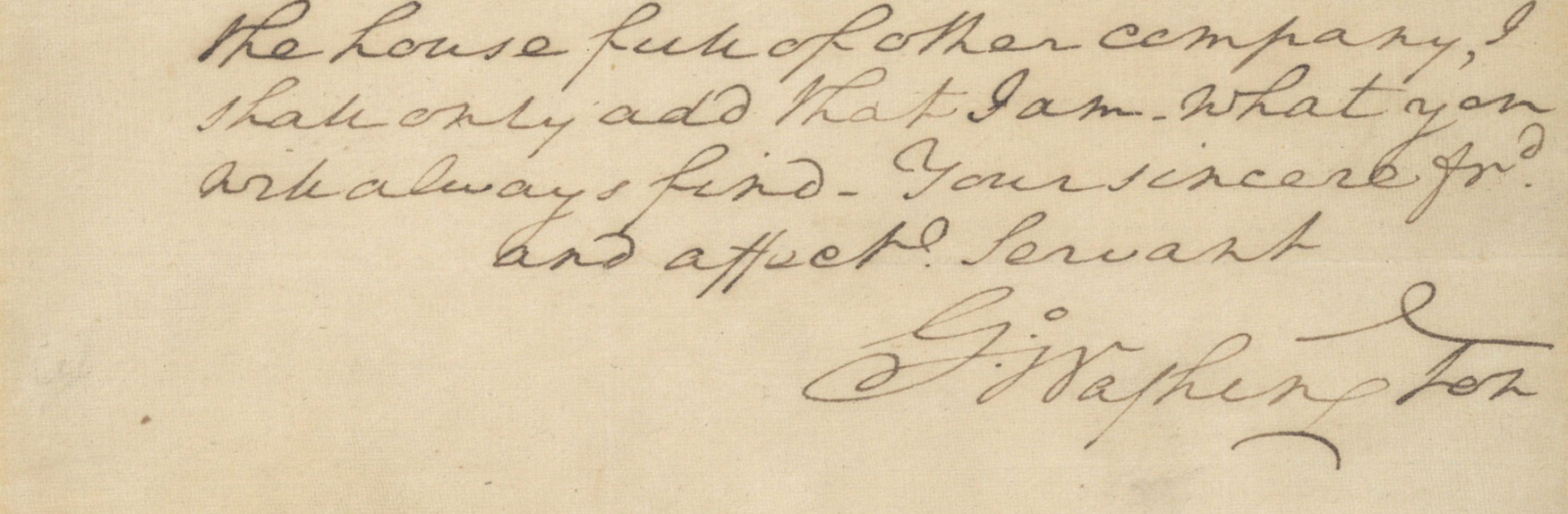
“As I have Mr. Liston here, & the house full of other company, I shall only add that I am-what you will always find–Your sincere frd. and affect. servant, G: Washington”. Addressed by Washington on verso of the integral leaf and docketed in another hand.
The Crescent was completed on August 15, 1797. Smaller than the other American frigates, she bore 36 guns, a 122-foot gun deck, 32-foot beam, and a 10-foot depth of hold. The ship reportedly carried a “Lion” figurehead, chosen in deference to the religious preferences of the Algerines, rather than the “dragon” or allegorical figures common on American ships. Timothy Newman, former Algerine captive and present captain of the Crescent, considered the frigate as “complete a piece of workmanship as he ever saw.” A friend of shipbuilder Josiah Fox’s congratulated him, “You would be pleased I am sure to see the Frigate Crescent, riding at anchor the pride of our river and the boast of our seamen; indeed, she is a beautiful Ship & it is confidently asserted, the handsomest vessel, in the United States.”
On January 18, 1798, the Crescent set sail from Portsmouth, New Hampshire to Algiers, carrying the new consul general to Algiers, Richard O’Brien, along with $180,000 worth of silver coins. It arrived on February 26, and was officially delivered on March 1. The Dey also received a schooner, the “Hamdullah,” in lieu of a portion of the military and naval stores stipulated in the treaty. The Dey thereupon provided passports for the crews, the members of which returned to the United States on board two American vessels then at Algiers. The Crescent did not do well in the hands of the Algerians, however. By 1800, it was reported that the ship was showing signs of dry rot due to neglect, and by 1806 it was declared unfit for service and broken up.
Washington’s houseguest, Robert Liston, was the British Minister to the United States from 1796-1800. He, his wife Henrietta Marchant Liston, his secretary Edward Thornton, and Henry Stuart, arrived at Mount Vernon on July 20, 1796. Washington used the meeting to reaffirm U.S. neutrality in European conflicts while maintaining cordial relations with Britain. He stressed that the United States wished to avoid entangling alliances but still sought stable trade and diplomatic ties. He also likely discussed the Mediterranean situation, including the U.S.’s tribute arrangements with Tripoli, signaling that the young nation was careful, deliberate, and responsible in handling foreign threats. This visit reflected Washington’s broader foreign policy principle: “peace through vigilance and respect, but readiness to defend national interests.”
Washington’s articulation of his view of his presidential duties – to execute promptly the responsibilities given to him – is both fascinating and important, as he is the man who set the precedents. It is also uncommon to see this set forth in a letter.

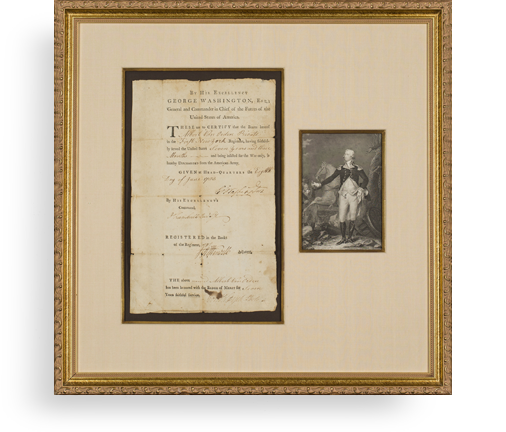
Frame, Display, Preserve
Each frame is custom constructed, using only proper museum archival materials. This includes:The finest frames, tailored to match the document you have chosen. These can period style, antiqued, gilded, wood, etc. Fabric mats, including silk and satin, as well as museum mat board with hand painted bevels. Attachment of the document to the matting to ensure its protection. This "hinging" is done according to archival standards. Protective "glass," or Tru Vue Optium Acrylic glazing, which is shatter resistant, 99% UV protective, and anti-reflective. You benefit from our decades of experience in designing and creating beautiful, compelling, and protective framed historical documents.
Learn more about our Framing Services

