





During the Mexican War, President James K. Polk Writes His Secretary of War to Assist a Close Friend in Securing an Officership in the Army for His Son

Alfred Flournoy was born in Virginia but grew to manhood in Tennessee. He lost his leg at Pensacola during the War of 1812. Though he was qualified as a physician, he never practiced. He was a Jackson elector in 1828. Flournoy became a close friend, political ally and admirer of James K....


Alfred Flournoy was born in Virginia but grew to manhood in Tennessee. He lost his leg at Pensacola during the War of 1812. Though he was qualified as a physician, he never practiced. He was a Jackson elector in 1828. Flournoy became a close friend, political ally and admirer of James K. Polk in Tennessee, and their correspondence lasted for decades. Polk did not hesitate to ask Flournoy for favors, and these were generally granted. Letters to Flournoy from Congressman Polk pertained to such matters as a pension bill; a request for list of voting residents in his county; and urging support of Andrew Jackson. This letter shows that Flournoy asked favors of Polk also.
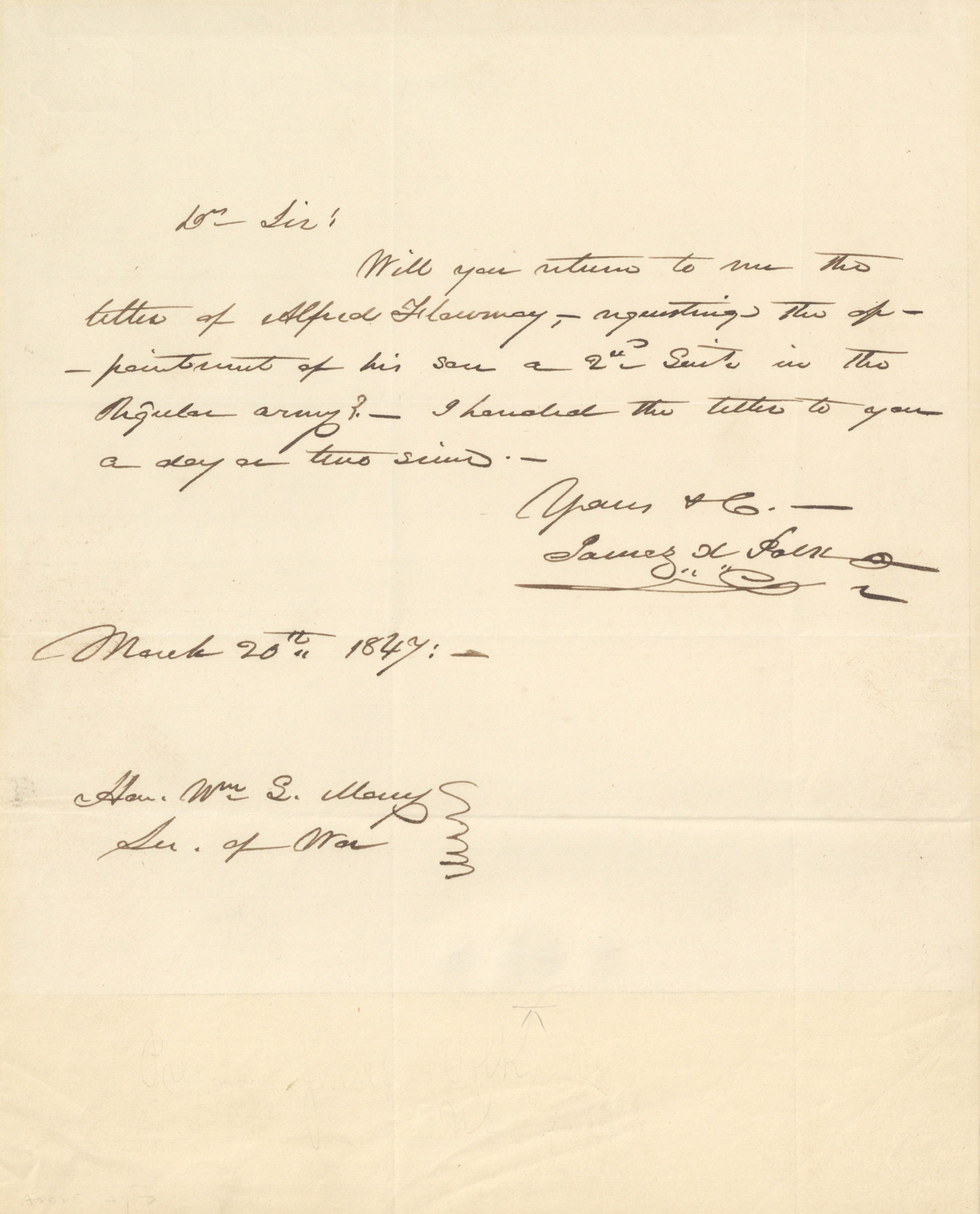
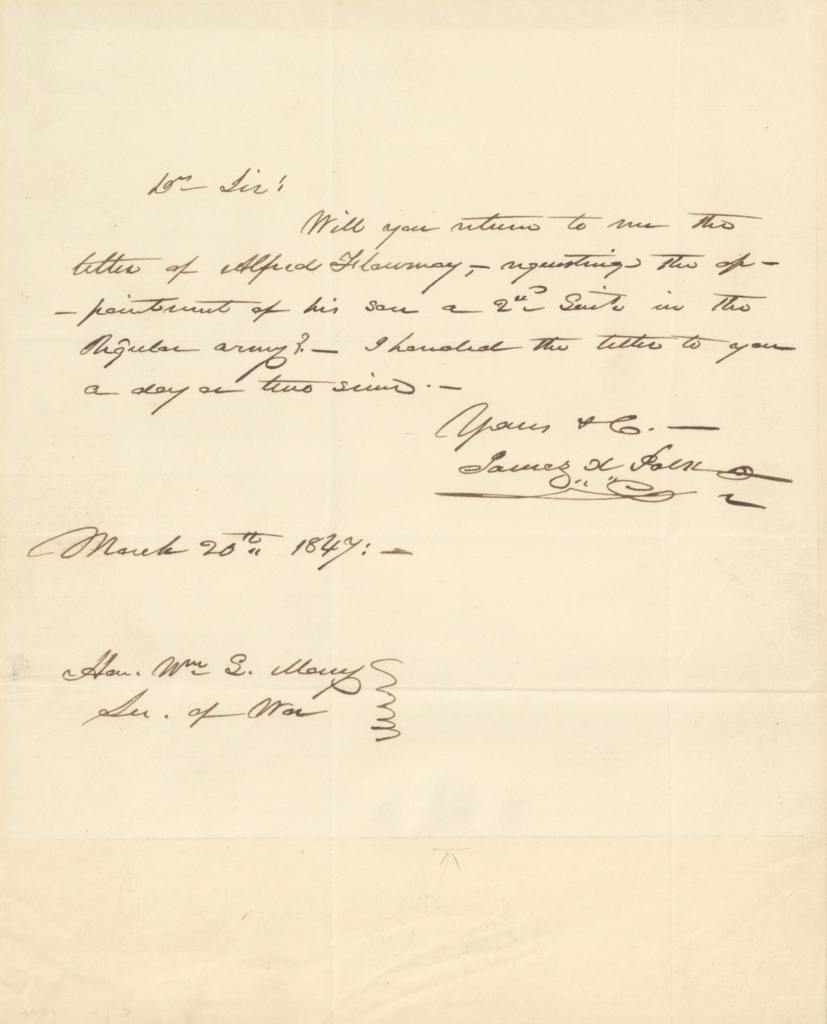
Autograph letter signed as President, Washington, March 20, 1847, to William L. Marcy, Secretary of War, relating to Flournoy’s request that his son be appointed an officer in the army during the Mexican War. “Will you return to me the letter Alfred Flournoy requesting the appointment of his son a 2nd lieutenant in the regular army? I handed the letter to you a day or two since.”
It is not known for certain which of Flournoy’s sons this relates to, but considering that his son William had a career in the military, we speculate that it was likely him.
Letters of Polk as president during the Mexican War are uncommon.

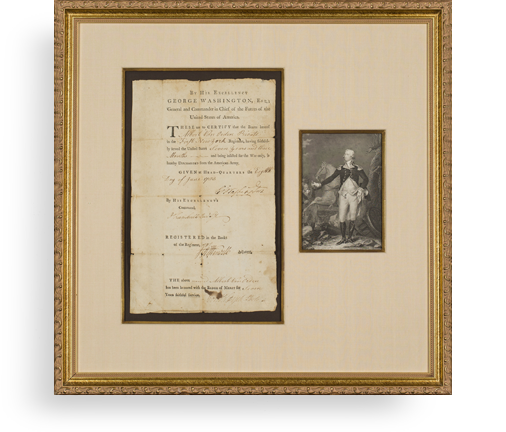
Frame, Display, Preserve
Each frame is custom constructed, using only proper museum archival materials. This includes:The finest frames, tailored to match the document you have chosen. These can period style, antiqued, gilded, wood, etc. Fabric mats, including silk and satin, as well as museum mat board with hand painted bevels. Attachment of the document to the matting to ensure its protection. This "hinging" is done according to archival standards. Protective "glass," or Tru Vue Optium Acrylic glazing, which is shatter resistant, 99% UV protective, and anti-reflective. You benefit from our decades of experience in designing and creating beautiful, compelling, and protective framed historical documents.
Learn more about our Framing Services