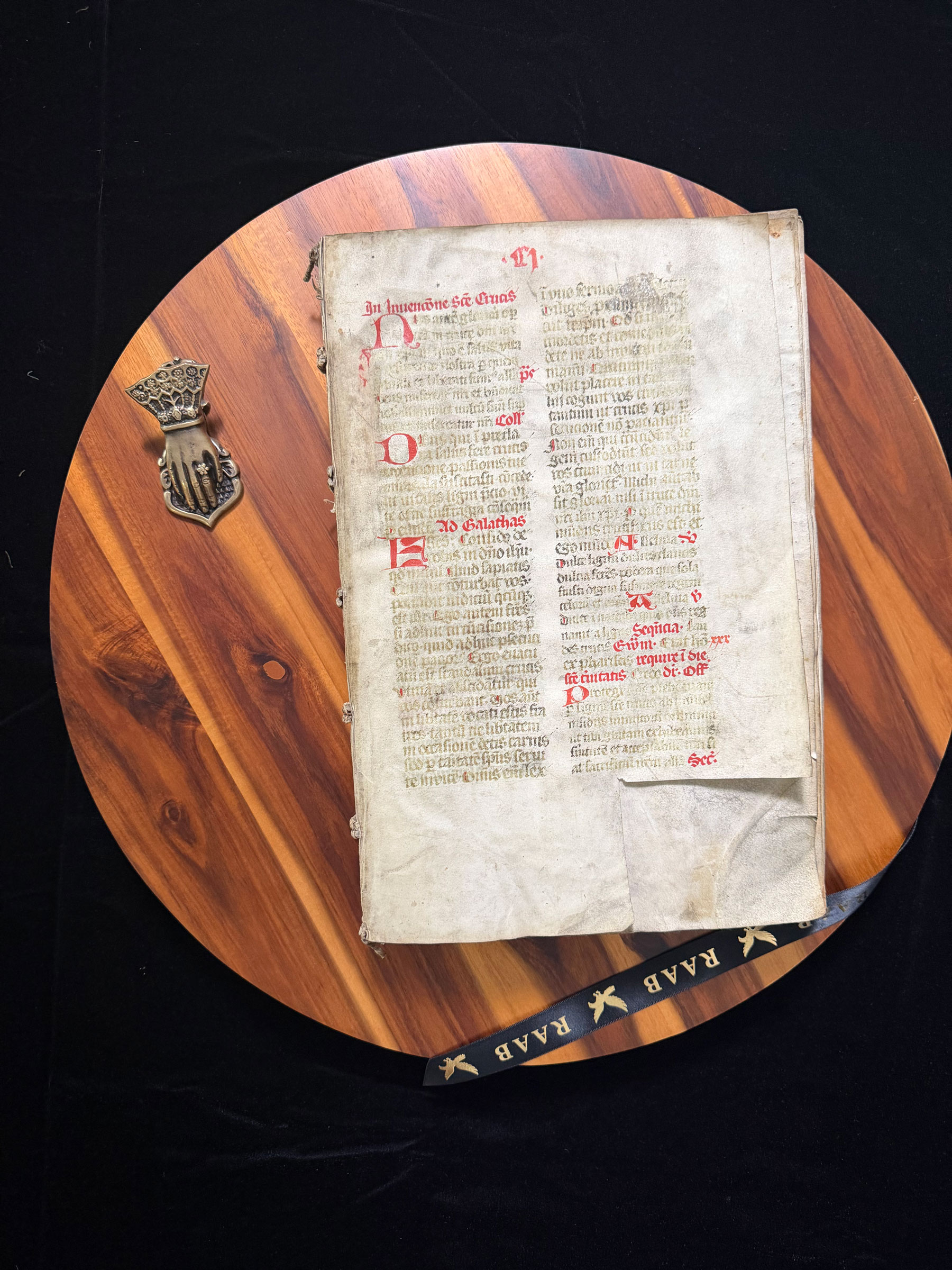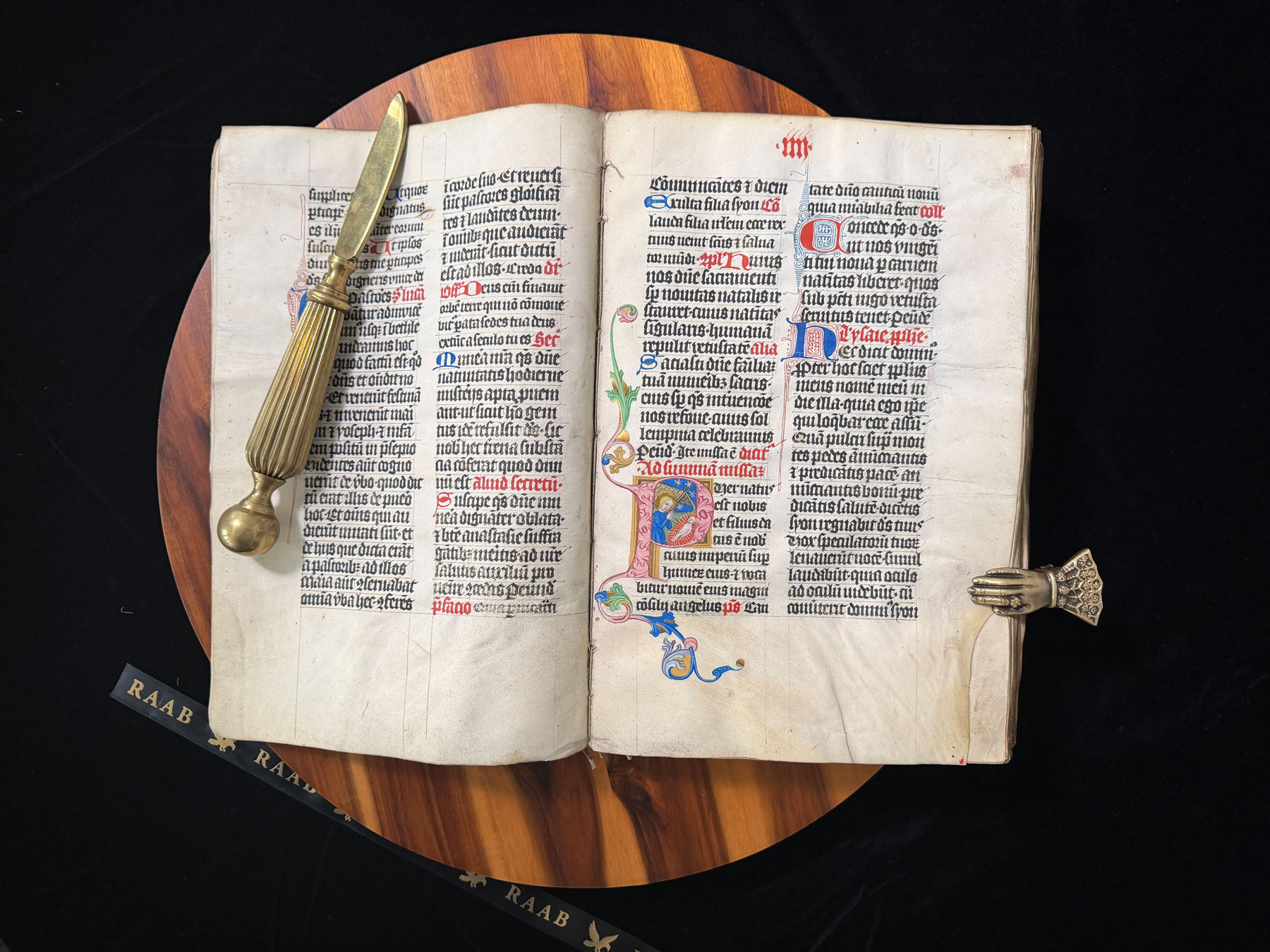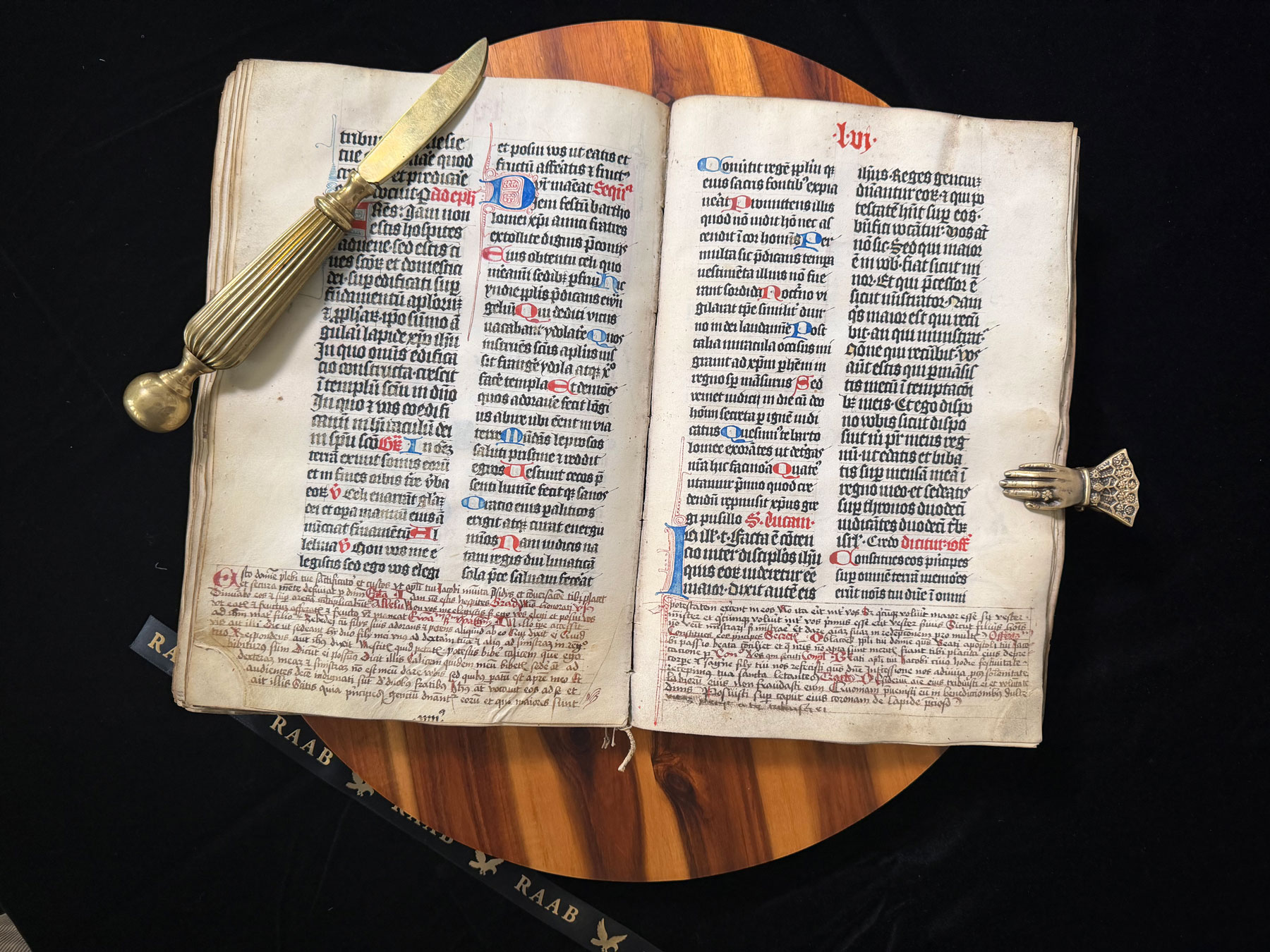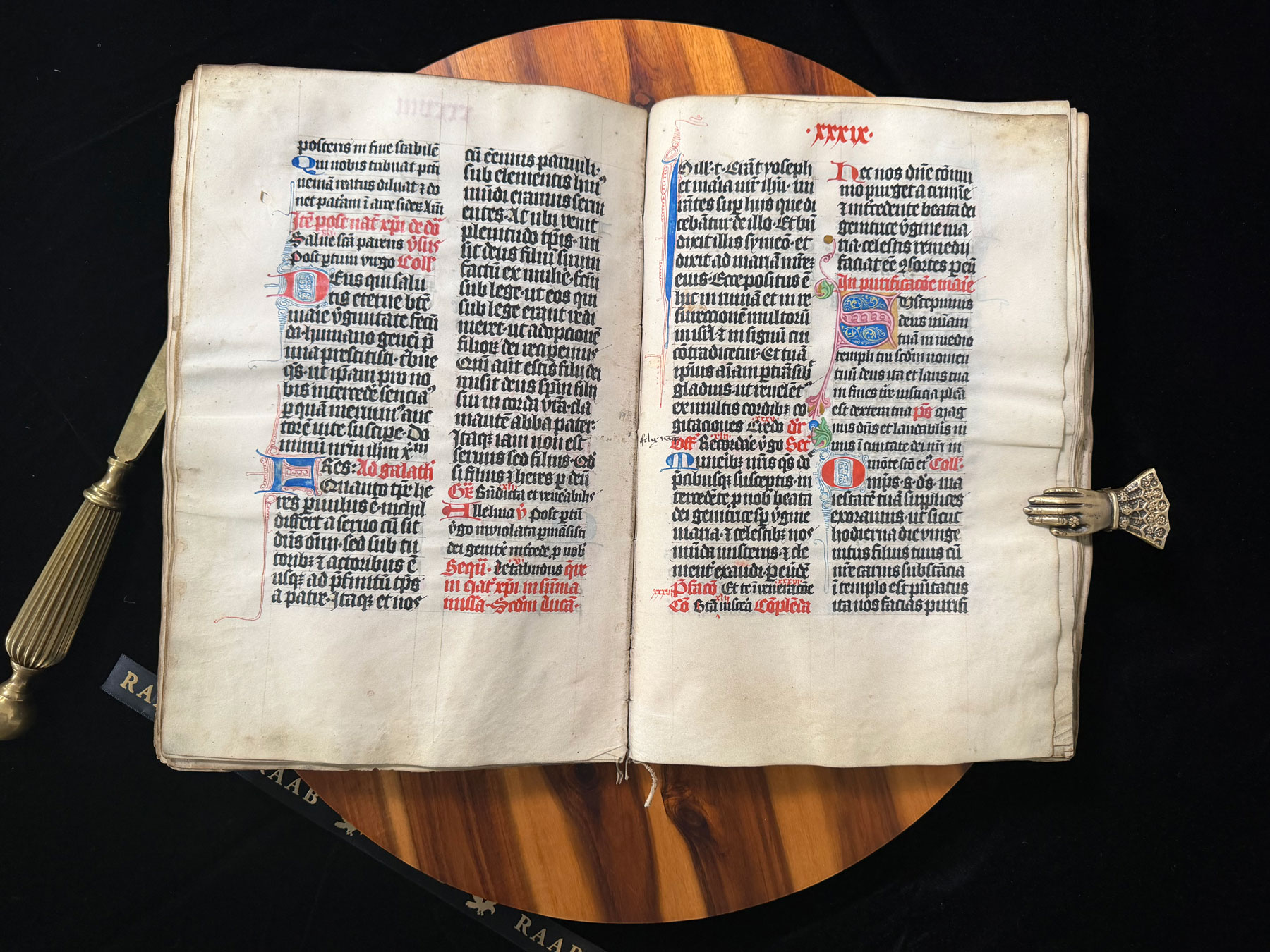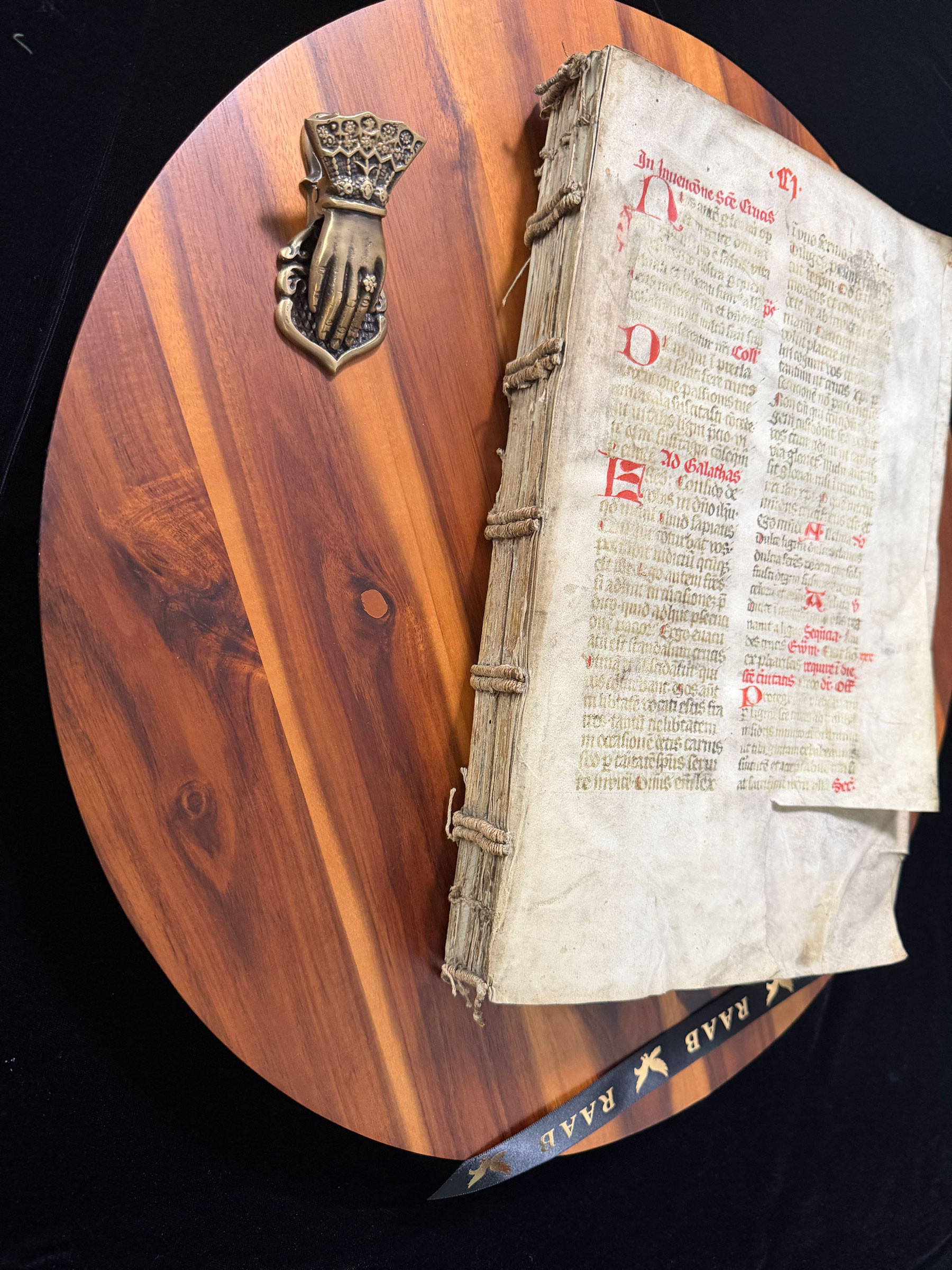





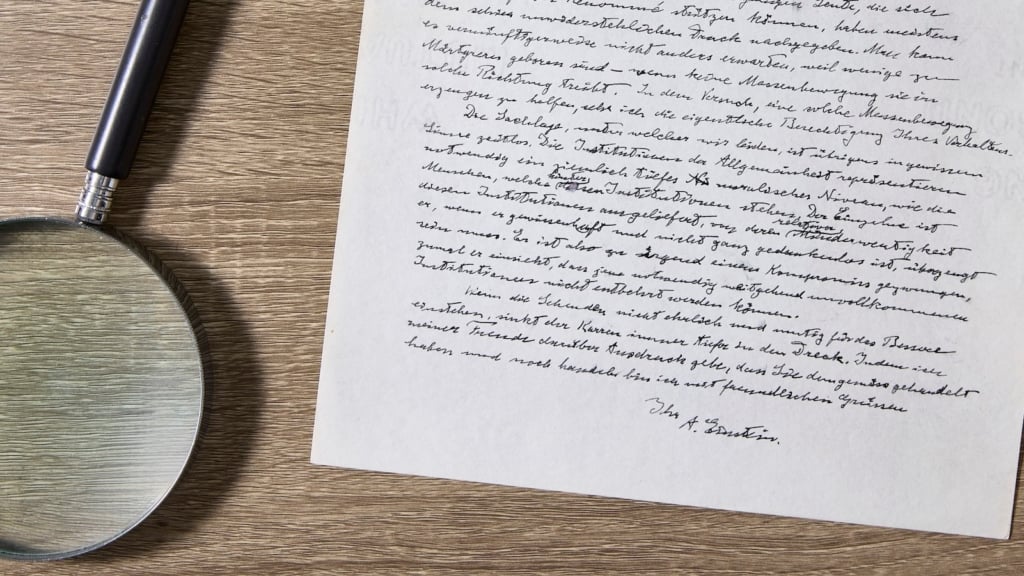


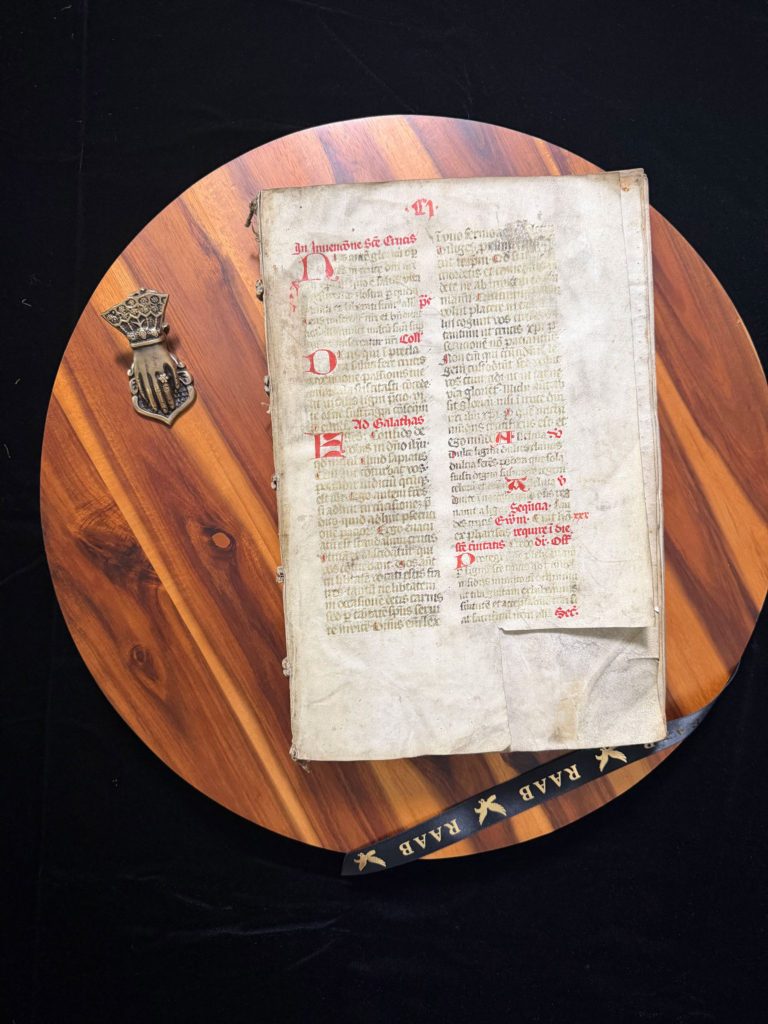
A Gorgeous 15th Century Illuminated Missal, Likely Southern German or Austrian, Showing the Type of Script Employed With Gutenberg and the Dawn of Printing
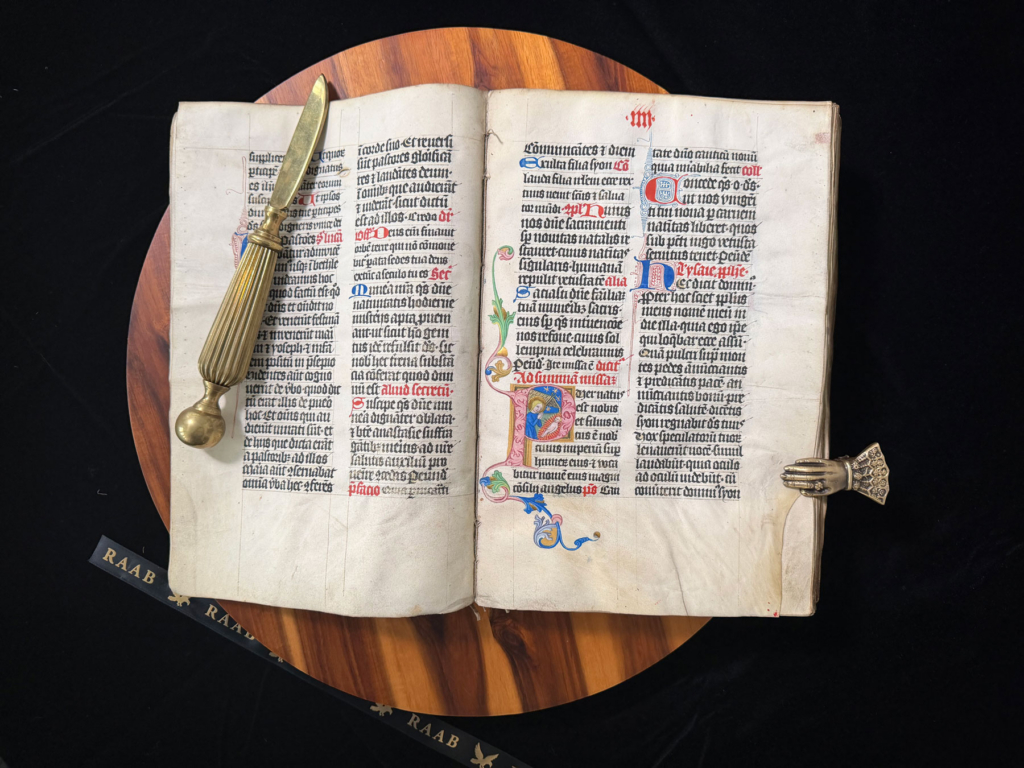
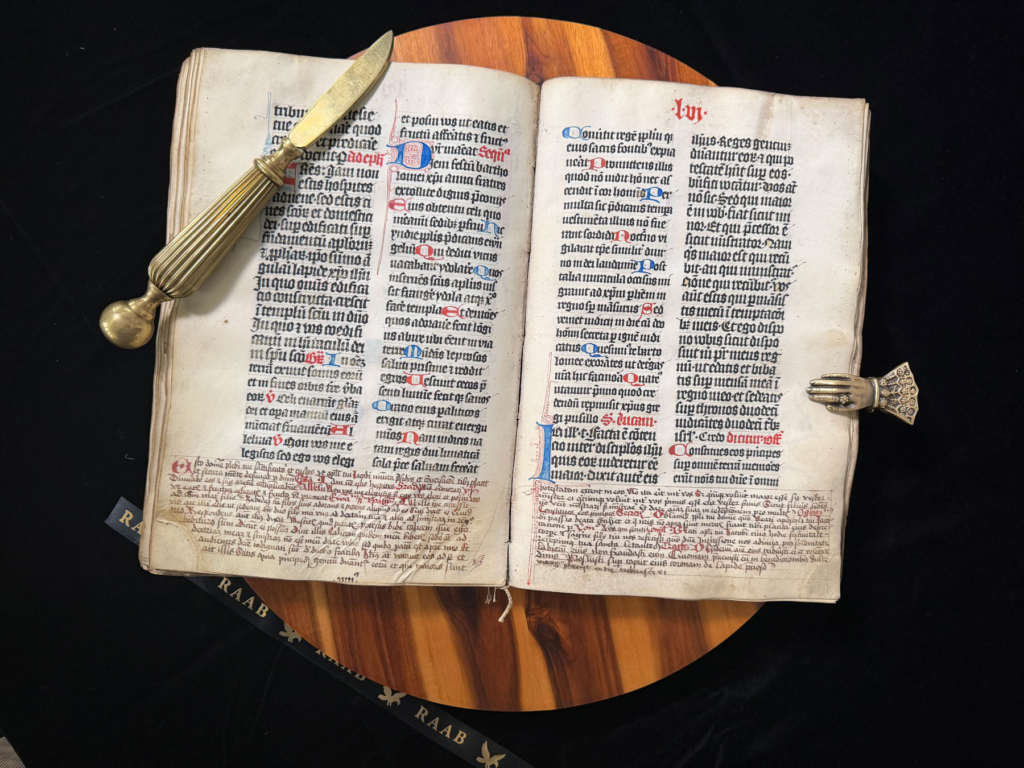
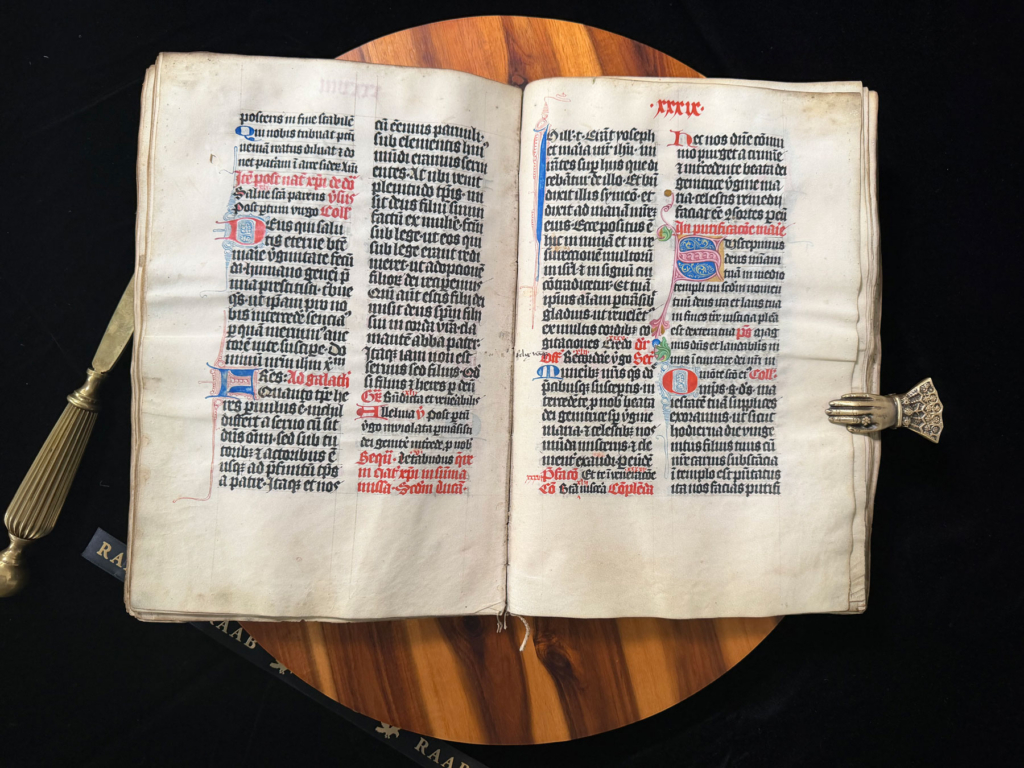
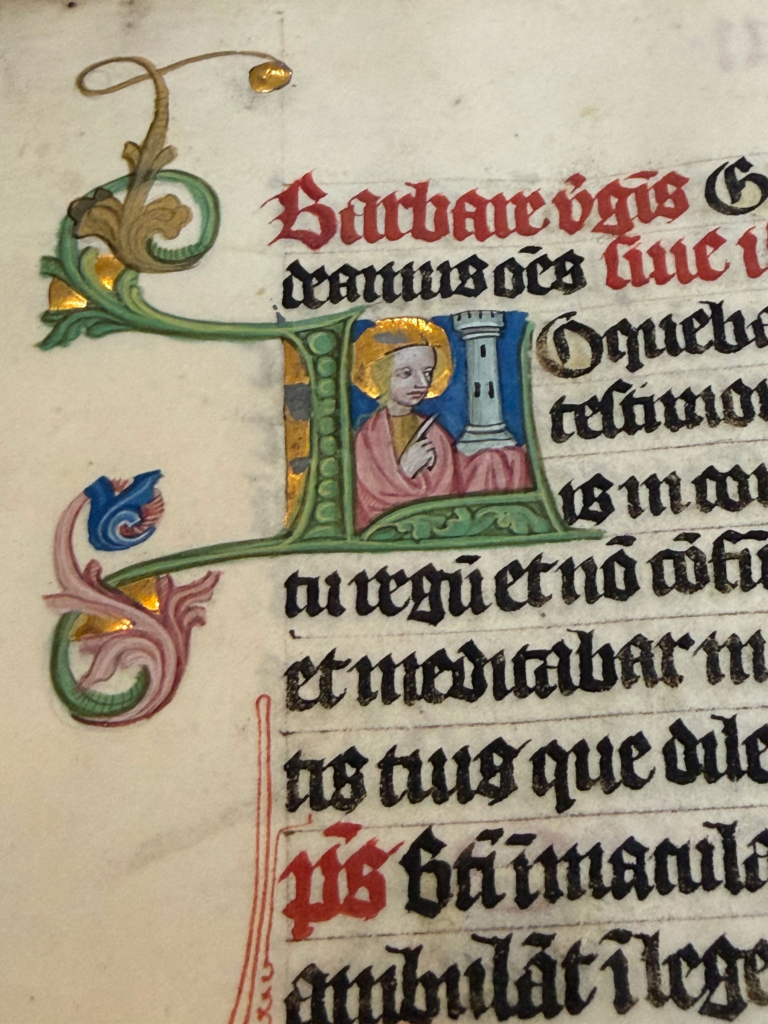
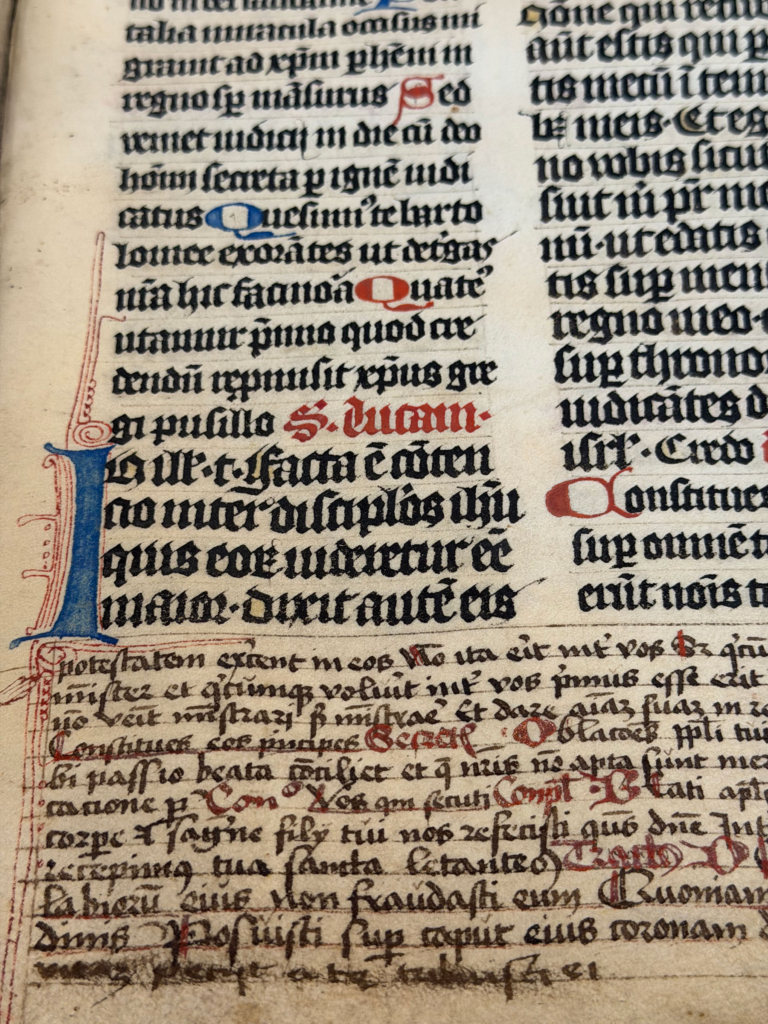
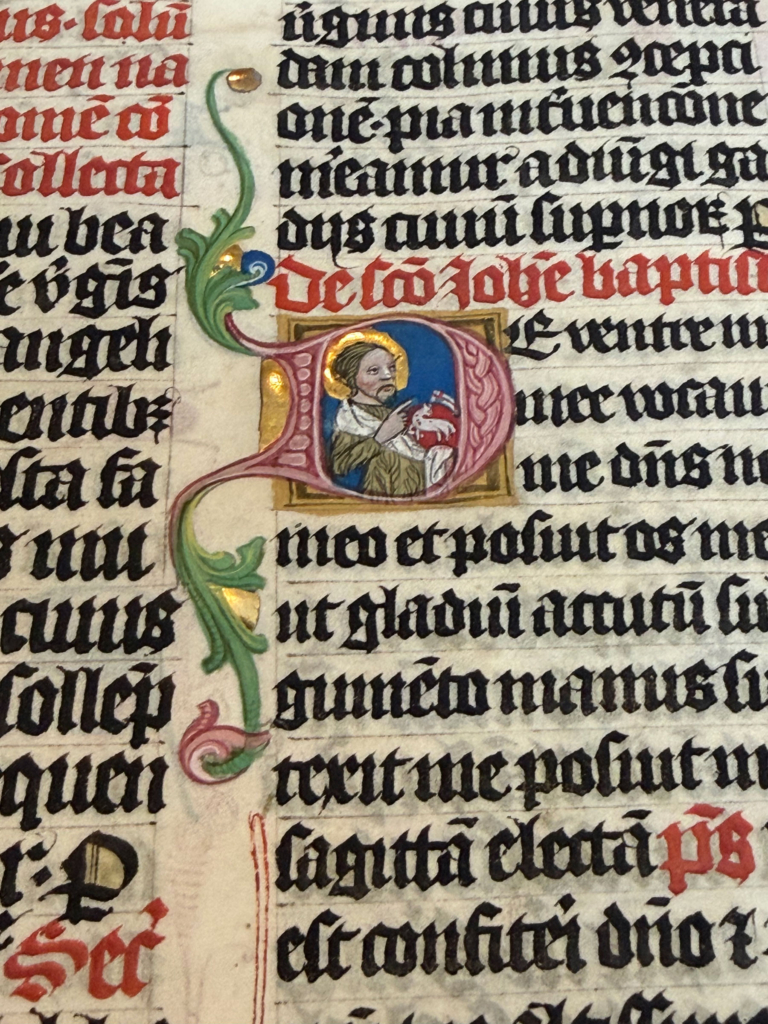
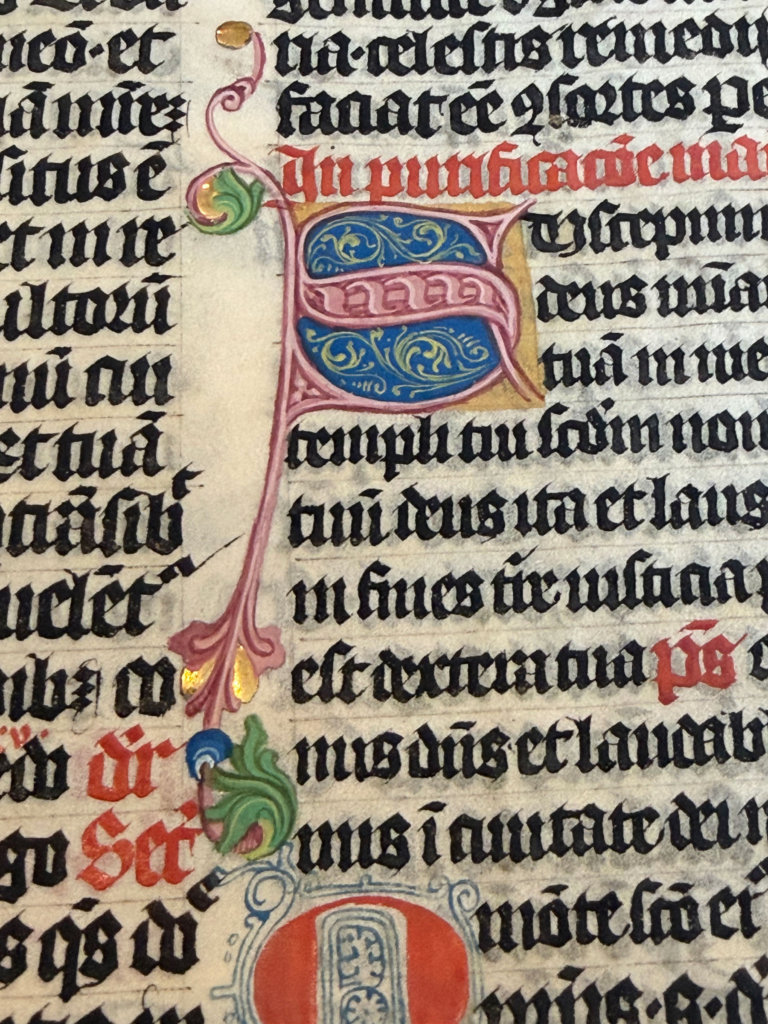
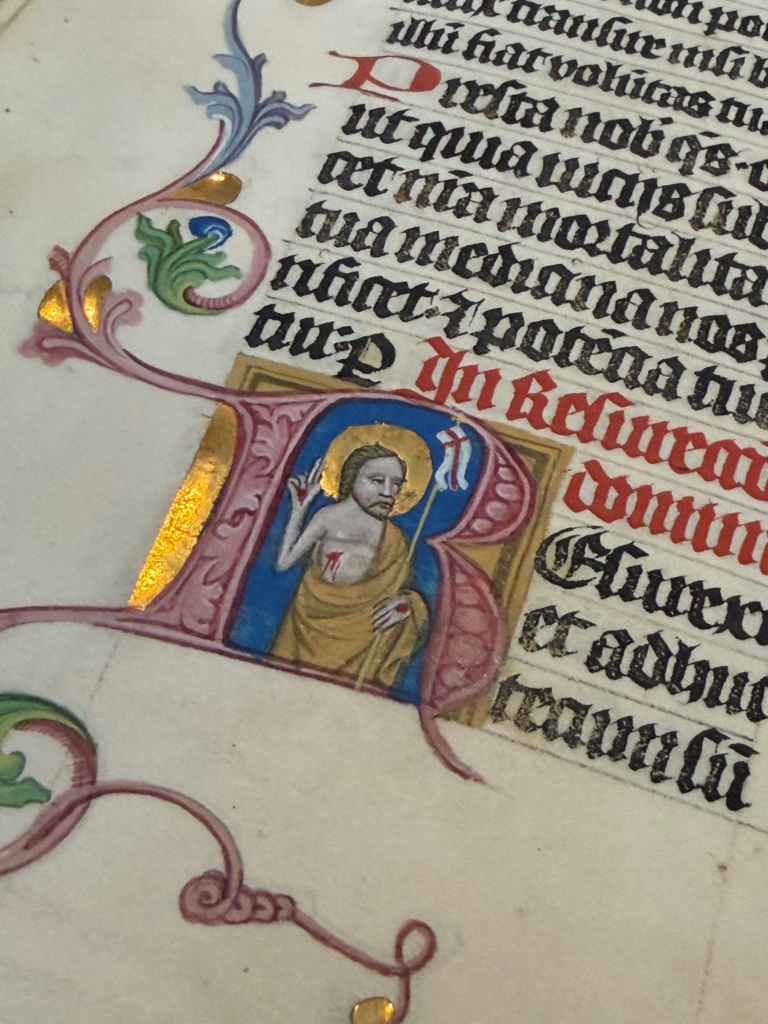
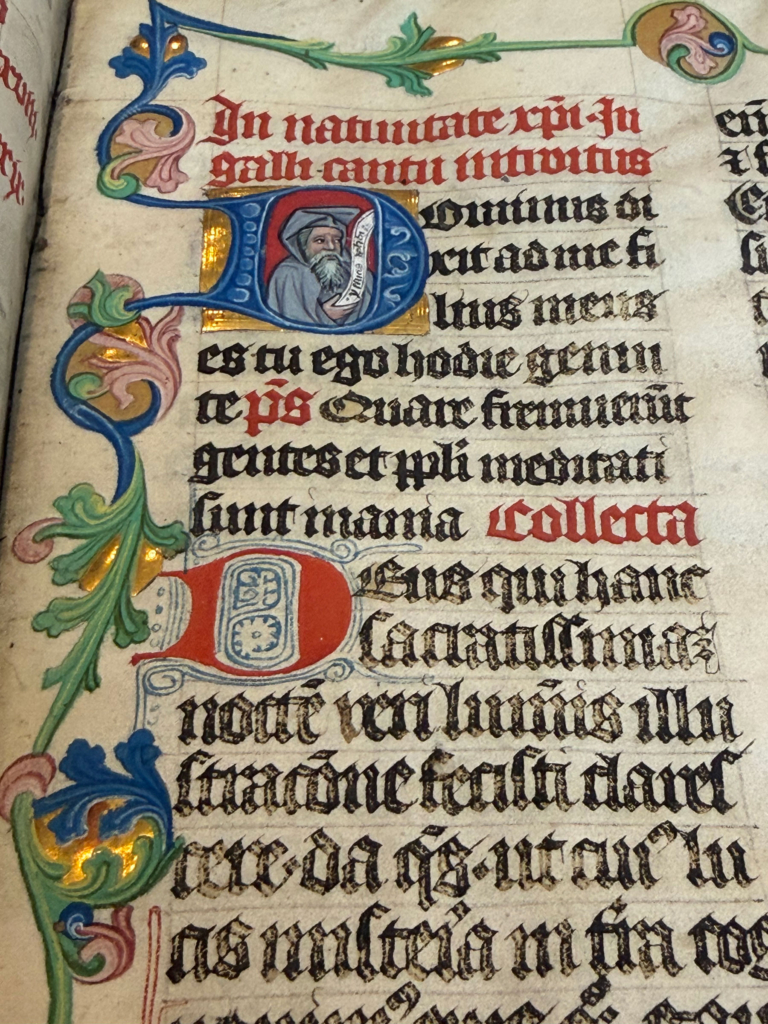
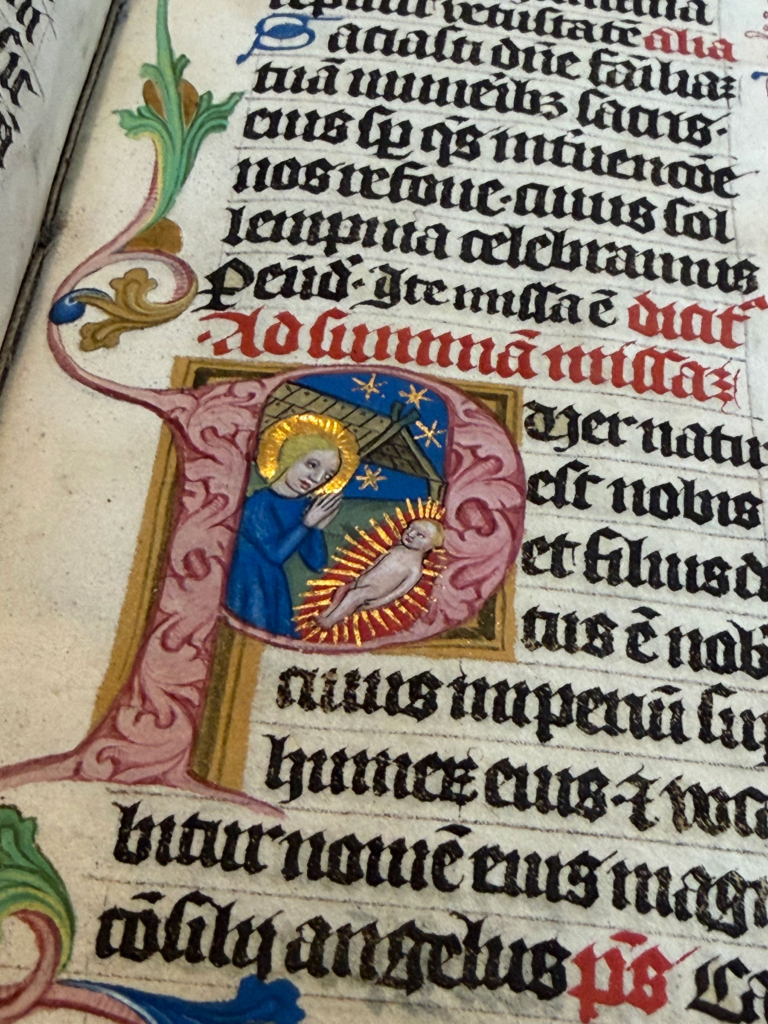

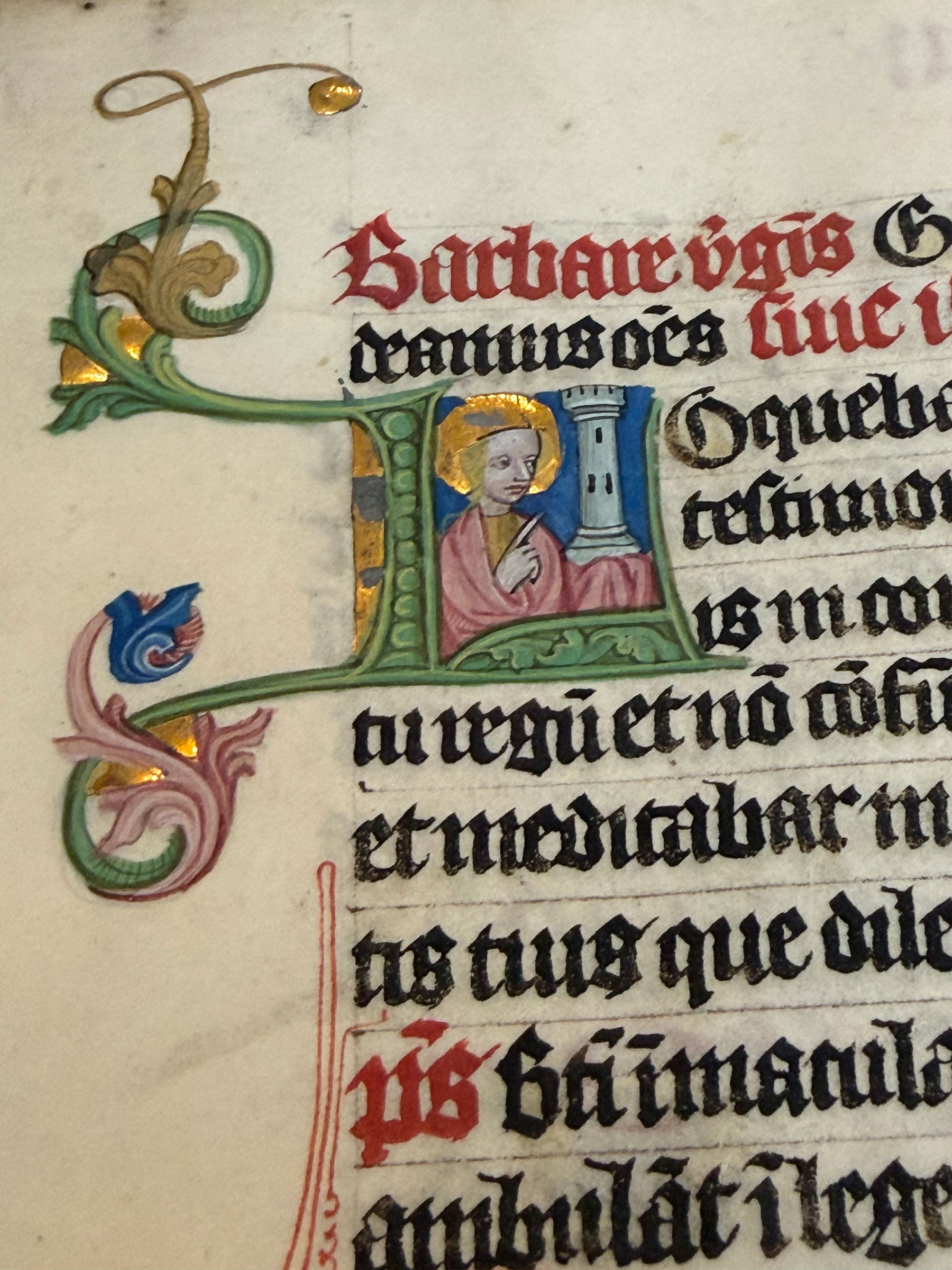
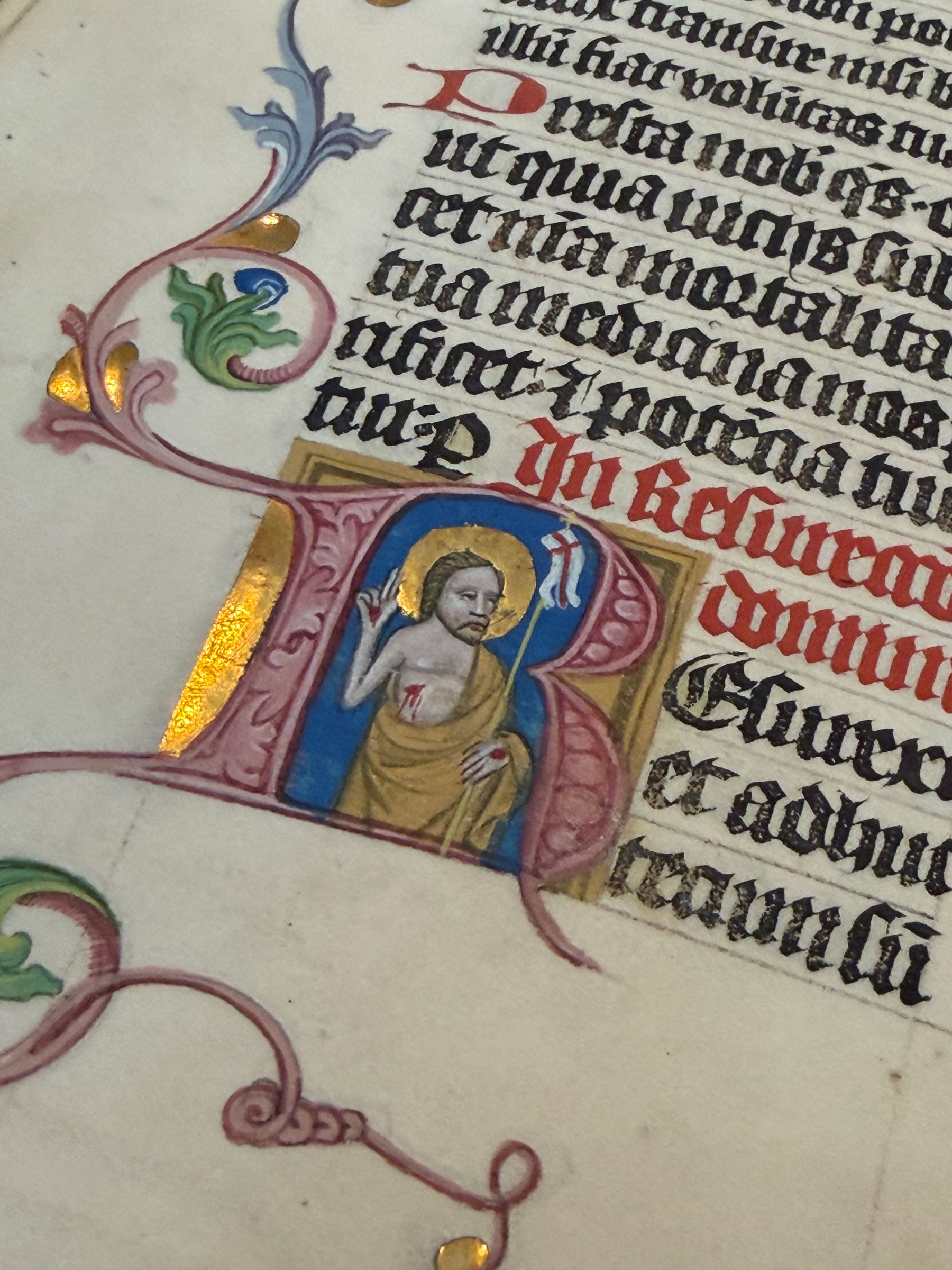
Among the illustrations are St. Barbara and Christ with the Flag of the Holy Roman Empire
The illuminations are exquisite and the entire book is present, excepting one leaf
The missal is a liturgical book used for celebrating the Roman Catholic Mass, which consolidated into a single volume nearly everything the priest needed at the altar — the prayers, readings (Epistle & Gospel), canon of the Mass,...


The illuminations are exquisite and the entire book is present, excepting one leaf
The missal is a liturgical book used for celebrating the Roman Catholic Mass, which consolidated into a single volume nearly everything the priest needed at the altar — the prayers, readings (Epistle & Gospel), canon of the Mass, rubrics, and proper texts for the liturgical year.
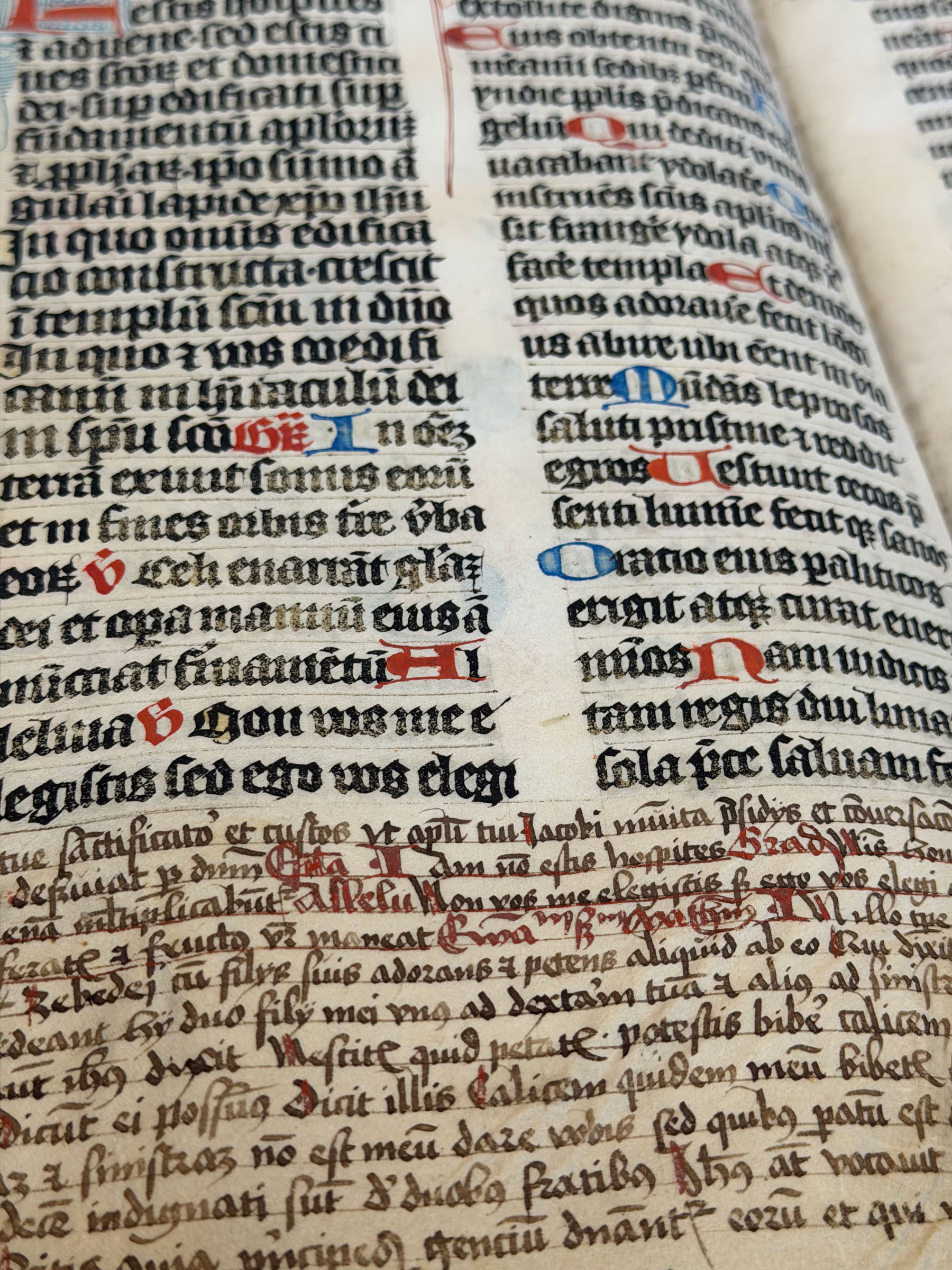
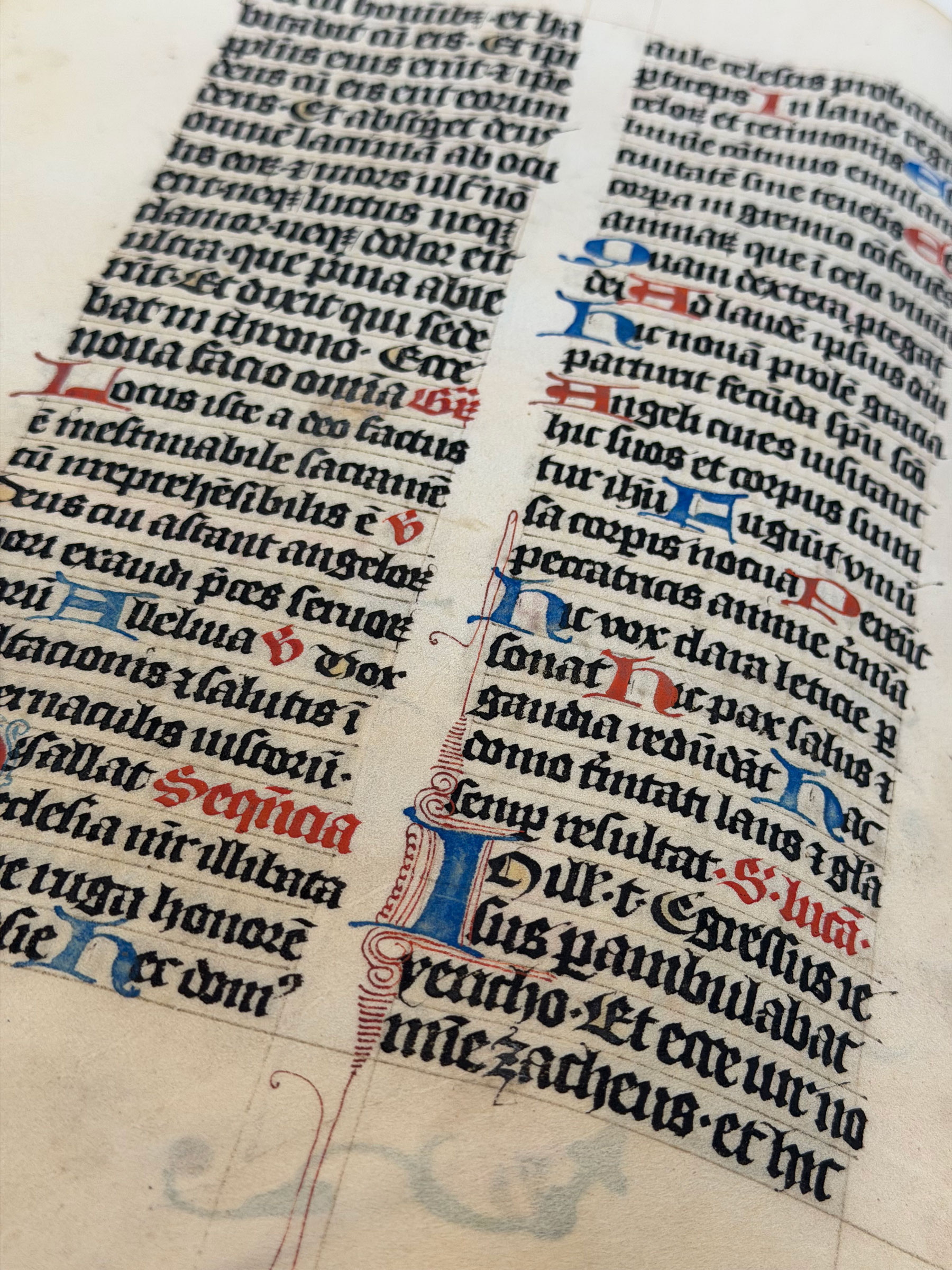
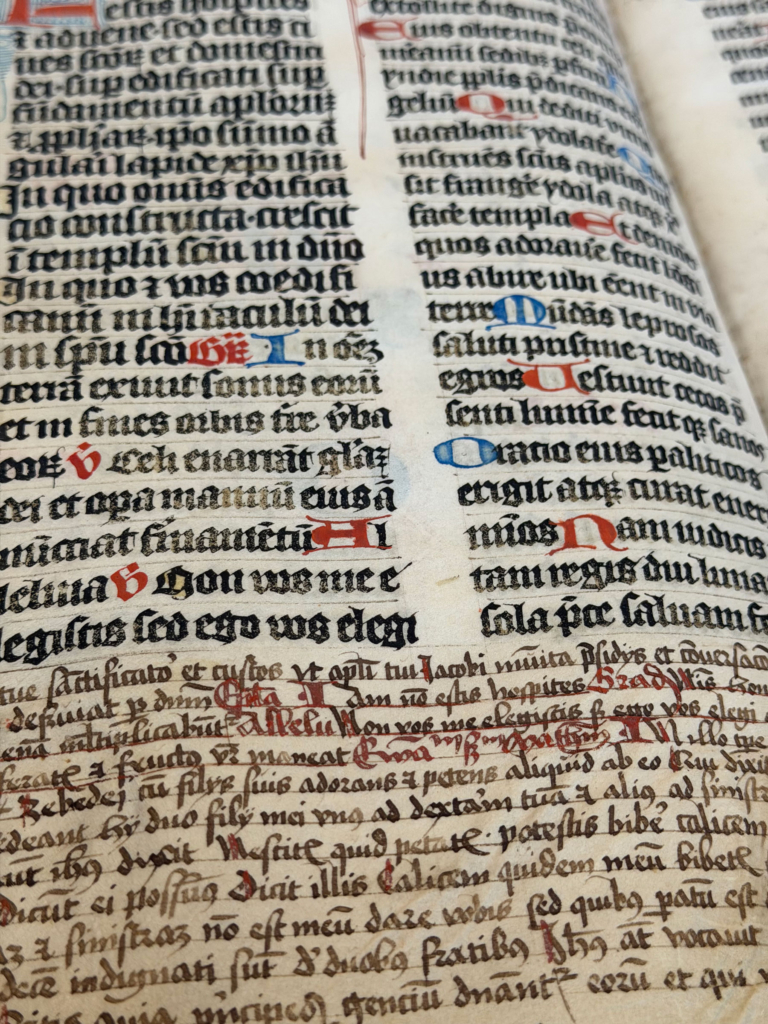
In the 1440s–50s, the most authoritative books—especially liturgical and university texts—were copied in Gothic textura (Textura Quadrata/Presensis). This script signaled seriousness, correctness, and ecclesiastical approval. Gutenberg wanted his printed Bible to look like a prestigious manuscript, not a novelty.
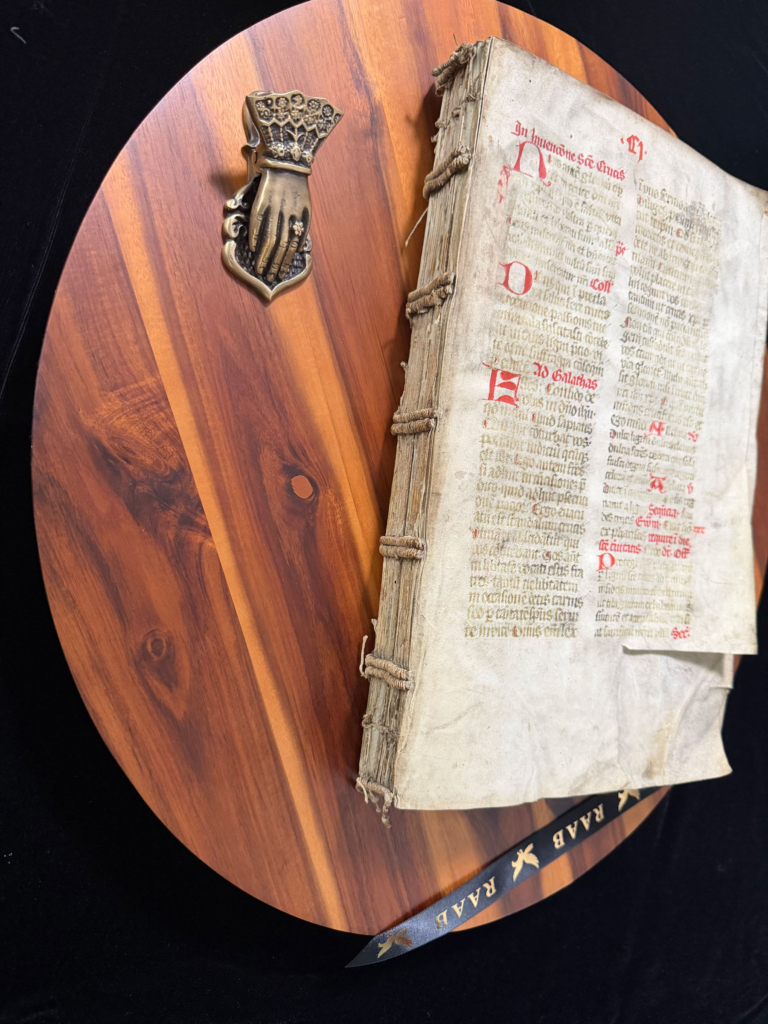
Missal, for the entire liturgical year (from Christmas Day to the Feast of St. Nicholas the confessor on 6 December the following year), with eleven finely painted historiated initials, illuminated manuscript on vellum
Germany (probably south) or Austria (perhaps Vienna or vicinity), c. 1450
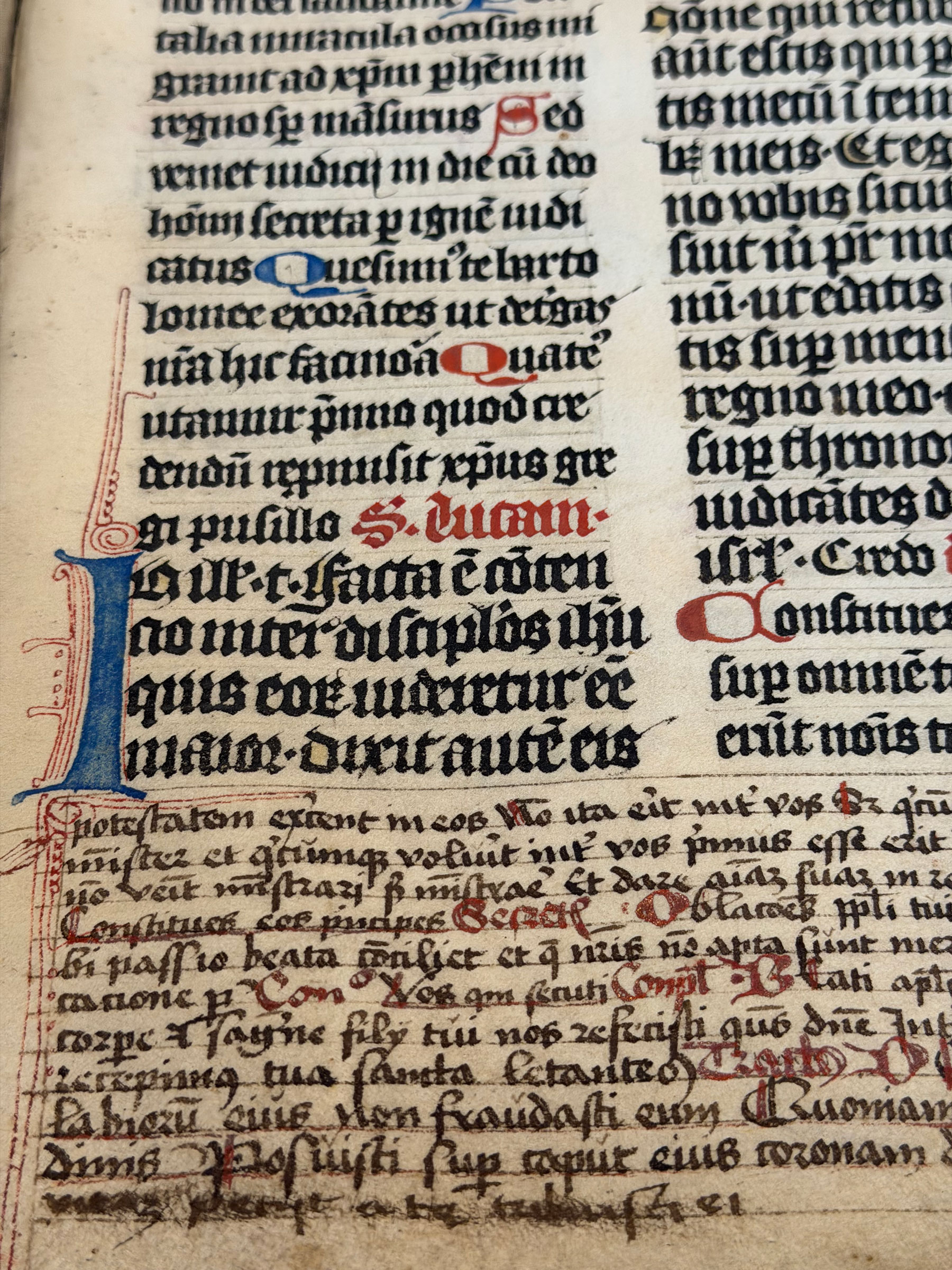
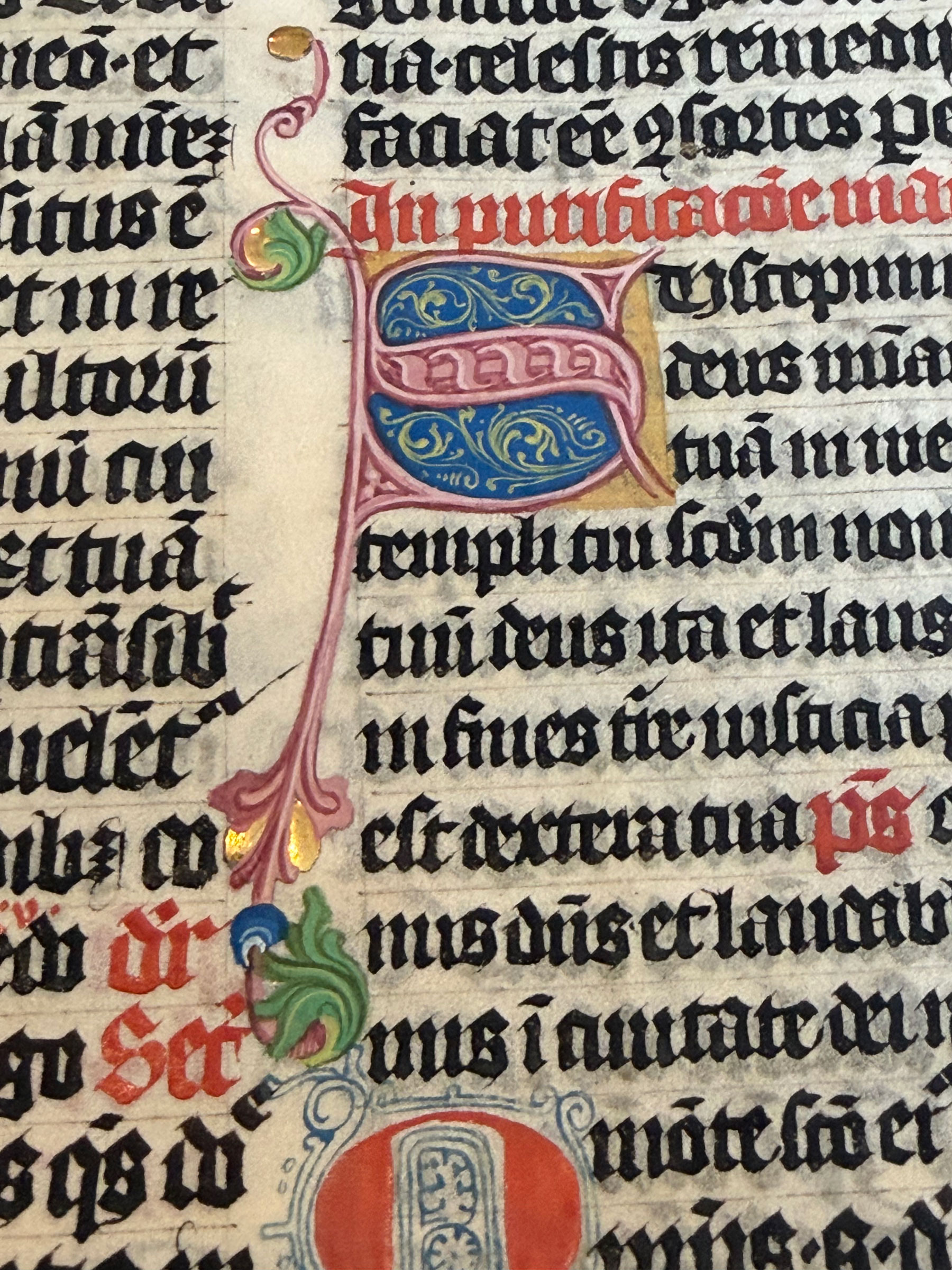
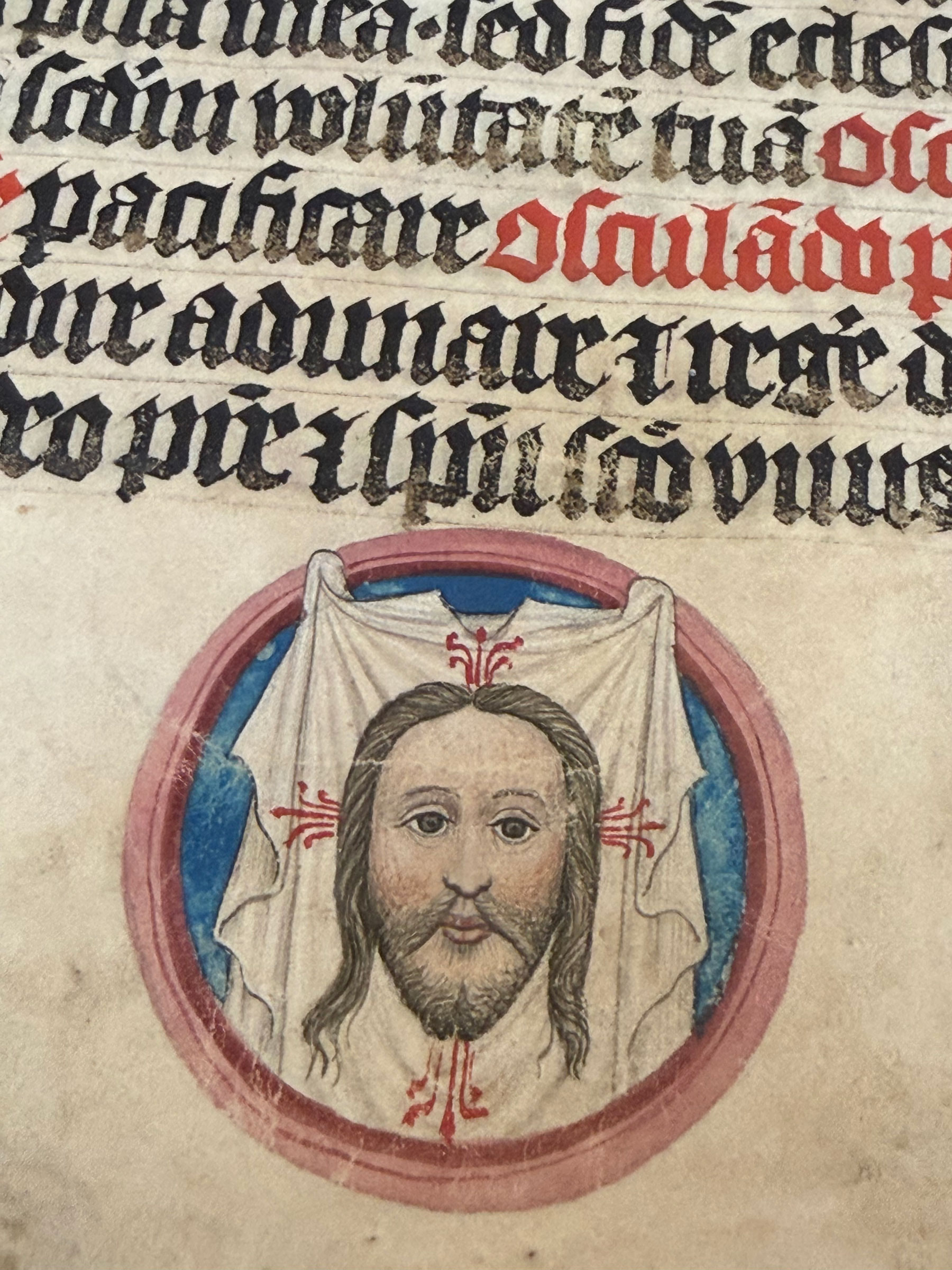
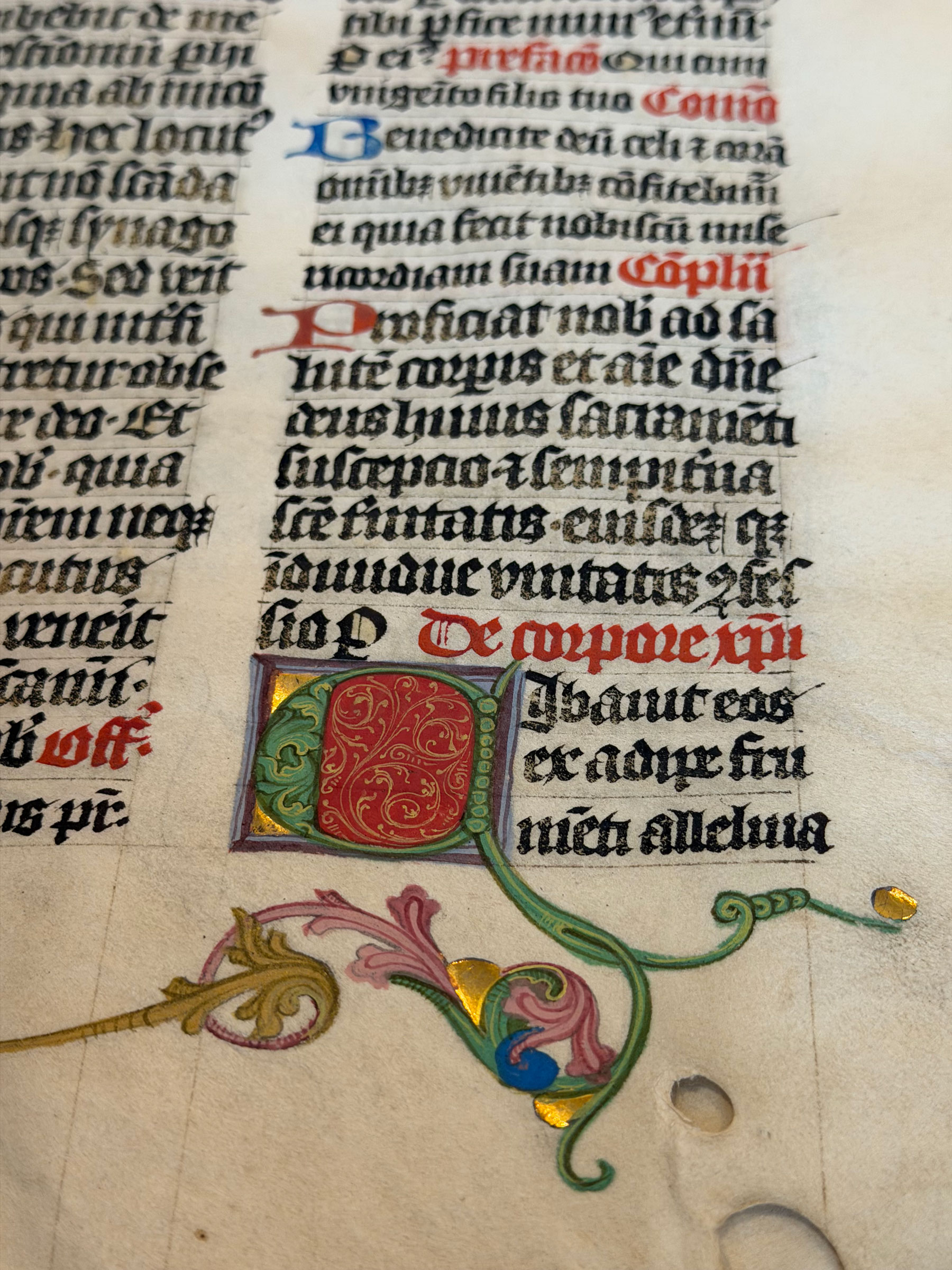
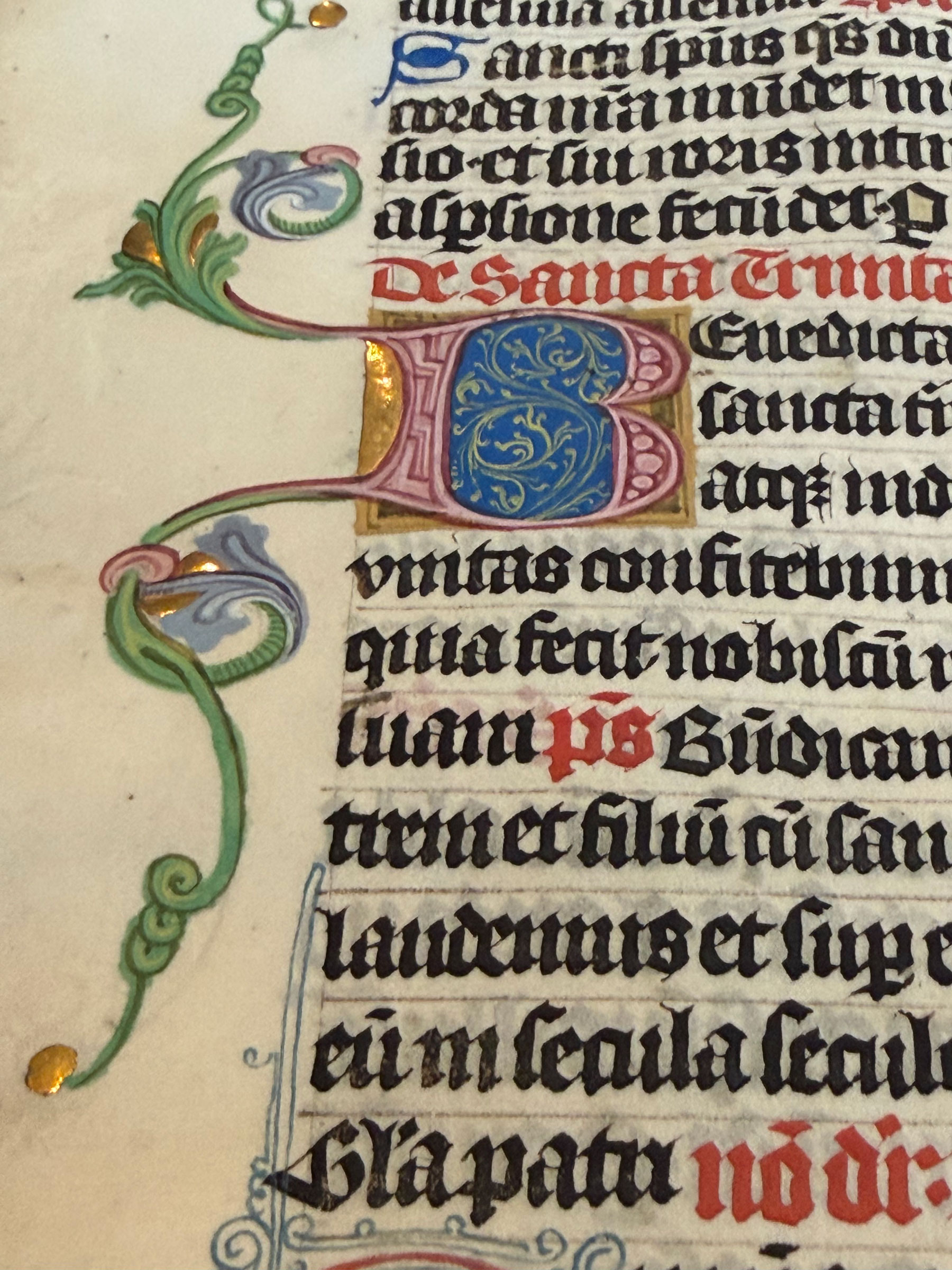
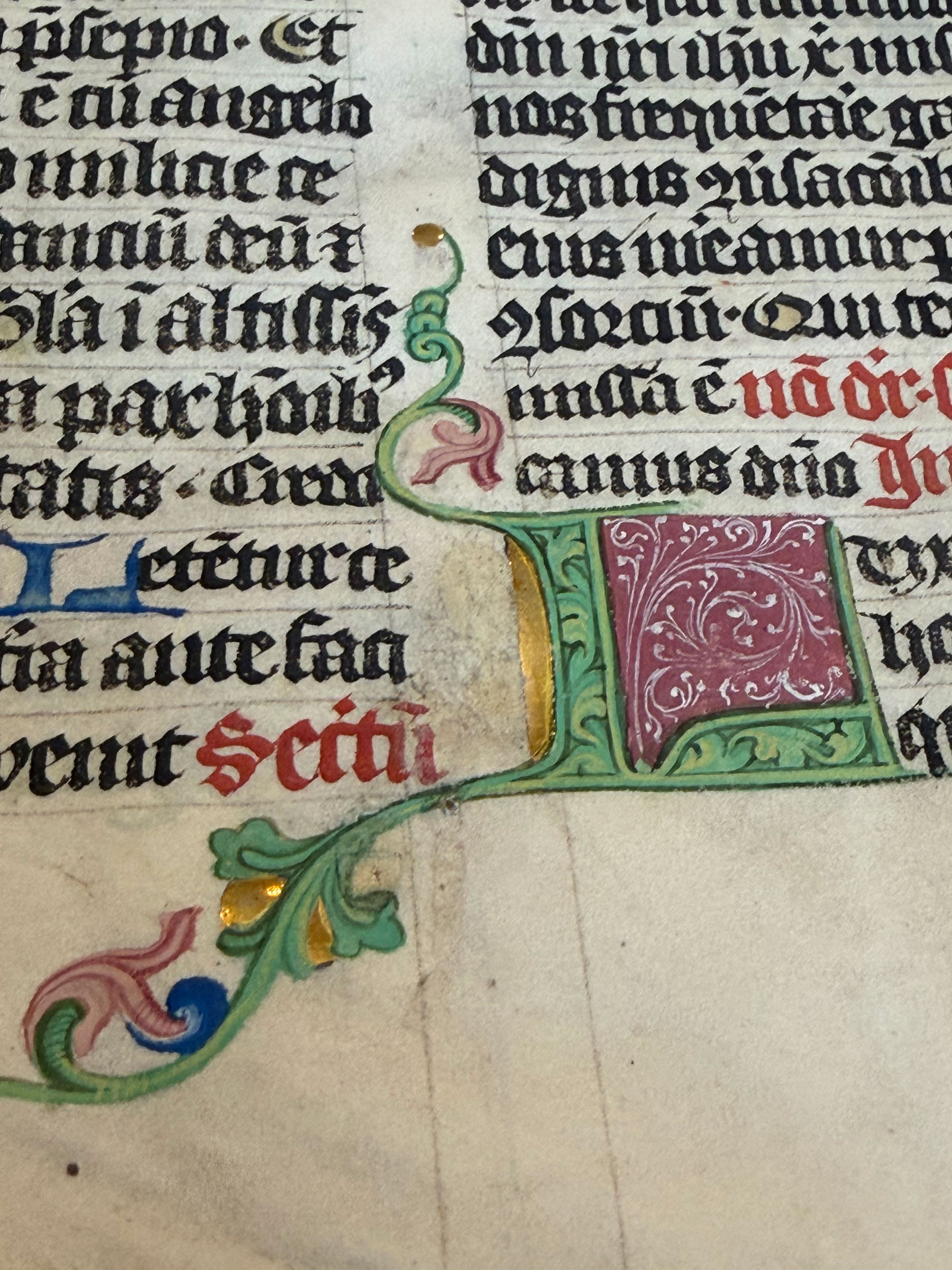
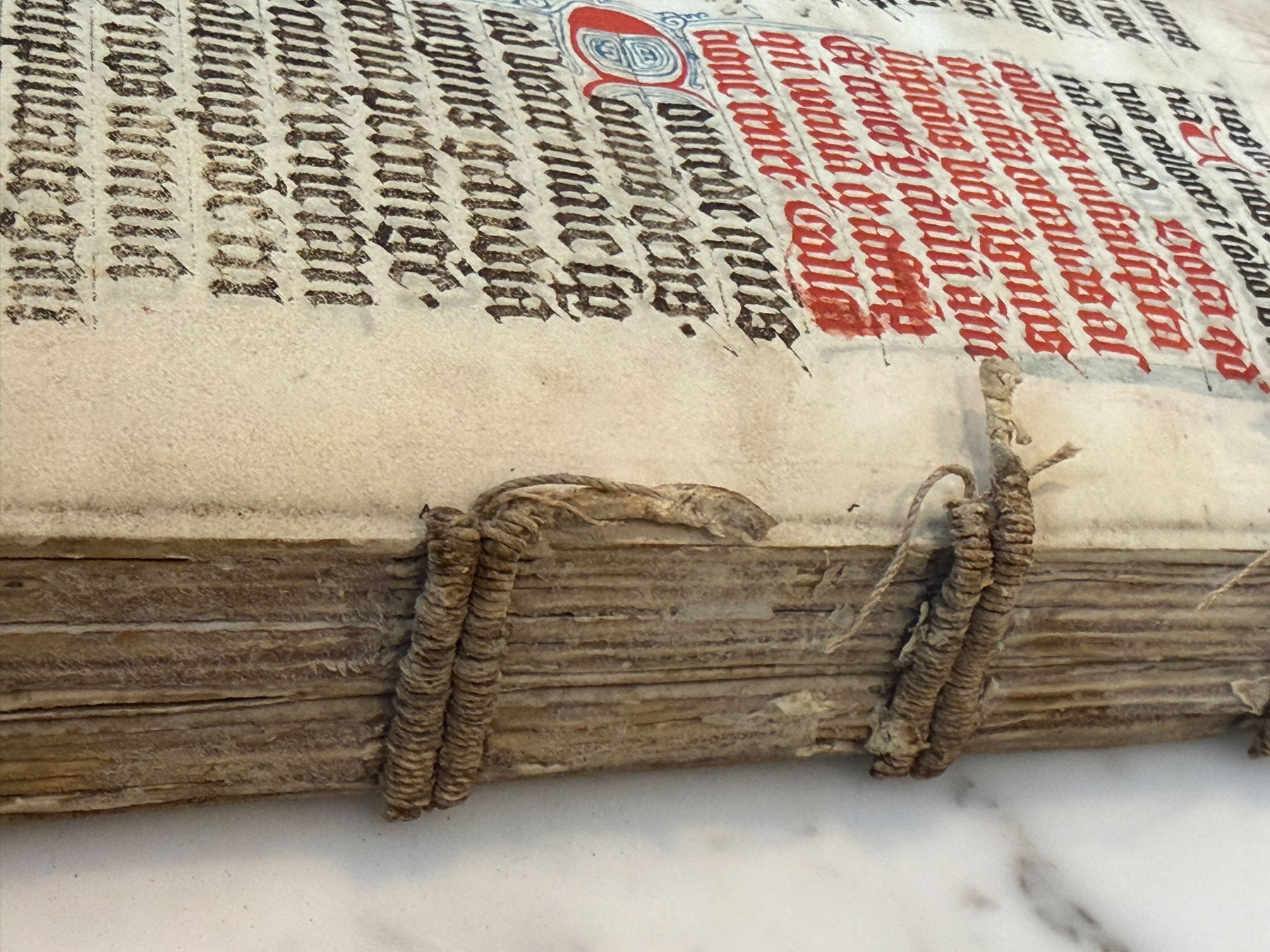
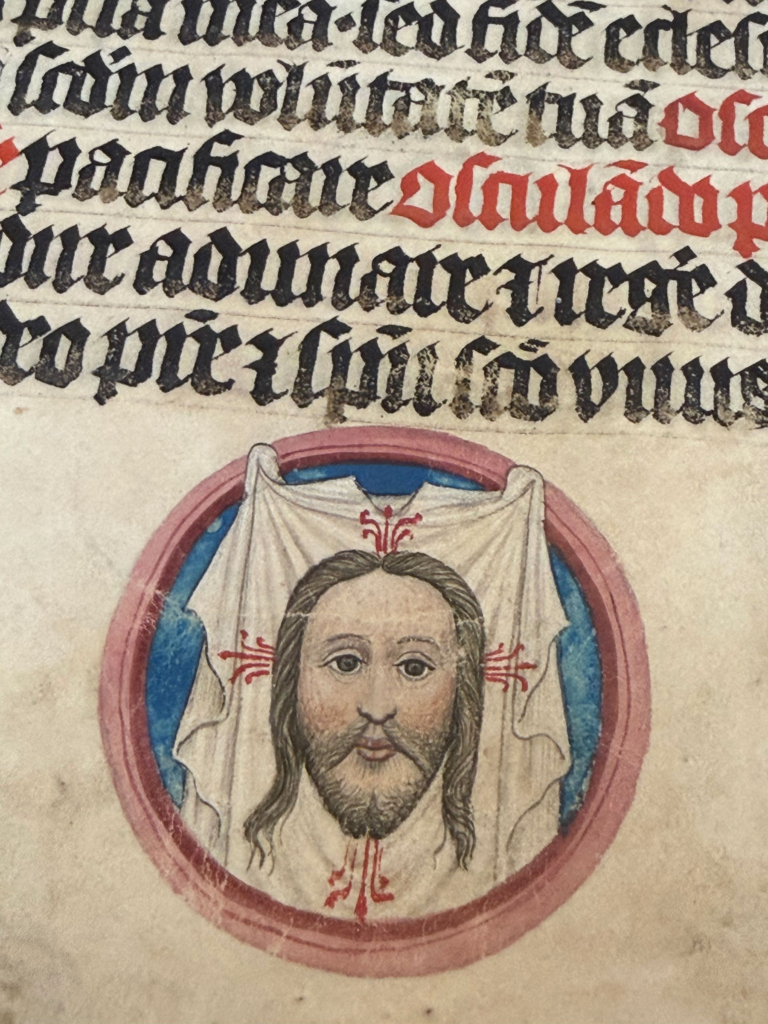
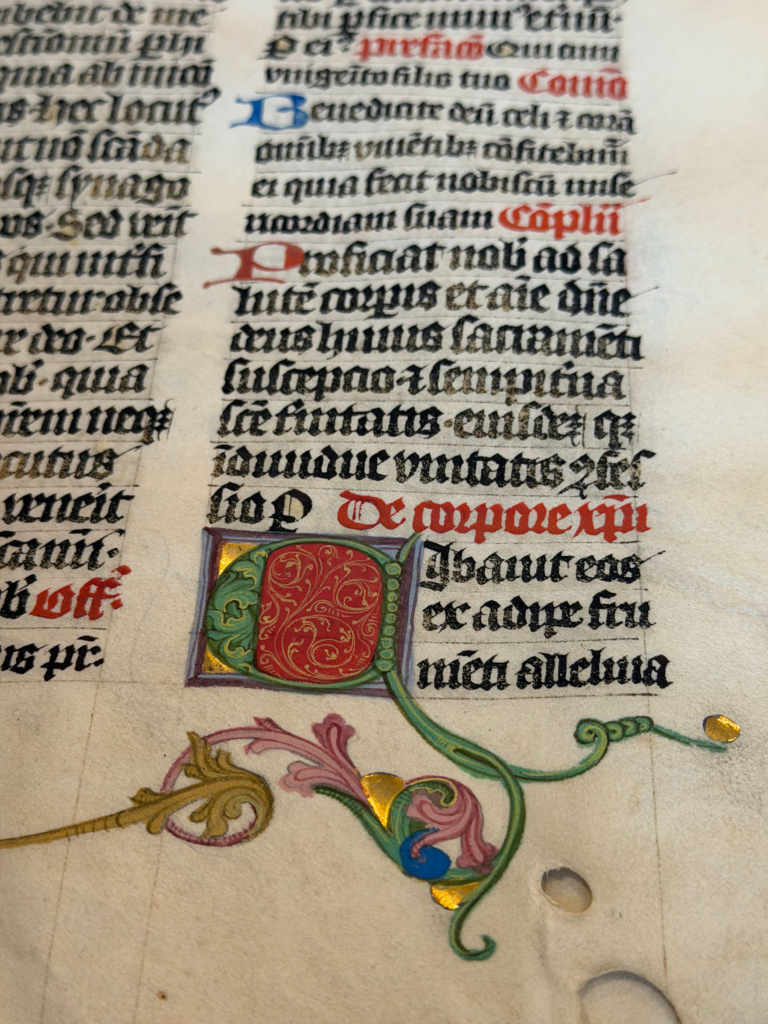
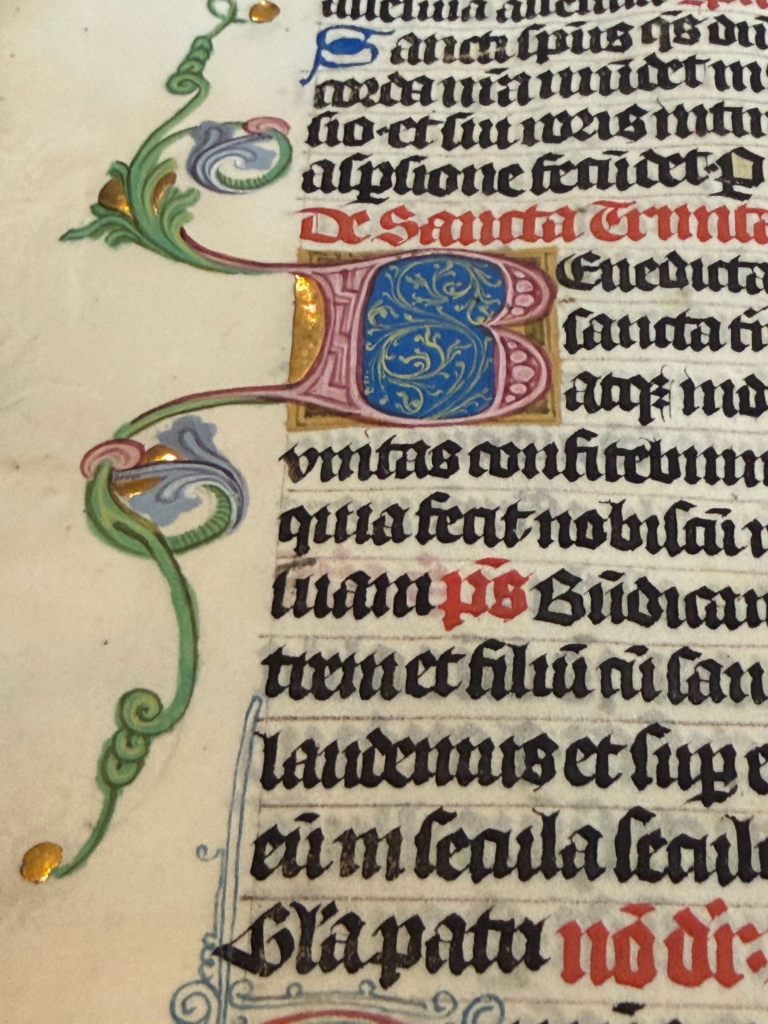
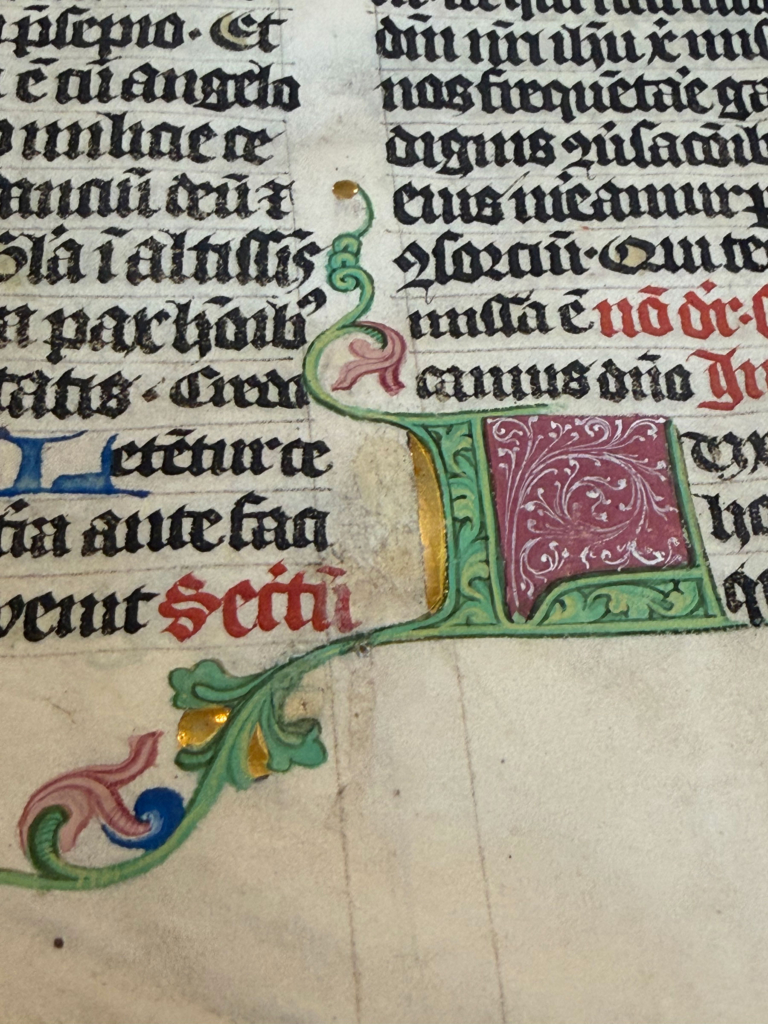
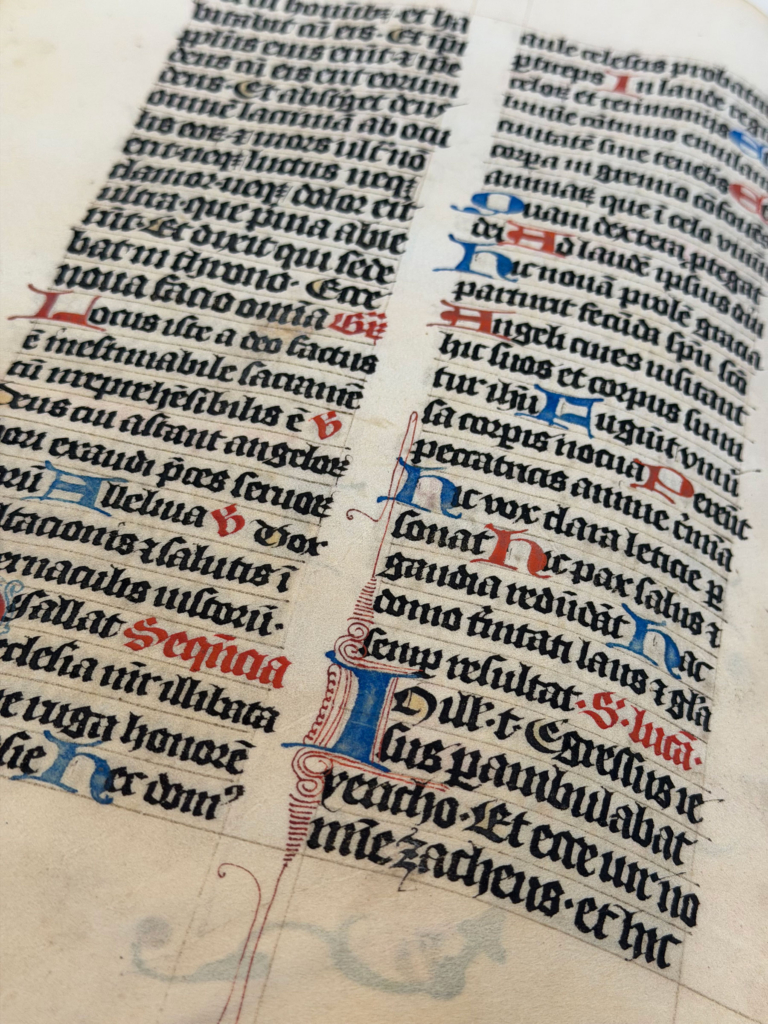
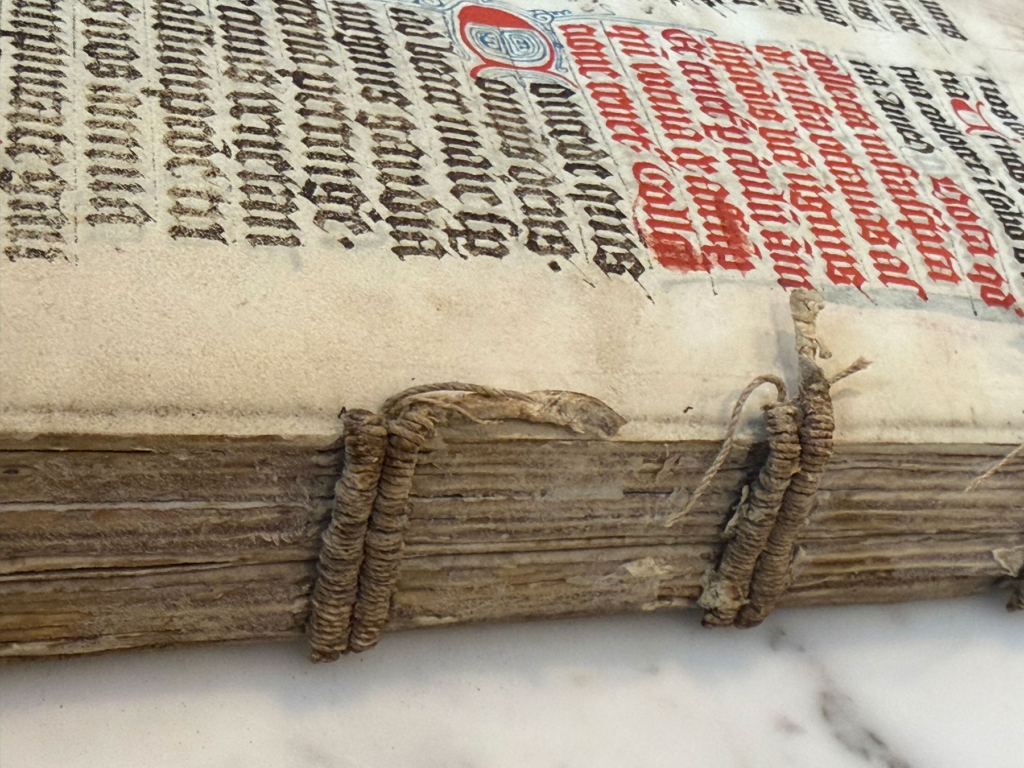
87 leaves, wanting a single leaf from the second half of the sixth quire, else complete, contemporary foliation in red at head of rectos (using ‘ci’-‘cii’ for first two leaves with prefactory material, then ‘I’-lxxxvii’; a few leaves missing between fols. xl and xlvii; text in single or double columns of 25 lines of two sizes of a very high grade late gothic German bookhand, red rubrics, one-line initials in red or blue, 2-line initials in same with elaborate penwork in contrasting colour, larger initials in green, pink or blue with scrolling designs painted on their bodies, their grounds decorated with acanthus leaves in yellow, these with long curling foliate extensions into the borders holding gold fruit and bezants, one marginal image of the veil of veronica in the bas-de-page of fol. xxviiv (2nd occurrence of this folio number), eleven historiated initials, a few leaves with near-contemporary marginal additions usually adding further devotional readings, some flaking form ink in places, a few leaves at each end with scuffs and discolouration (this also indicating volume in the present disbound state for some time), bottom outer corner of first leaf wanting, but historiated initials in bright and sparking condition and the volume overall in good condition, 210×310 mm, disbound, with binding structures present at spine
Provenance:
1. Written and illuminated for use in an ecclesiastical community in southern Germany or Austria in the middle of the fifteenth century. If, as seems likely from the illumination, this volume is Austrian, then it is worth noting that the St. Barbara Kirche in Vienna held the most important relics of that saint in that country, and a production there would accord with the status given to this saint (with her own historiated initial, and one of only three saints given this) in the last part of this volume.
2. Recently rediscovered in a private collection in North America.
Text and illumination:
This fine and handsome volume shows the type of script that was employed in Germany at the dawn of printing, and after which the typefaces of the earliest incunables was cut. This must have been an important volume for the life of the ecclesiastical community that owned it, and the addition of detailed instructions for the actions and positions of the various ‘players’ in the Masses included in its lengthy red rubrics add a charming and even personal element.
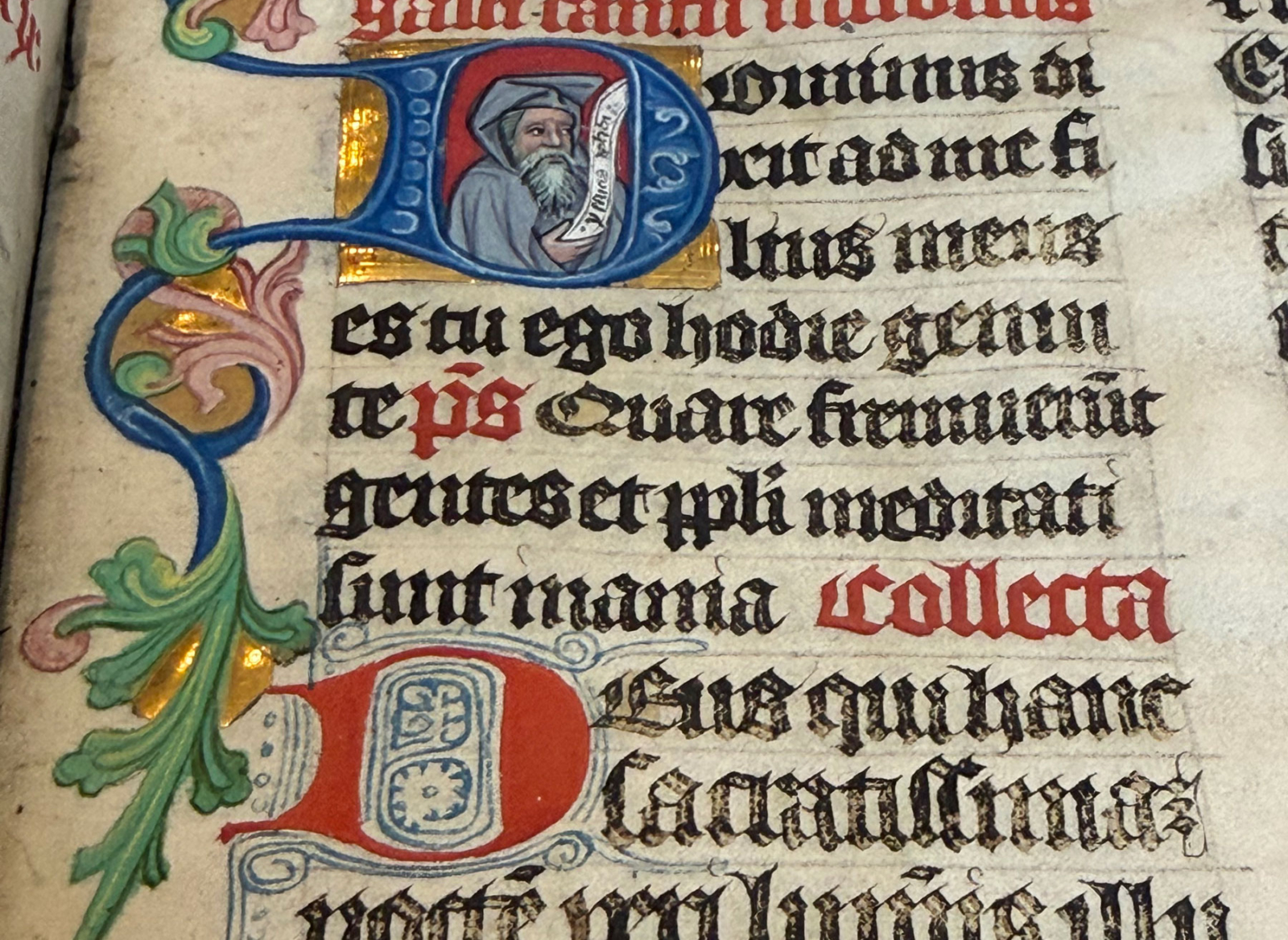
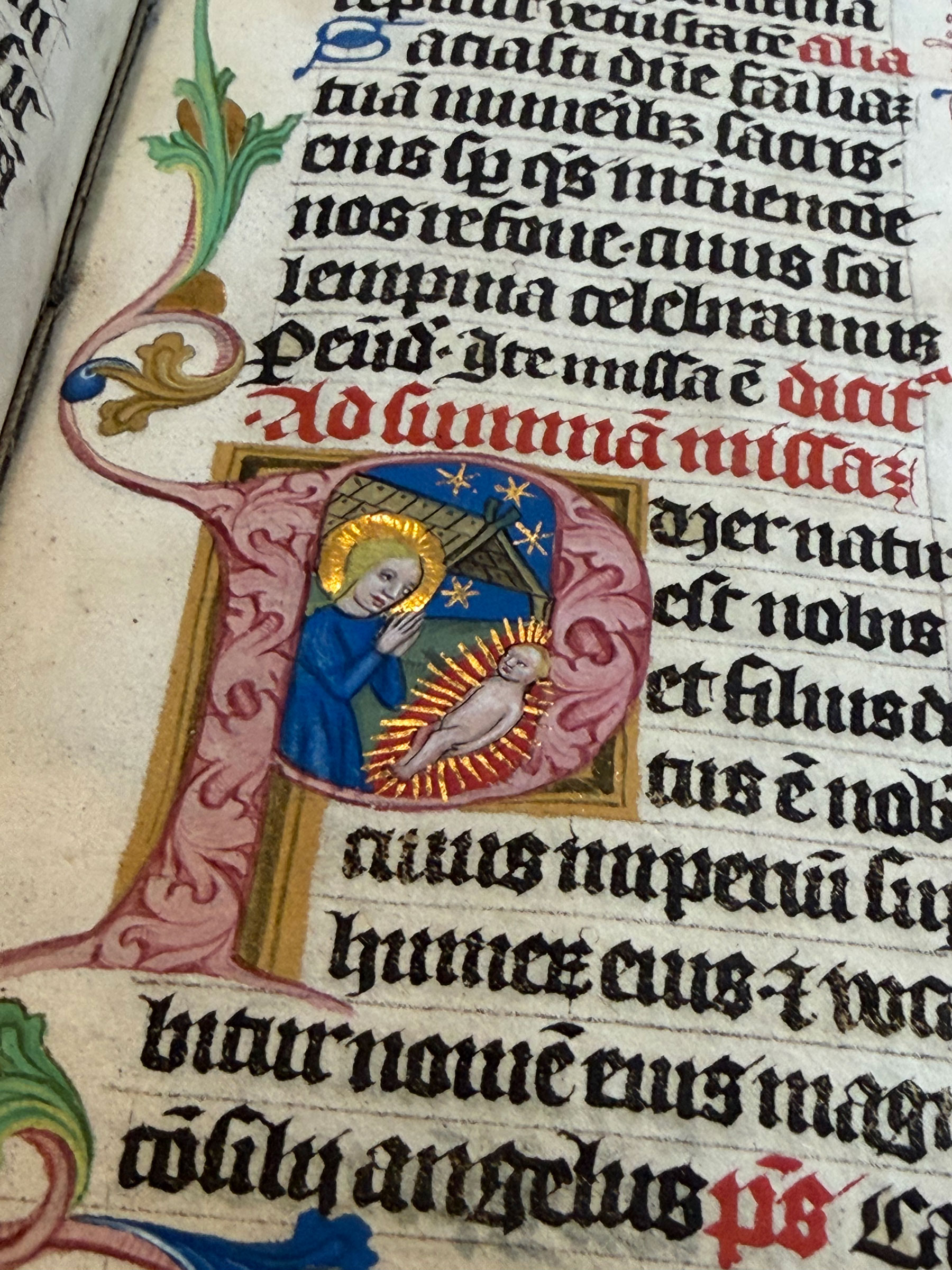
The historiated initials, are in a style common to much of fifteenth-century German book-art, but are perhaps closest to those from Nuremberg (compare the border decorations with those in C. Stauer, In Nürnberg illuminiert, 2015, no. 4 and 5), and especially Austrian sites, such as Klosterneuberg (compare the borders, human figures and their heavy deeply shadowed features with those in M. Theisen and M. Haltrich, Kloster, Kaiser und Gelehrte, 2015, nos. 4 and 5).
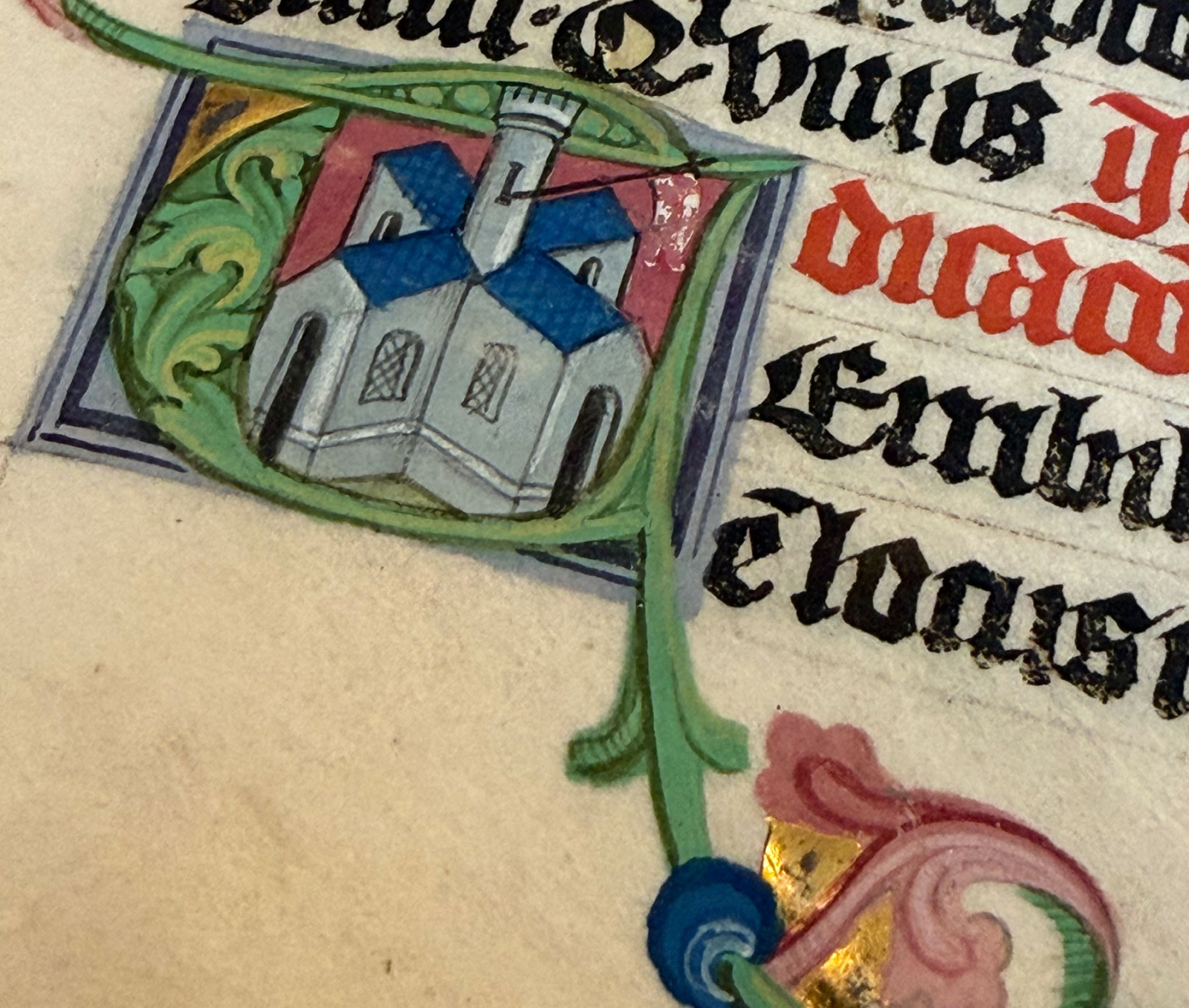
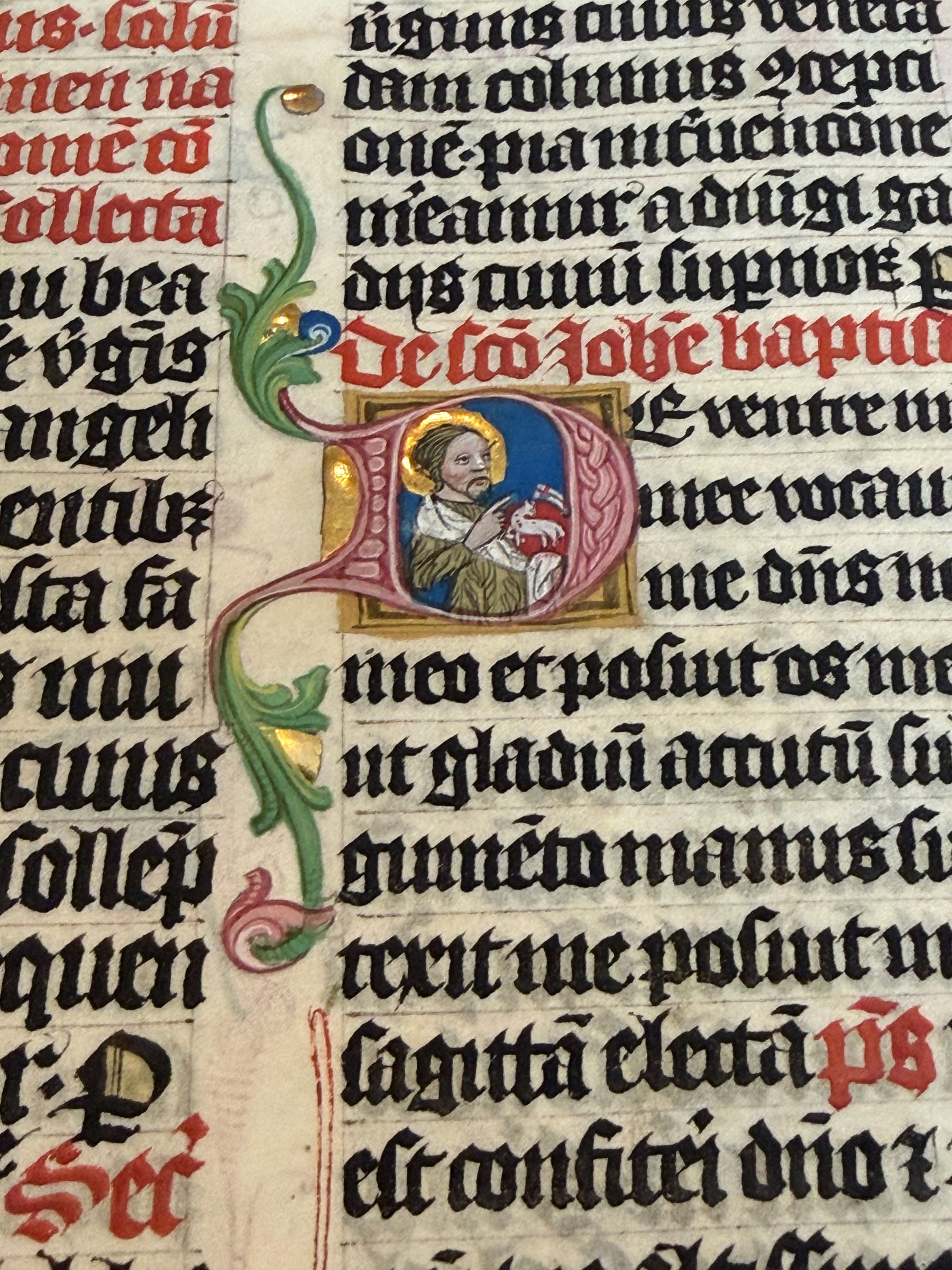
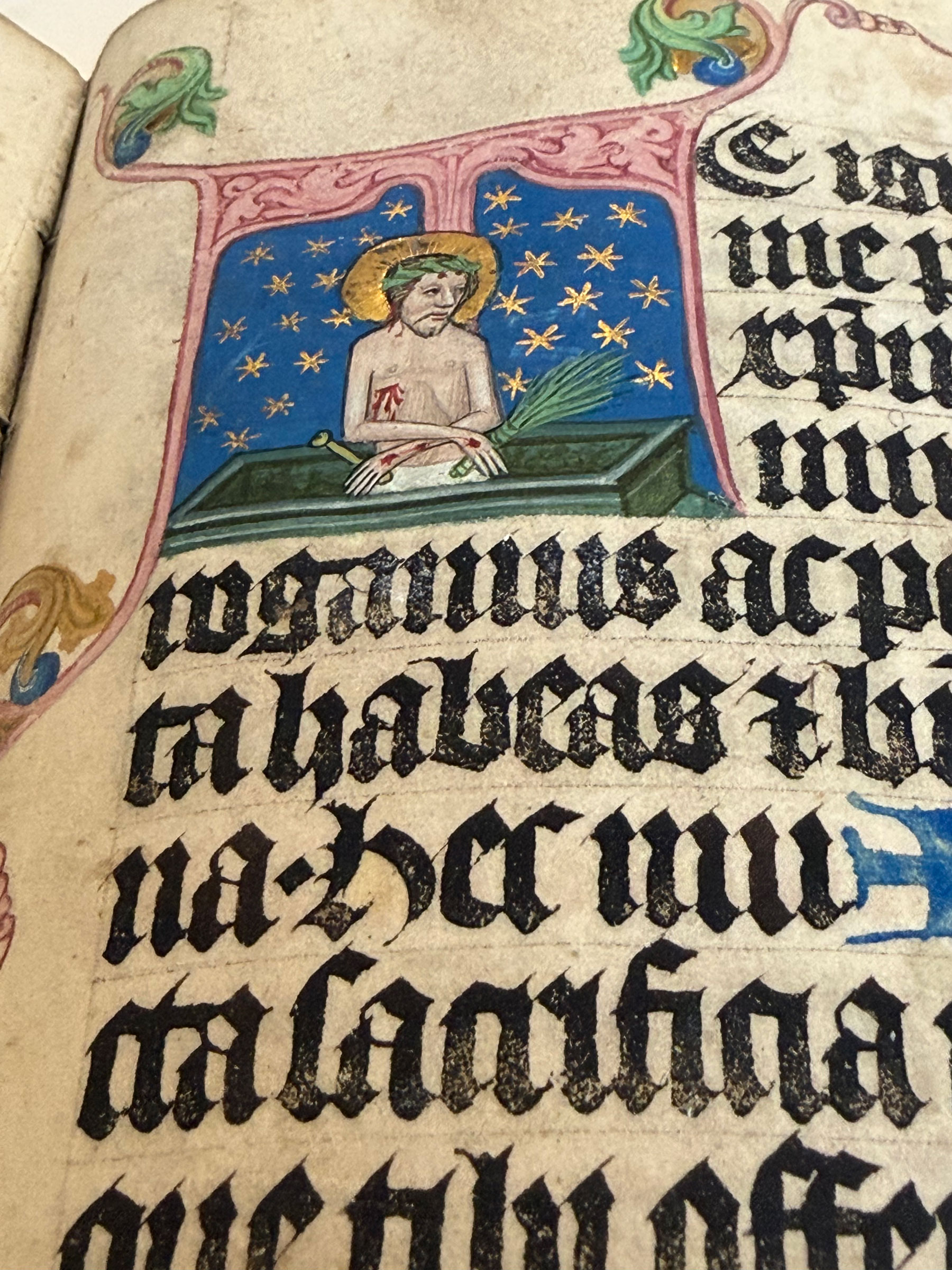
The historiated initials here show:
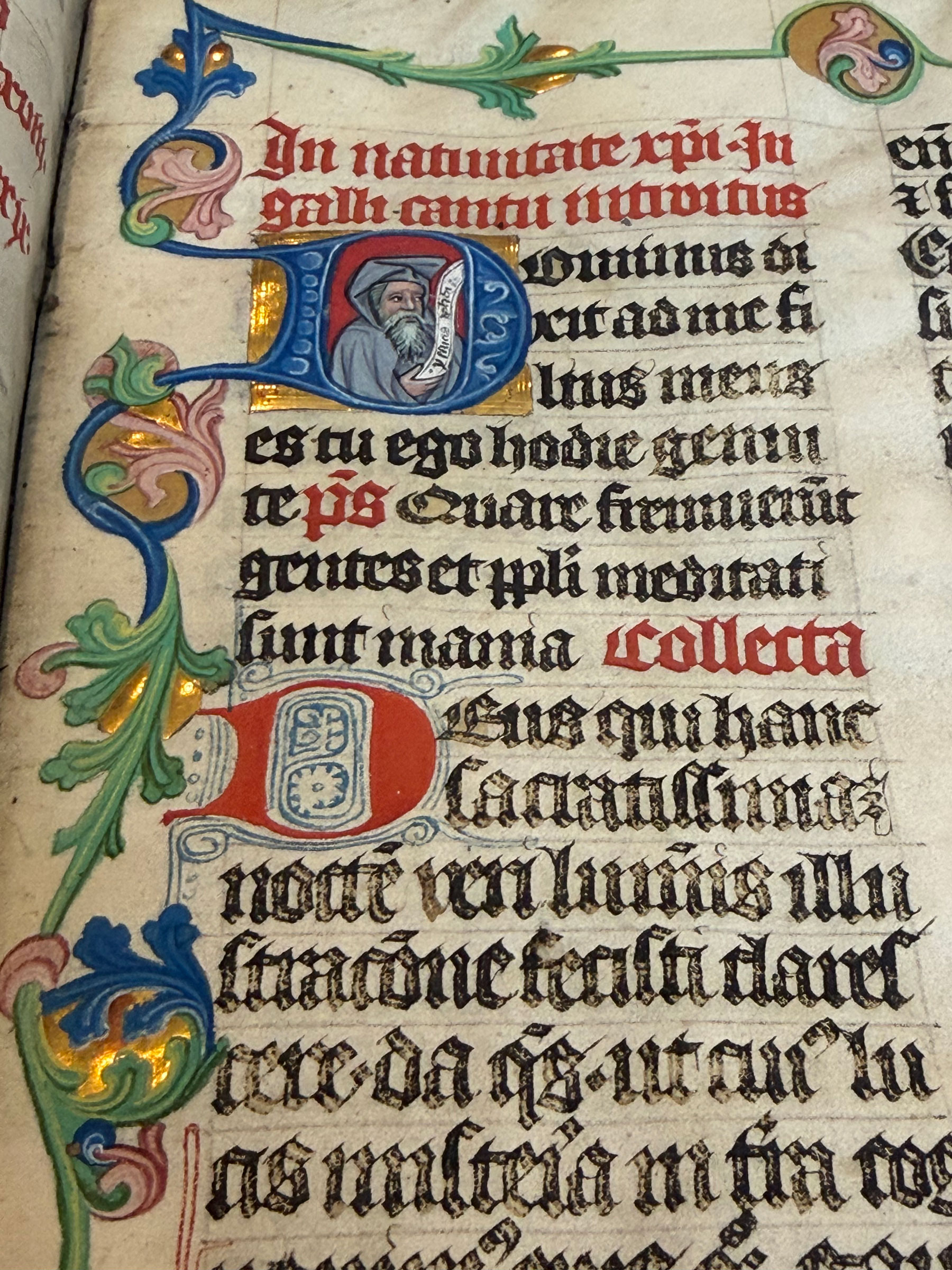
fol i recto, King David as a bearded man, holding a scroll and gazing at the opening of the text; this with long foliate border decorations in upper and inner margins;
fol. iv recto, the Virgin praying before the Christ Child before the stable and a starry sky;
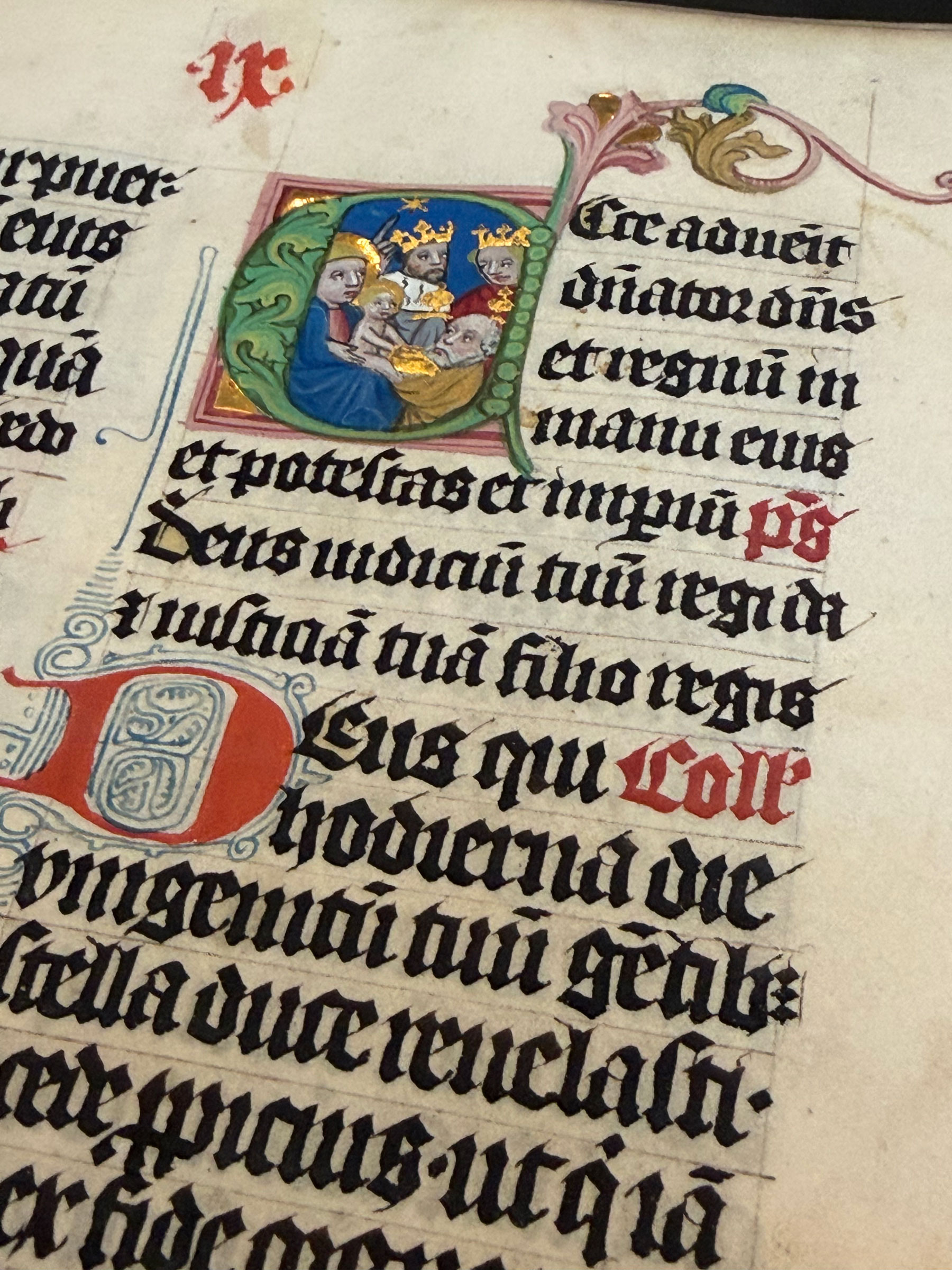
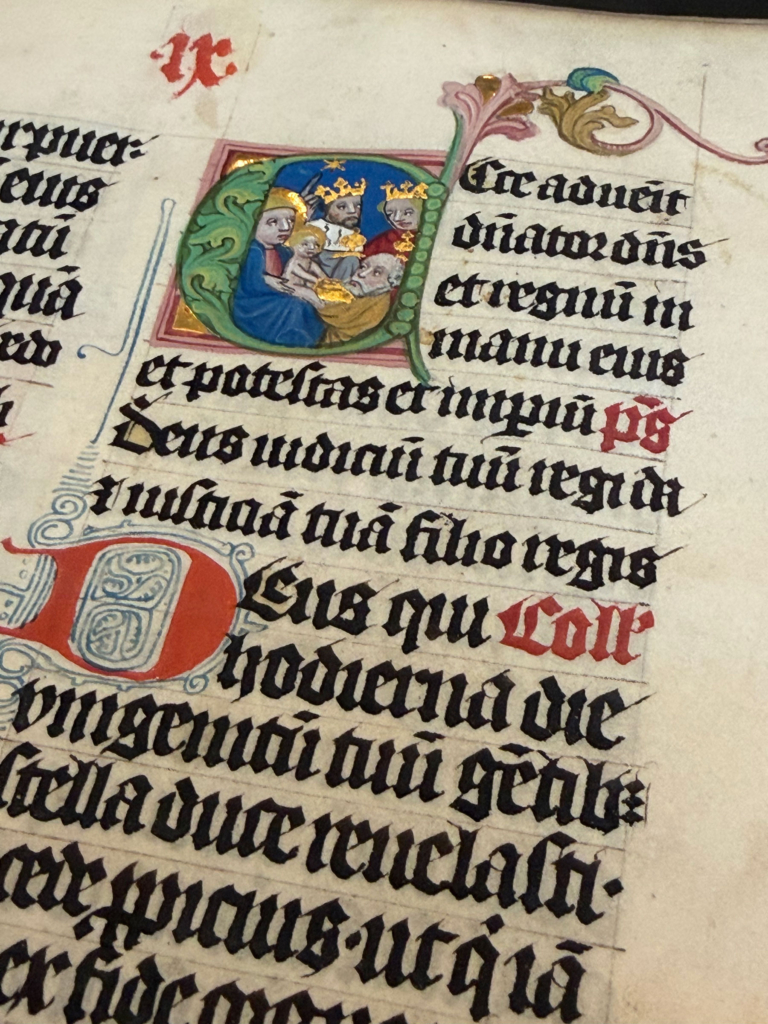
fol. ix recto, the Visitation of the Magi to the Virgin and the Christ Child;
fol. xxi verso verso, Christ, standing in a shroud and holding a flag with a red cross on it (ie. the flag of the Holy Roman Empire), showing the viewer his wounds;
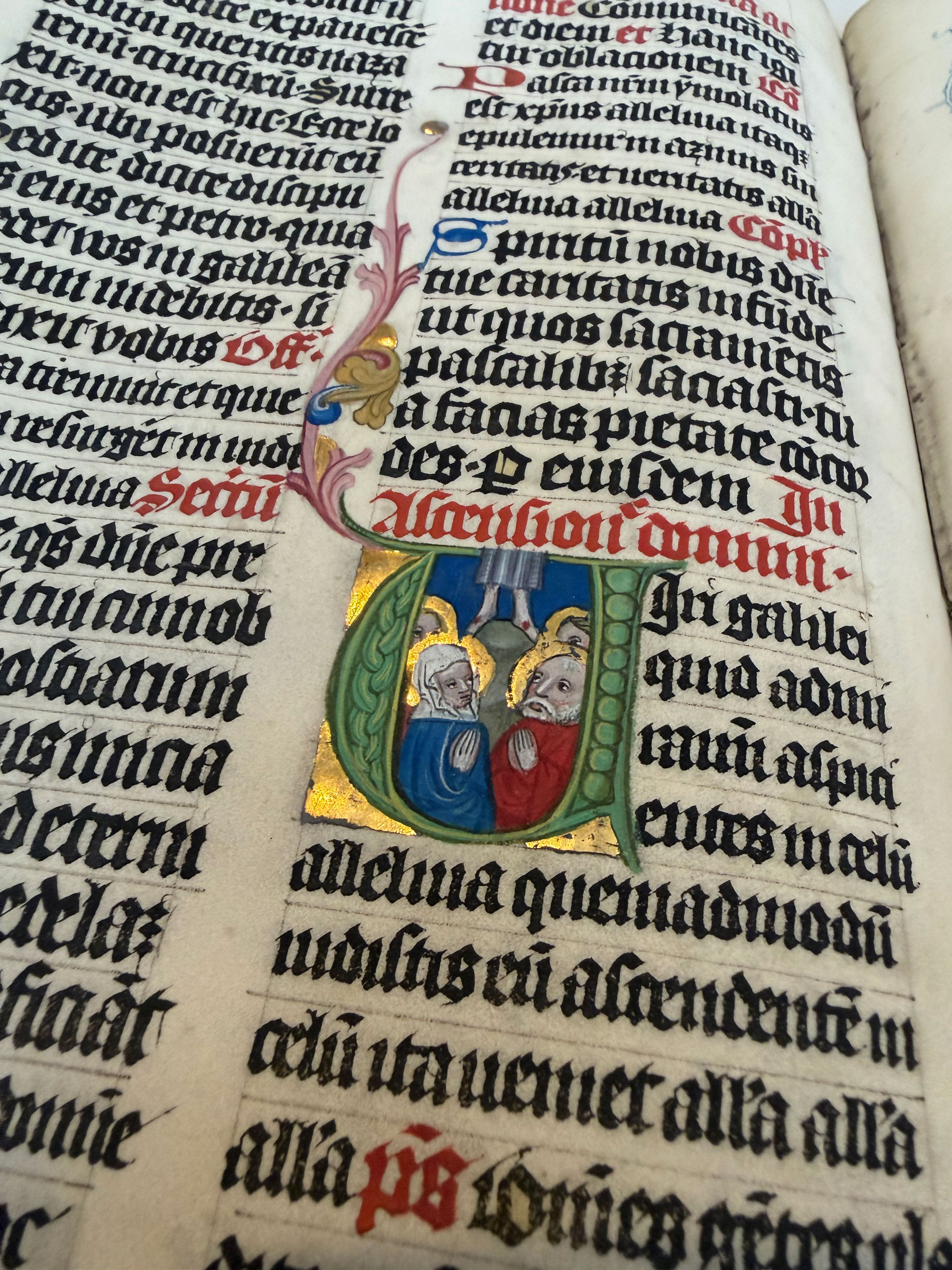
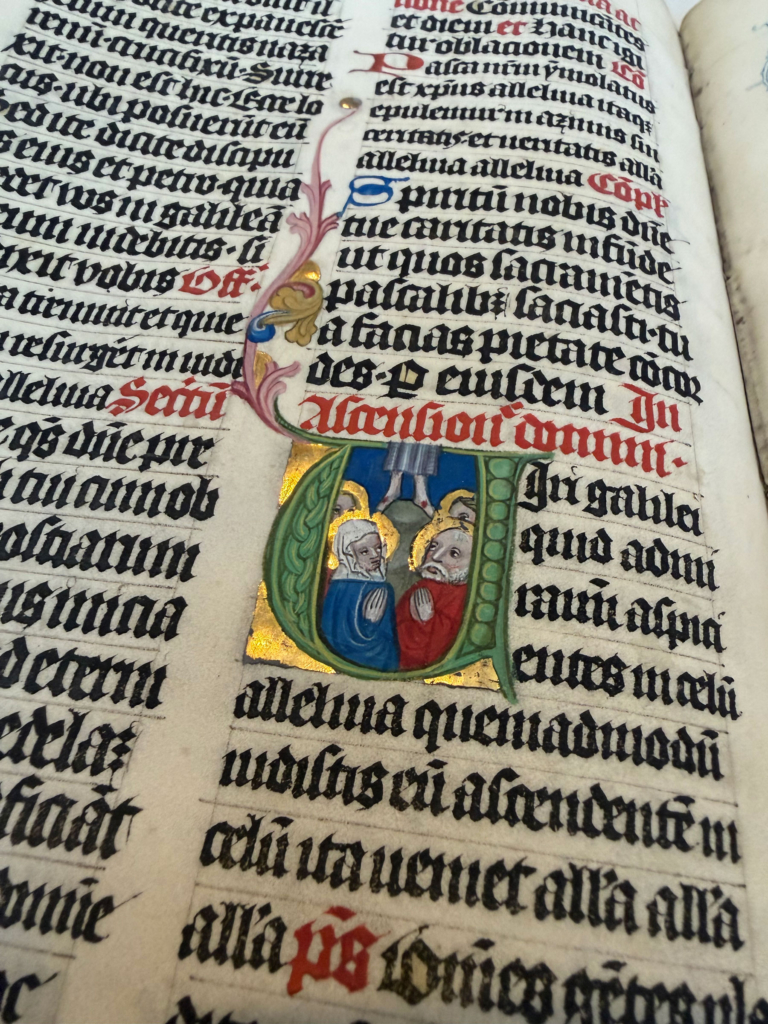
fol xxv verso, Christ’s ascension to heaven before his devotees;
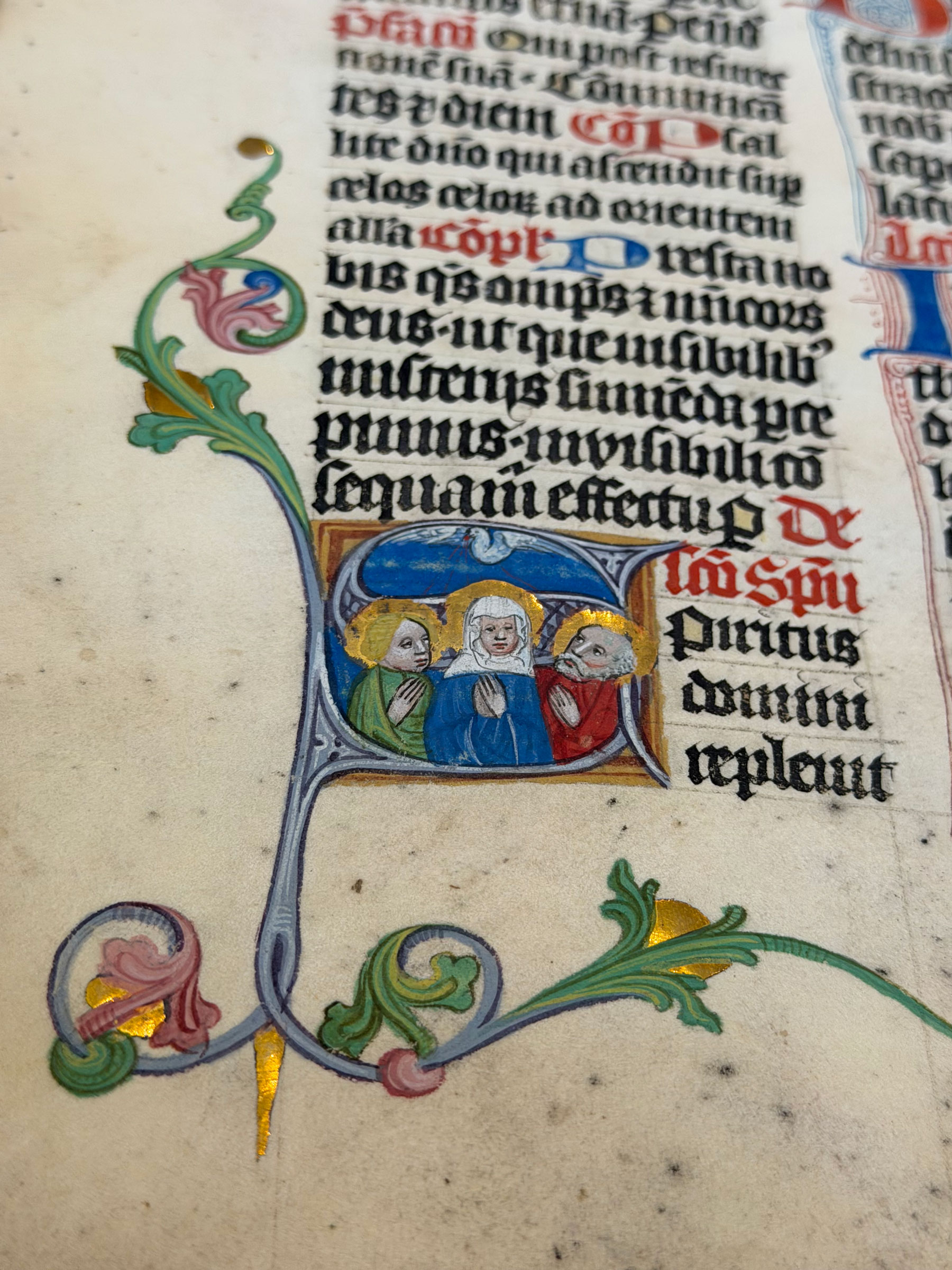
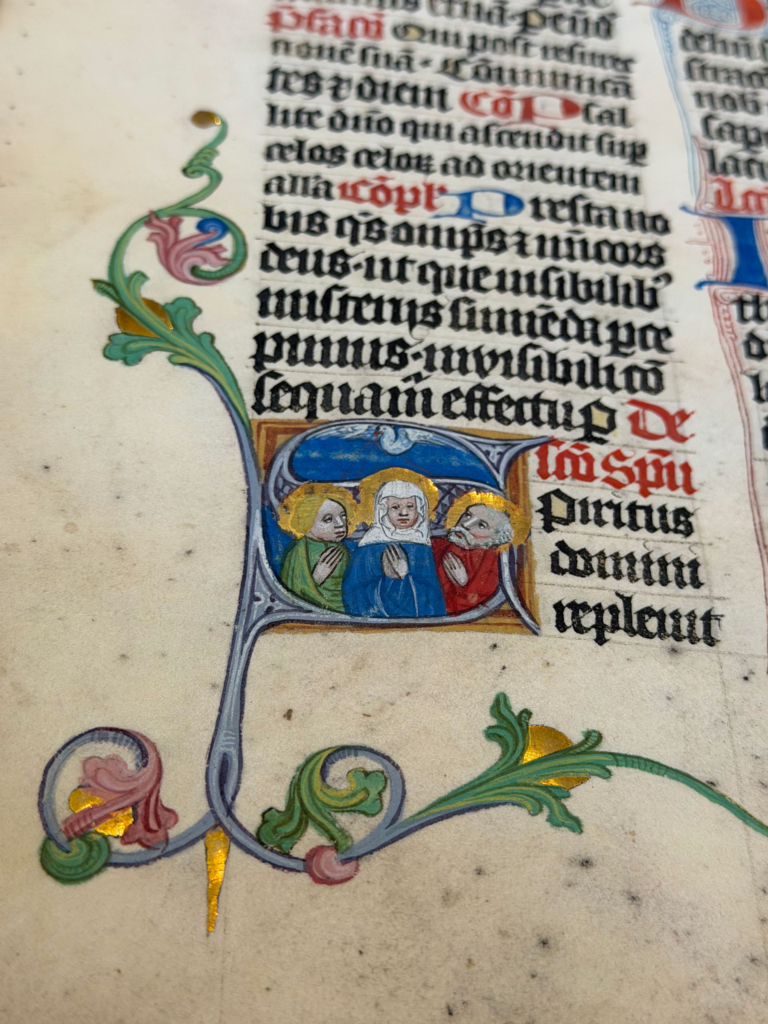
fol. xxvii verso, Pentecost, with the dove appearing high above the Virgin and her followers;
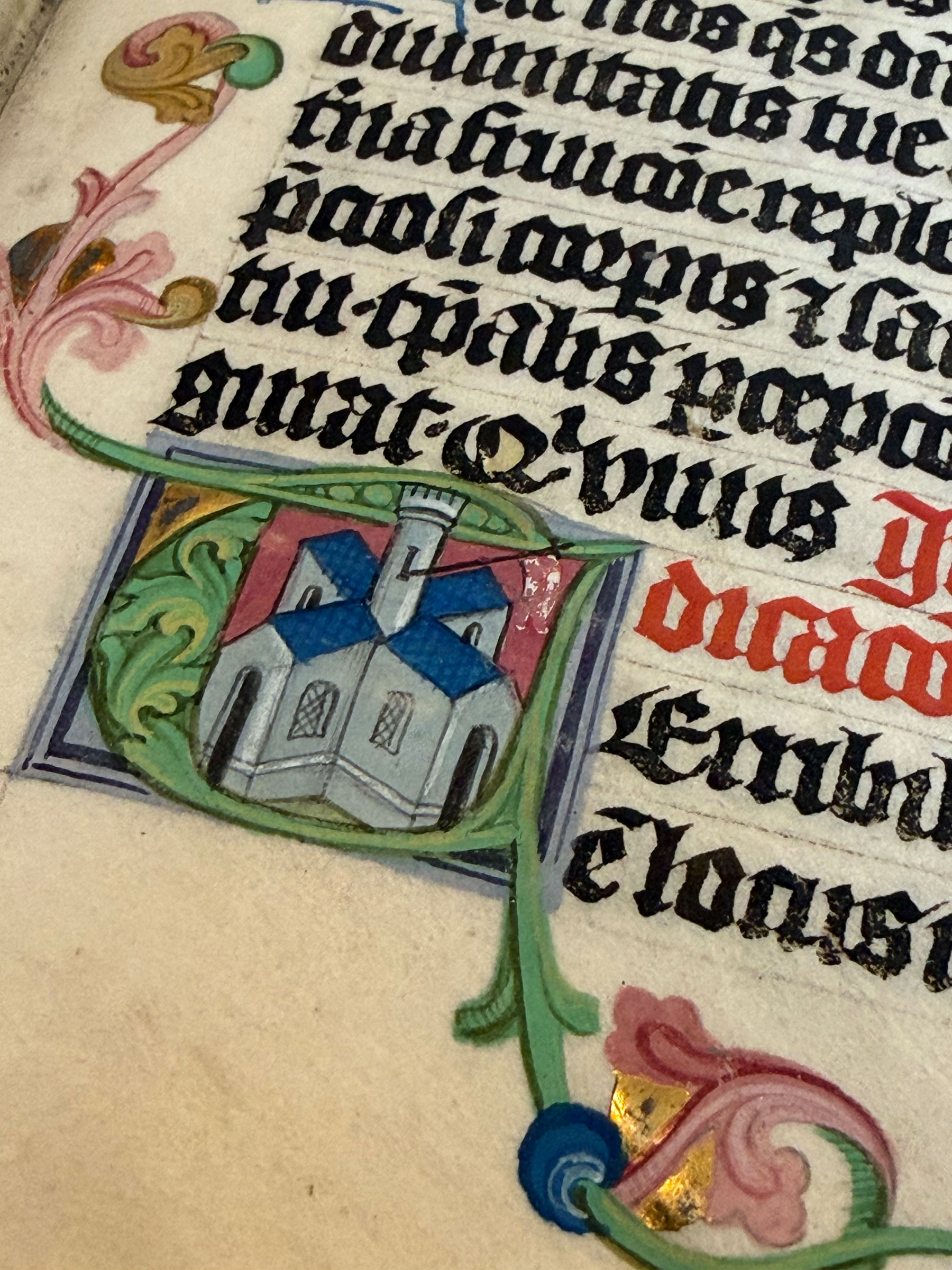
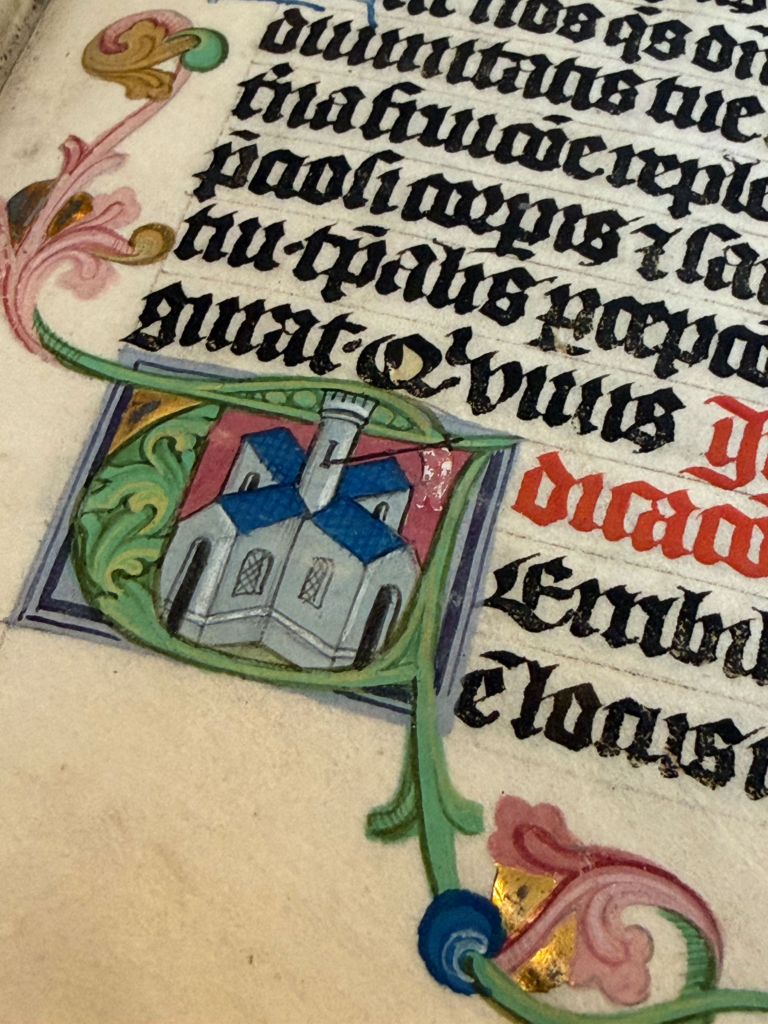
fol. xxxiii recto, a Church (this accompanying the office for the dedication of a just such a building);
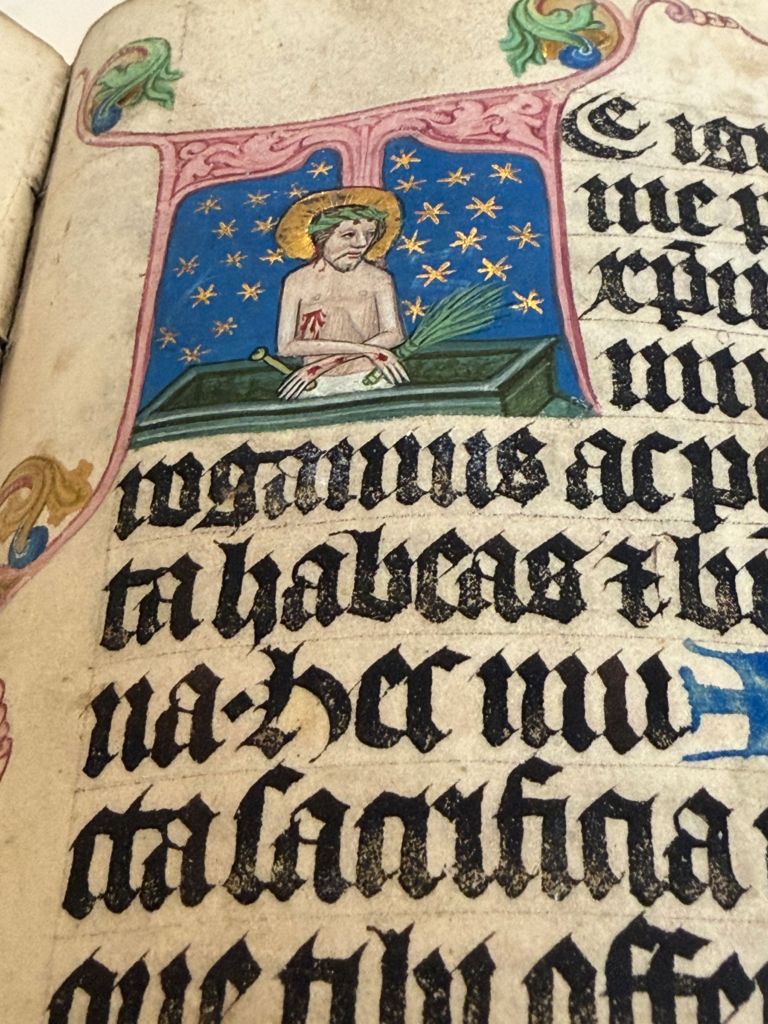
fol. xxxvii recto (first occurrence of this folio number), Christ with his torso naked and arms crossed as if dead, rising from his tomb before a starry sky;
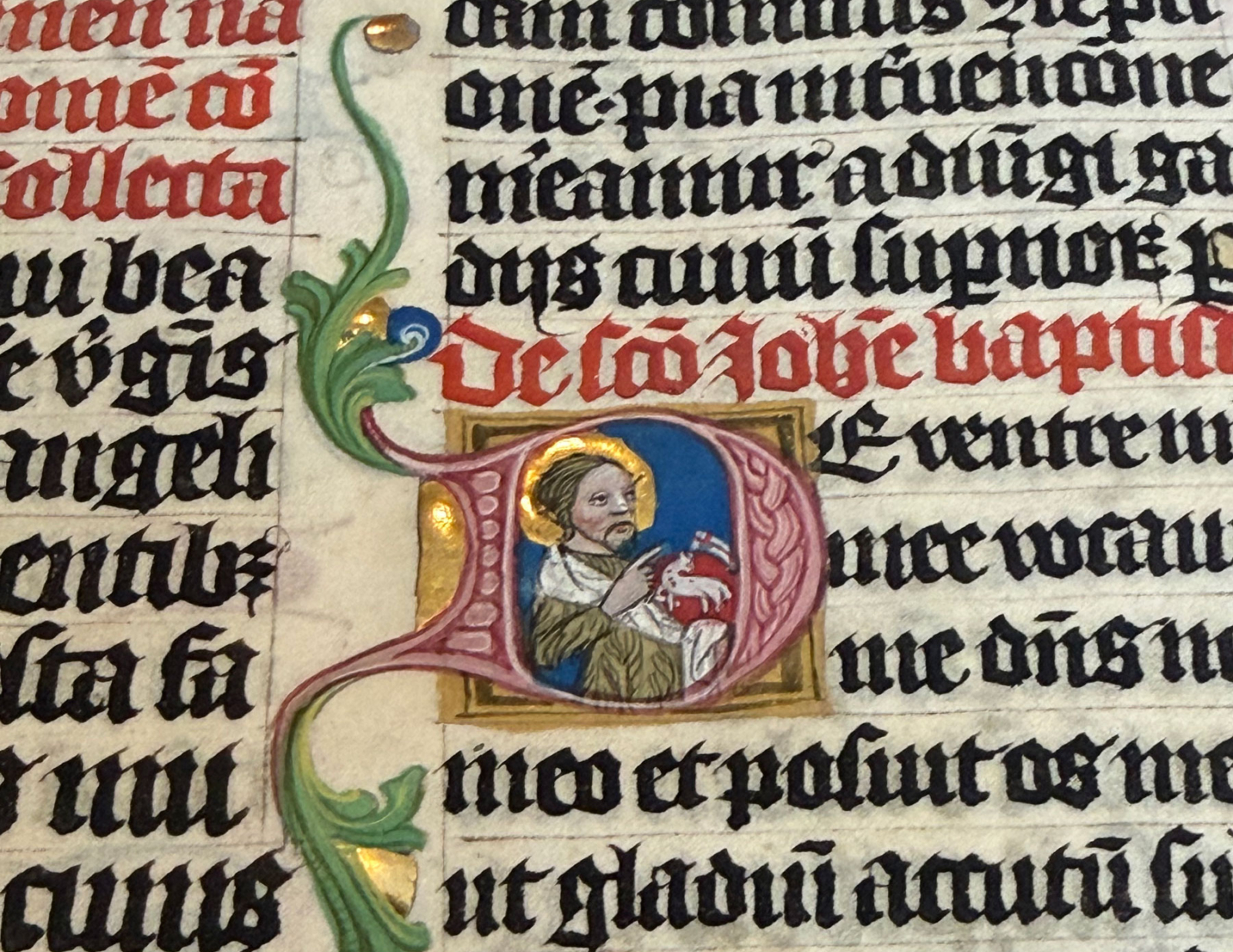
fol. xlix recto, St. John the Baptist in his hair shirt and with an agnes dei;
fol. liv recto, St. Laurence holding his griddle on which he was martyred;
fol. lxviii verso, St. Barbara holding the tower in which her father imprisoned her, while pointing to it with her other hand.
A beautiful and substantial Illuminated Missal, as nice a one as we have carried.

Frame, Display, Preserve
Each frame is custom constructed, using only proper museum archival materials. This includes:The finest frames, tailored to match the document you have chosen. These can period style, antiqued, gilded, wood, etc. Fabric mats, including silk and satin, as well as museum mat board with hand painted bevels. Attachment of the document to the matting to ensure its protection. This "hinging" is done according to archival standards. Protective "glass," or Tru Vue Optium Acrylic glazing, which is shatter resistant, 99% UV protective, and anti-reflective. You benefit from our decades of experience in designing and creating beautiful, compelling, and protective framed historical documents.
Learn more about our Framing Services