






Guglielmo Marconi Works to Solve Directional Telegraphy, Testing His Wireless Invention For the First Time in the Real World

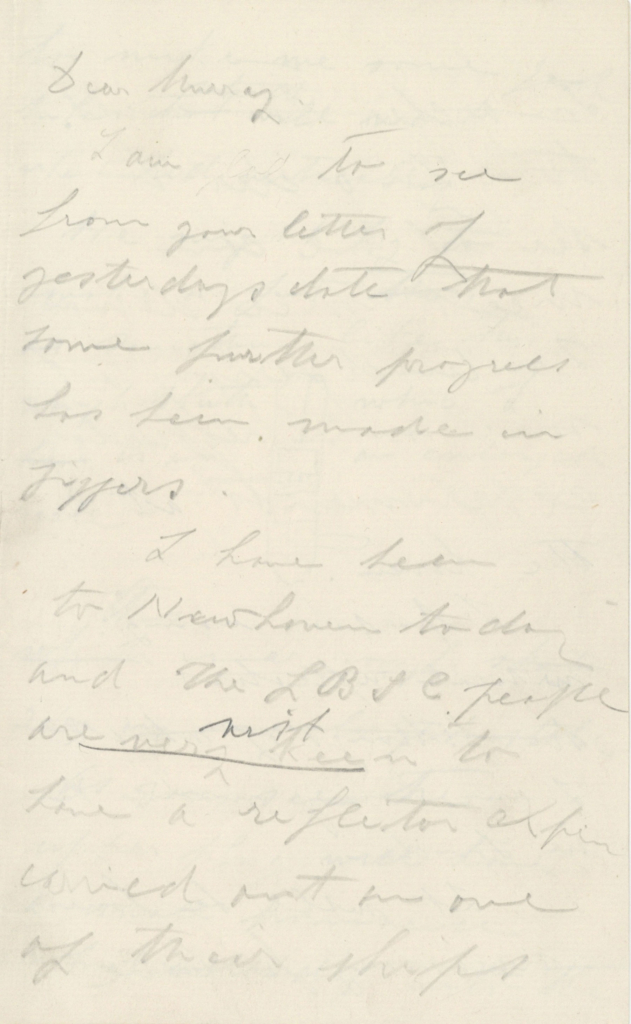
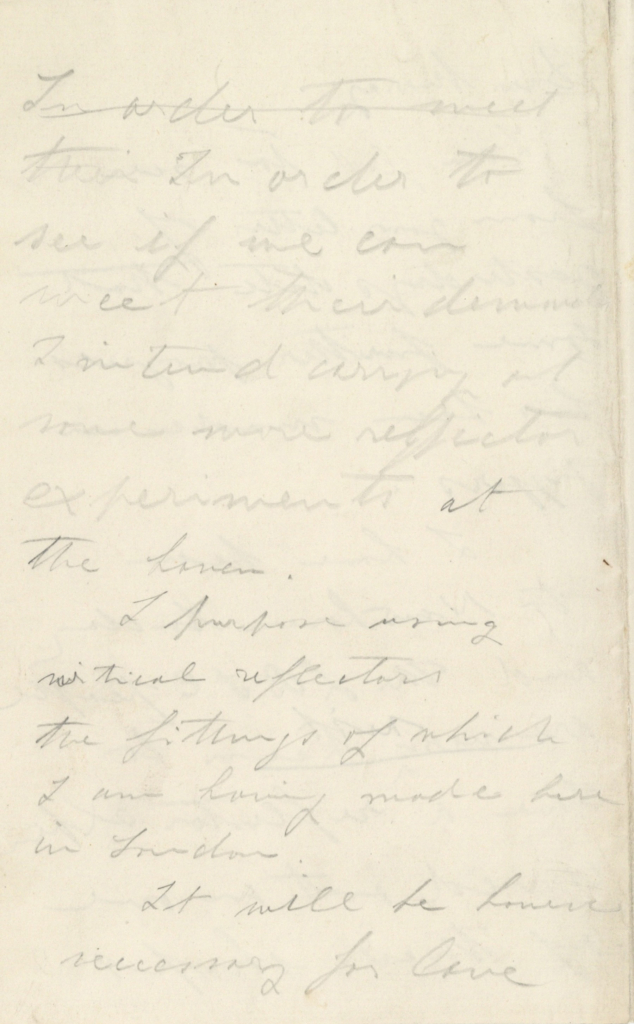
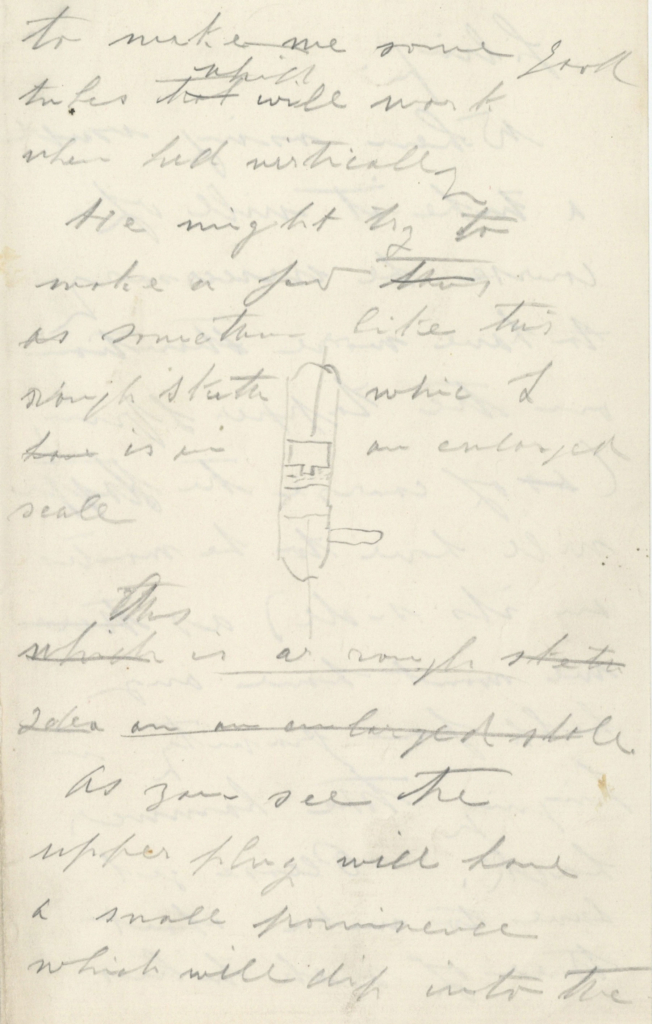
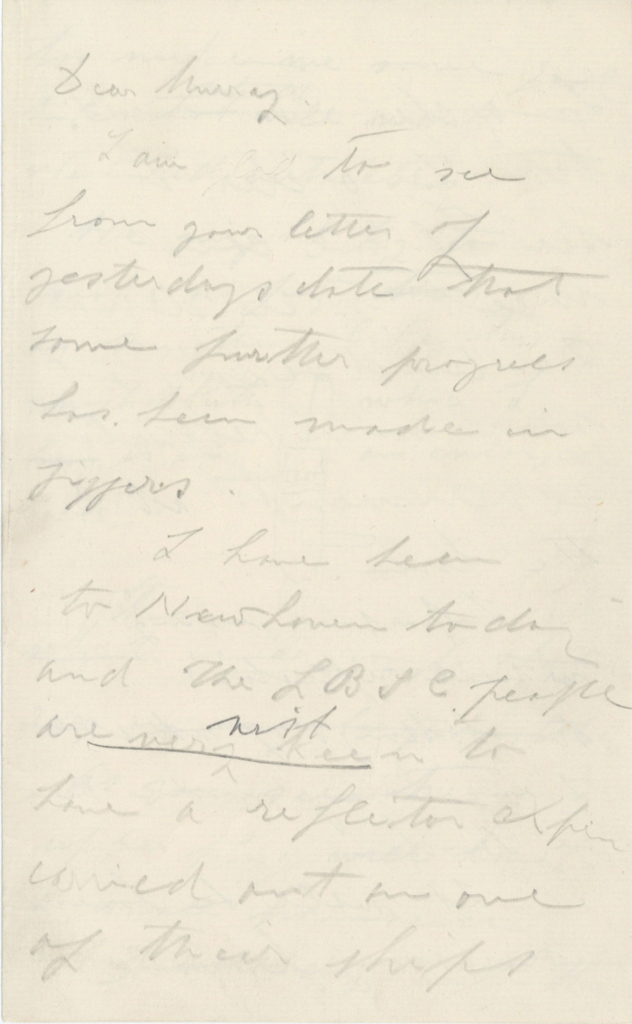

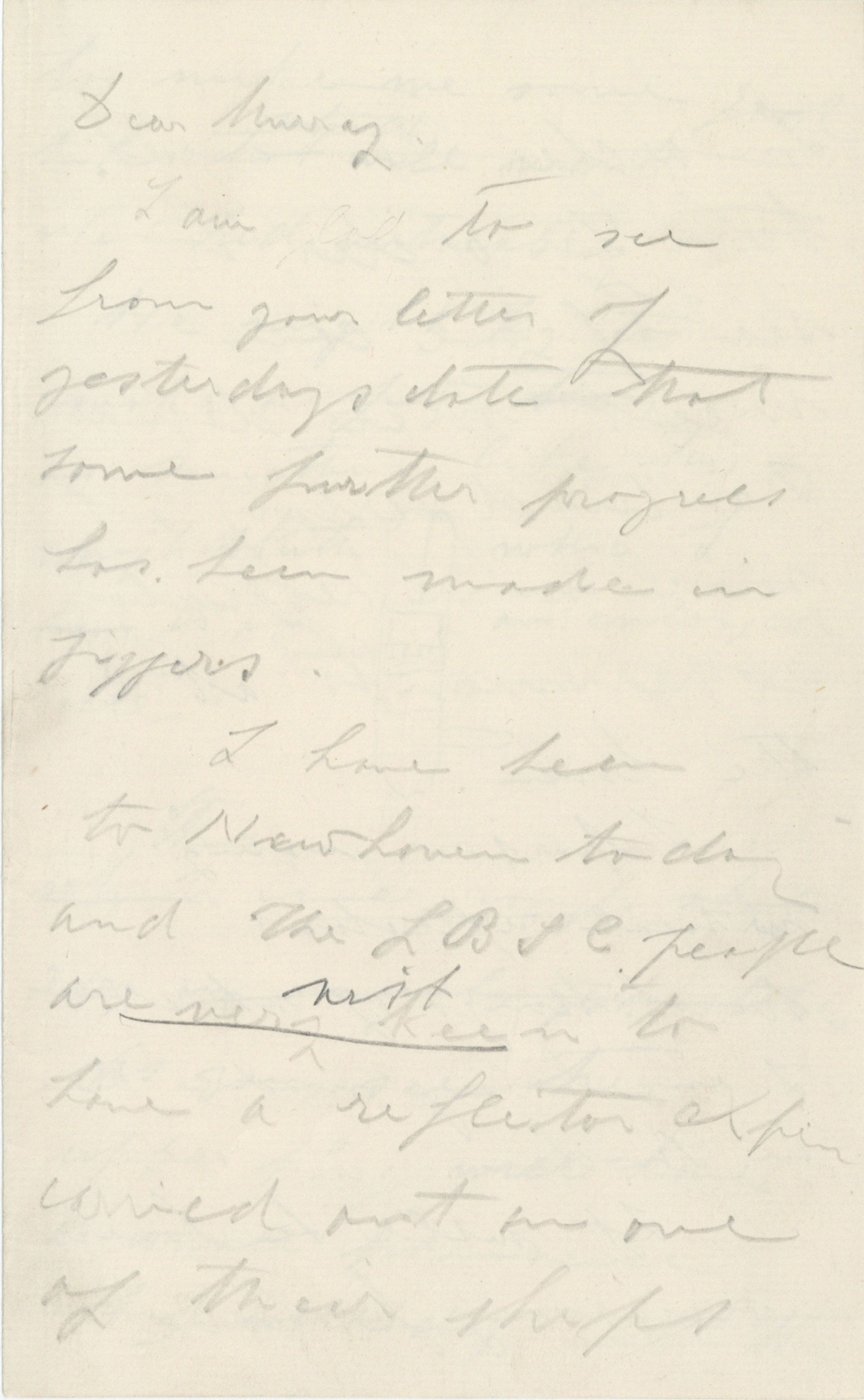
This letter contains a drawing of his telegraphy system in his hand
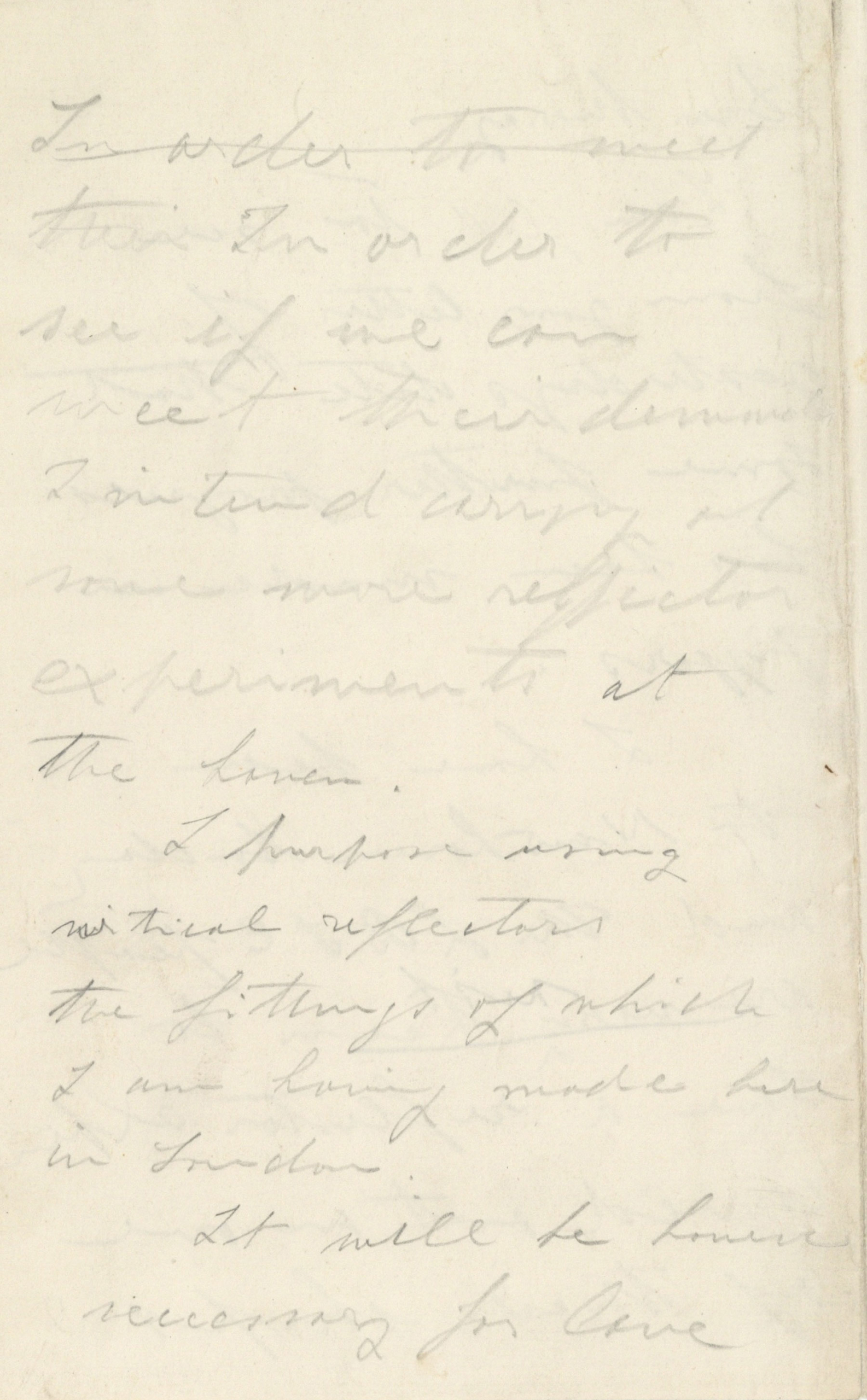
“I propose using vertical reflectors the fittings of which I am having made here in London.”
A remarkable letter both describing and illustrating a crucial invention in the history of global communication
The principles of radio were not well understood before the theoretical work of Scottish physicist James Clerk Maxwell and...


“I propose using vertical reflectors the fittings of which I am having made here in London.”
A remarkable letter both describing and illustrating a crucial invention in the history of global communication
The principles of radio were not well understood before the theoretical work of Scottish physicist James Clerk Maxwell and the experimental work of the German physicist Heinrich Hertz. Maxwell’s electromagnetic theory, developed in the 1860’s, predicted the existence of electromagnetic waves; waves of an electrical nature that travelled through the air or empty space at the speed of light. In the 1880’s Hertz did a series of experiments to generate these waves and measure their properties. He produced sparks between two spherical electrodes with the aid of a high voltage induction coil, and the high frequency currents generated by these sparks flowed into two metal rods that Hertz connected to terminals. These currents in turn generated electromagnetic waves that radiated from the rods. Hertz then succeeded in developing an apparatus to detect the waves that he had generated. We now recognize that his radio wave generator and detector were a primitive form of radio transmitter and receiver. However, at the time, proof of the existence of Hertz’s faint waves did not seem especially significant and the utility of his experiments was unknown.
By the end of 1895 Marconi had transmitted signals a distance of over a mile, and the next year he demonstrated his wireless telegraph apparatus to the Italian government (which showed little interest). Consequently he journeyed to England to try his luck there, forming a company to market his idea. The marine industry saw that radio could provide a way for ships to communicate beyond their lines of sight, and so became a customer. There was little demand for radio communications on land because its benefits were not yet understood; besides, telegraph networks were widespread and telephones were coming commonly into use.
Enter the US military. In late 1899, Guglielmo Marconi was invited (and paid) by the New York Herald newspaper to use his fledgling wireless system to report on the progress of that year’s Americas Cup yacht races, which were to be held off the coast of New Jersey. He accepted, eager for any opportunity to promote his system. The U.S. Navy was very interested in the new technology and made arrangements to observe these operations, and conduct tests of their own. This Marconi successfully did. Still this was short distance work.
But it confirmed for Marconi that radio communication had enormous potential, and moreover, gave him the insight on how to best demonstrate it; using high powered stations, he would send signals across the Atlantic Ocean! The idea that people could communicate wirelessly across the ocean was considered incredible if not impossible, but Marconi managed to convince his board of directors to authorize the experiment. One station was set up at Poldhu in Cornwall, England, and the second was slated for Newfoundland, Canada.
In order to speed up the experiment he decided to take portable receiving equipment to Newfoundland initially rather than construct a permanent station. He and two assistants, Messrs. Kemp and Paget, sailed from Liverpool November 26, 1901 and arrived at St. John’s December 6. The true purpose of their trip to Newfoundland was kept secret; as far as the rest of the world was concerned, they were simply going to make tests for a future ship-shore station. But in mid December 1901, Marconi sent a signal, using fixed stations, across the Atlantic.
Now he turned to another milestone: could he mount his stations to moving targets that could communicate across large expanses regardless of weather. Here he partnered with the LB&SCR (London, Brighton & South Coast Railway) which wasn’t just a railway. Like several British rail companies of the 19th–early 20th centuries, it also operated steamship services. Newhaven – Dieppe was their most famous line, connecting directly with trains from London to Paris (via the Chemin de fer de l’Ouest in France).
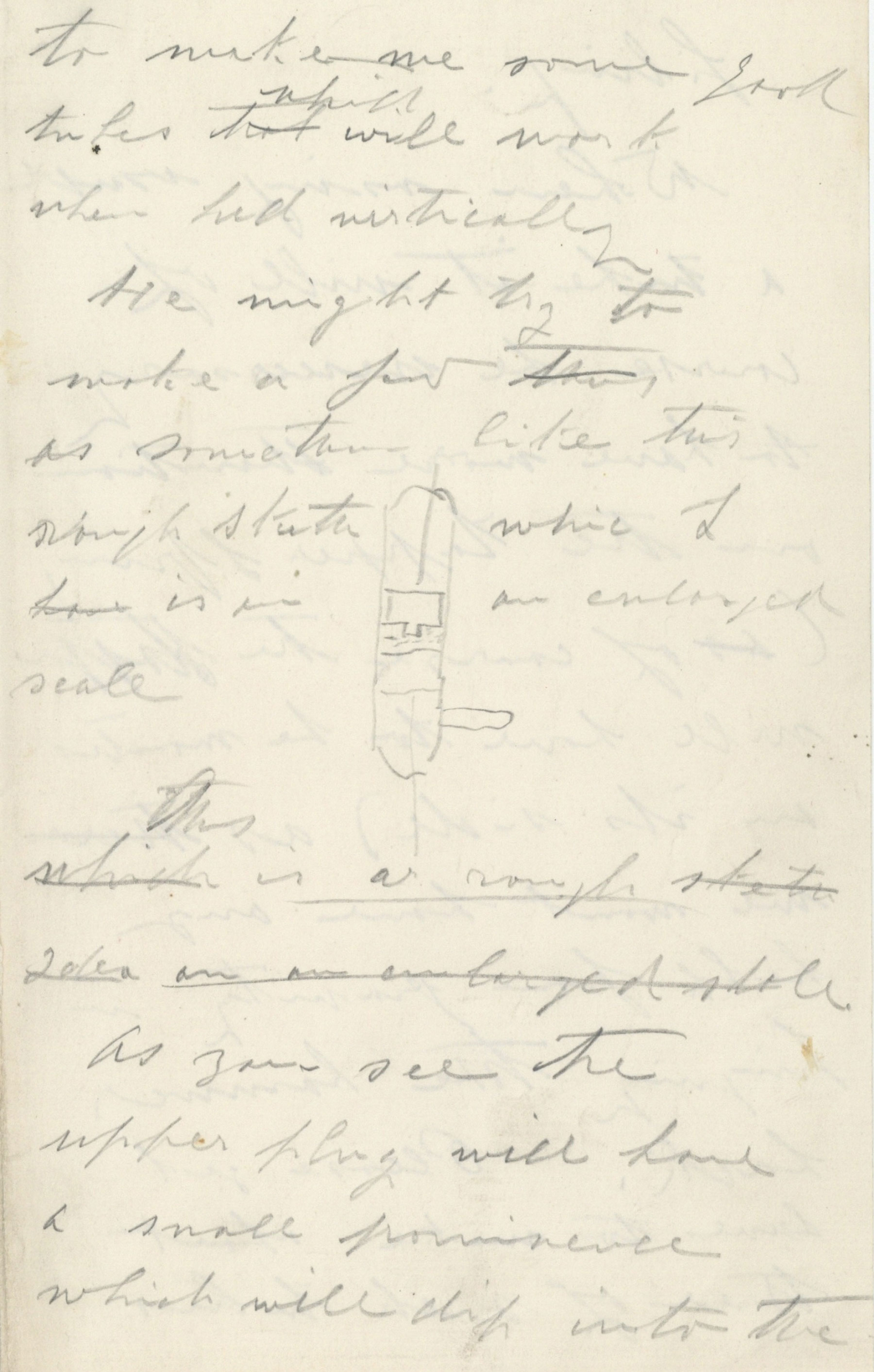
Marconi in transmitting this used reflectors that concentrated signals to transmit over larger distances. But these would be challenged in rough seas, such as those between England and France. He proposed glass tubes. These glass tubes were fragile. To use them on ships or trains, Marconi’s engineers could inside a mount with a larger seal or sleeve — essentially an enlarged sealing joint that cushioned the glass and kept out moisture. At sea (like on the Newhaven–Dieppe ferries), keeping salt air out was essential. These LB&SCR experiments would be a perfect stress-test: ships in rough Channel seas and trains shaking down the London–Brighton line. A standard glass coherer tube or a bare aerial feedthrough wouldn’t survive. By using tubes with enlarged seals, Marconi would aim to solve a few problems: Mechanical stability (protect fragile tubes from vibration); Moisture protection (salt spray, rain); Electrical insulation (prevent sparking at the pass-through).
Why was this important? This was the first real-world attempt to use directional wireless not only for records and stunts, but for everyday safety and scheduling. Marconi’s reflector work with the LB&SCR is significant because it was the first time directional wireless was applied in real transport systems — ships and trains — to solve problems of reliability, interference, and integration. It turned reflectors from a “long-distance stunt” into a practical engineering tool for daily operations.
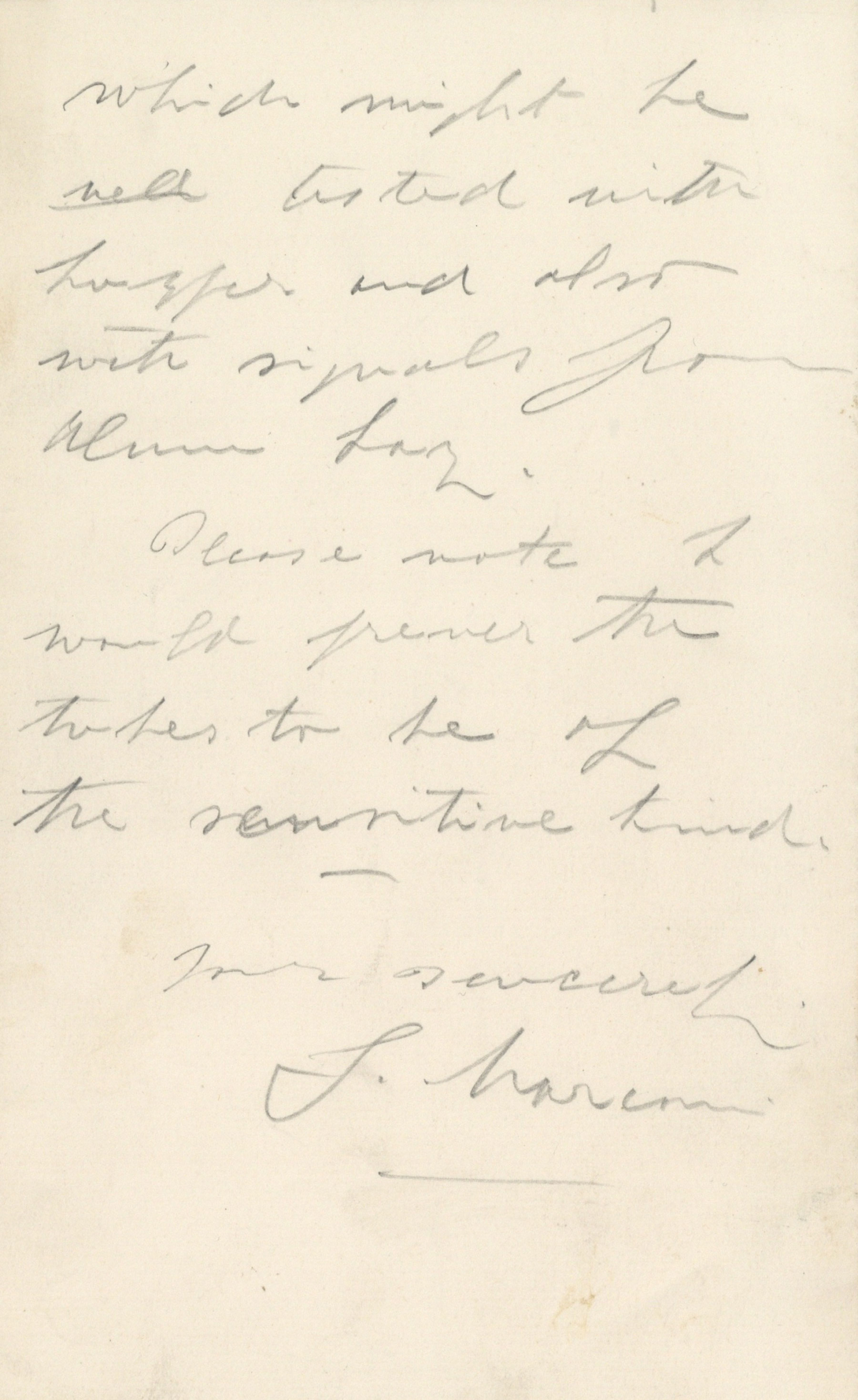
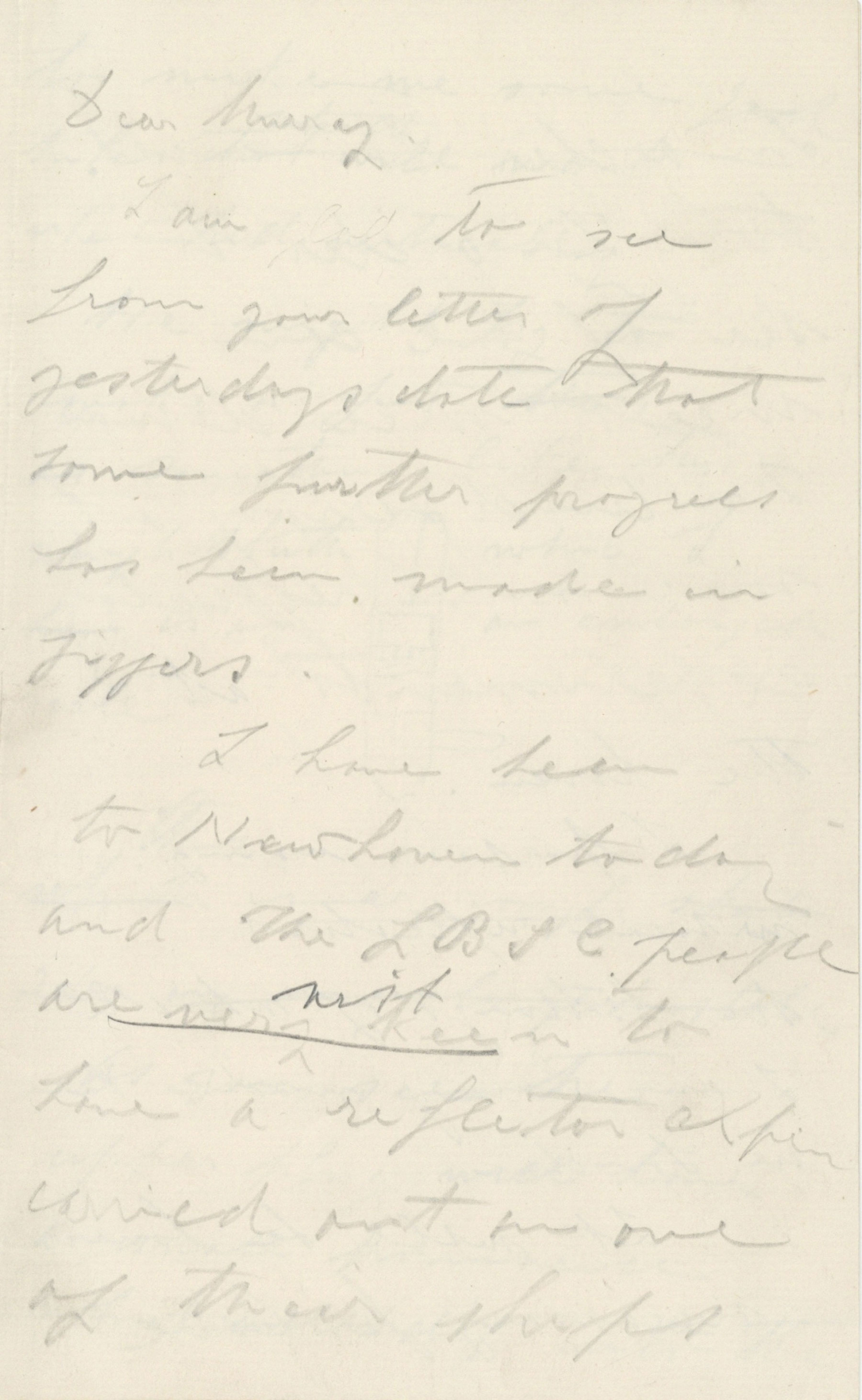
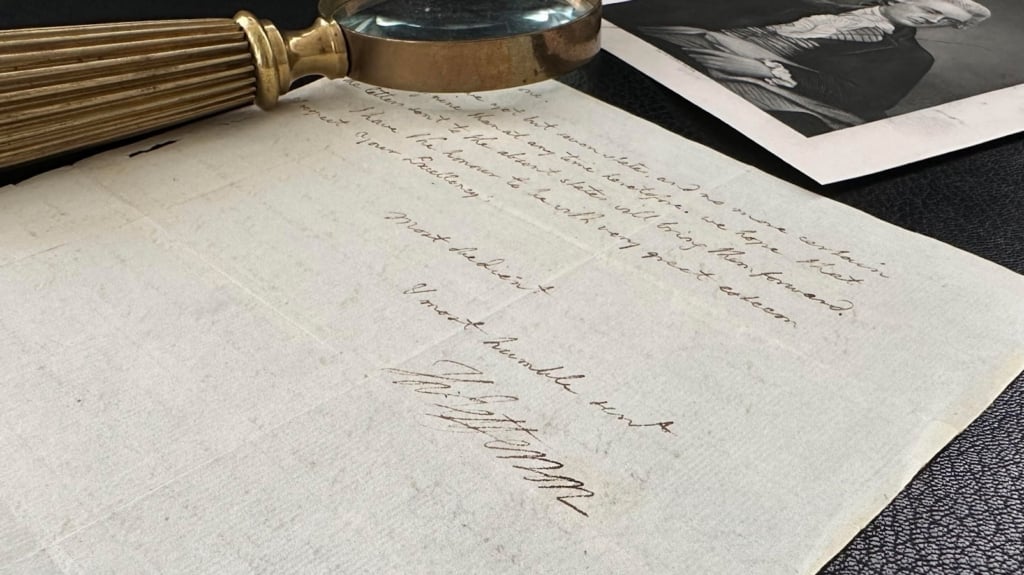
Letter signed, likely a draft, no date, but 1903 likely, to Willoughby Smith Murray, engineer with the British Post Office / Telegraph Department, concerning vertical reflector experiments and proposing the use of these very tubes. The tapper spring mentioned was the reset mechanism for the coherer tube: a spring-loaded hammer that automatically tapped the detector after each received signal, keeping it ready for the next Morse pulse. It was absolutely essential to make Marconi’s wireless practical. It was crucial given the jostling to take place on the ferries.
“I am glad to see from your letter of yesterday date that some further progress has been made…
“I have been to New Haven today and the LBSC people are very keen to have a reflector experiment carried out on one of their ships. In order to see if we can meet their demands I intend to carry out some more reflector experiments at the Haven.
“I propose using vertical reflectors the fittings of which I am having made here in London. It will be necessary for Cave (Cecil, an engineer and inventor who worked with Marconi’s company in the early 1900s) to make some good tubes which will work when lined vertically.
“He might try to make a few something like this rough sketch which is in an enlarged seal. As you can see the upper plug will have a small prominence which will dip into the filiment. When using such a tube it will of course be necessary to have more tension on the tapper spring…as we won’t have any help from gravity in springing the hammer back….
“Which might be tested with the tapper and also with signals from Alum Bay. Please note I would prefer the tubes to be of the sensitive kind.”

Frame, Display, Preserve
Each frame is custom constructed, using only proper museum archival materials. This includes:The finest frames, tailored to match the document you have chosen. These can period style, antiqued, gilded, wood, etc. Fabric mats, including silk and satin, as well as museum mat board with hand painted bevels. Attachment of the document to the matting to ensure its protection. This "hinging" is done according to archival standards. Protective "glass," or Tru Vue Optium Acrylic glazing, which is shatter resistant, 99% UV protective, and anti-reflective. You benefit from our decades of experience in designing and creating beautiful, compelling, and protective framed historical documents.
Learn more about our Framing Services