






Charles Dickens is Ready to Complete ‘Martin Chuzzlewit’, a Novel He Wrote at the Same Time as ’The Christmas Carol’


He writes of "having to finish Chuzzlewit; which I shall be very glad to dispose of, notwithstanding"
Showing his charitable side, Dickens thanks patron of the arts and poet John Kenyon for his “liberal donation” to the Sanatorium, a health care charity Dickens actively supported
He praises the Sanatorium and its report, which “will show you what an excellent Institution it is, and how well it merits your...
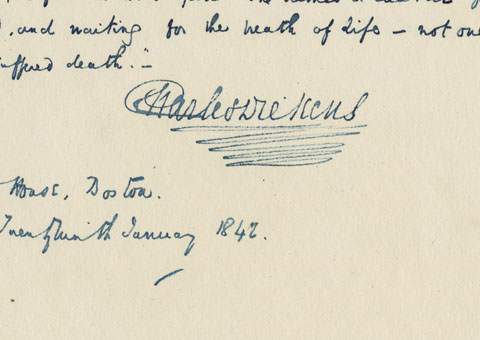

Showing his charitable side, Dickens thanks patron of the arts and poet John Kenyon for his “liberal donation” to the Sanatorium, a health care charity Dickens actively supported
He praises the Sanatorium and its report, which “will show you what an excellent Institution it is, and how well it merits your voluntary support.”
“The Life and Adventures of Martin Chuzzlewit” is a novel by Charles Dickens that was originally serialized between January 1843 and July 1844. While he was writing it Dickens told a friend that he thought it was his best work thus far. That’s saying quite a lot, as he was also working at that same time on his famous story “A Christmas Carol.” The main theme of the Chuzzlewit novel, according to Dickens’s preface, is selfishness, portrayed in a satirical fashion using the members of the Chuzzlewit family, a number of whom want the elderly and infirm Martin Chuzzlewit’s money.
The London Sanatorium was an innovation for the time – a Victorian health care facility housed in Devonshire Place House, York Gate, Regent’s Park, directly across the street from Dickens’ home. The middle classes – students, young professionals, the daughters of ‘reduced gentlemen’ – were to be its main beneficiaries. Dickens gave a speech at the Sanatorium Anniversary Festival on June 4, 1844, saying in part: “Let it never be forgotten that the Sanatorium is not a charity … It is a self-supporting Institution where, in consideration of an annual subscription of one guinea in time of health, and the most moderate and economical weekly charge possible in time of sickness, any of that large and most respectable class of persons who are seeking a subsistence in the Metropolis can, being stricken ill, repair, as to a home Private cheerful and wholesome rooms; the first medical advice; the most delicate and unremitting attention; the best provision that can possibly be made for tranquility, rest and mental ease.” So the Sanatorium was on his mind the next day, when he wrote to a contributor to the Sanatorium.
That contributor was John Kenyon, philanthropist, patron of the arts and poet. Kenyon was a seasoned traveller and a lion of London society who made his home a mecca for the intelligentsia. His favorite role of host fostered his aptitude for arranging fruitful introductions, which in turn contributed to his popularity and extended his influence. Kenyon’s reputation as a wealthy dilettante with a genial disposition and generous purse was universally acknowledged.
Mentioned in this letter is Thomas Milner Gibson, a British politician and member of Parliament. From 1846 to 1848 he was vice-president of the Board of Trade, later serving as President of the Board of Trade. Gibson was a leading spirit in the movement for the repeal of taxes on newspapers, and his efforts on behalf of journalism were recognized by a public testimonial in 1862.
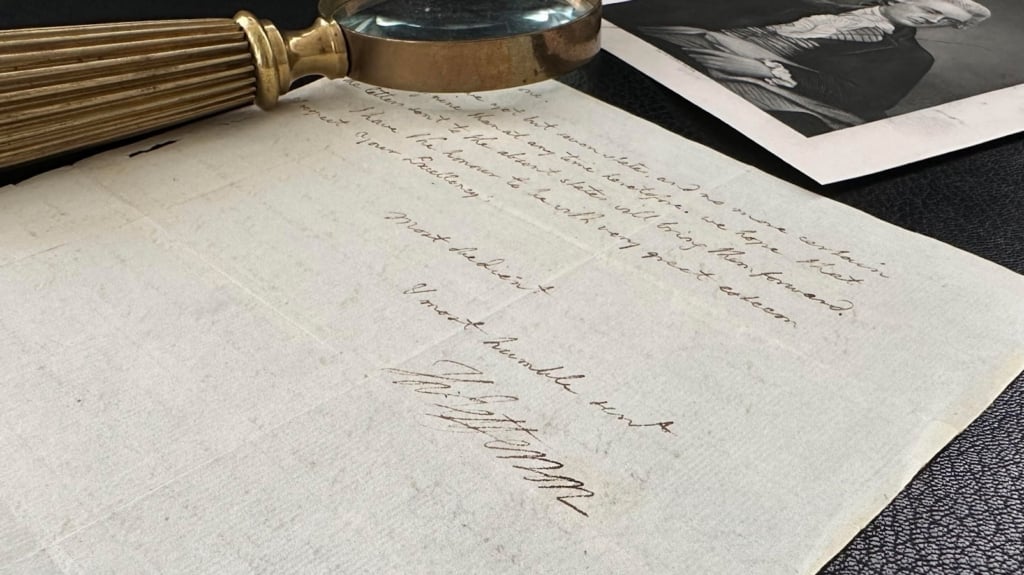
Autograph letter signed, three pages, London, June 5, 1844, to John Kenyon, writing of ‘Martin Chuzzlewit’ and of the Sanatorium he aided so forcefully. “I am rather late this morning or I would have answered your friendly note earlier. First, let me thank you for your kind and liberal donation to the Sanatorium. When they send you, as they will, a little report, do give it a perusal one morning at breakfast. It will show you what an excellent Institution it is, and how well it merits your voluntary support.
“Tonight we dine with the Milner Gibsons, and I verily believe that we have at least one engagement for every day between this and the first of July, when we leave England. In this list I don’t include the slight engagement of having to finish Chuzzlewit; which I shall be very glad to dispose of, notwithstanding. We shall come and shake hands with you before we go. And we shall meet you one night, I hope, at Mrs. Mcready’s. Let us take a vow to be better neighbors in times to come. As the boys say, ‘I will if you will’. Mrs. Dickens sends her best regards.”
A significant letter in which Dickens refers to his novel “The Life and Adventures of Martin Chuzzlewit,” and his support for the Sanatorium.

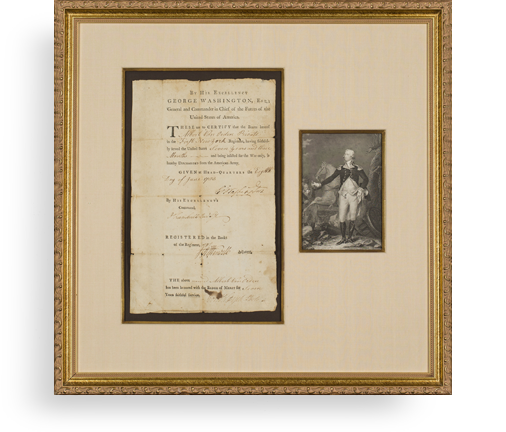
Frame, Display, Preserve
Each frame is custom constructed, using only proper museum archival materials. This includes:The finest frames, tailored to match the document you have chosen. These can period style, antiqued, gilded, wood, etc. Fabric mats, including silk and satin, as well as museum mat board with hand painted bevels. Attachment of the document to the matting to ensure its protection. This "hinging" is done according to archival standards. Protective "glass," or Tru Vue Optium Acrylic glazing, which is shatter resistant, 99% UV protective, and anti-reflective. You benefit from our decades of experience in designing and creating beautiful, compelling, and protective framed historical documents.
Learn more about our Framing Services


