





Charles Darwin Uses the Language of Religion to Describe the Increasing Number of Scientists Adopting His Theory of Evolution: Converts
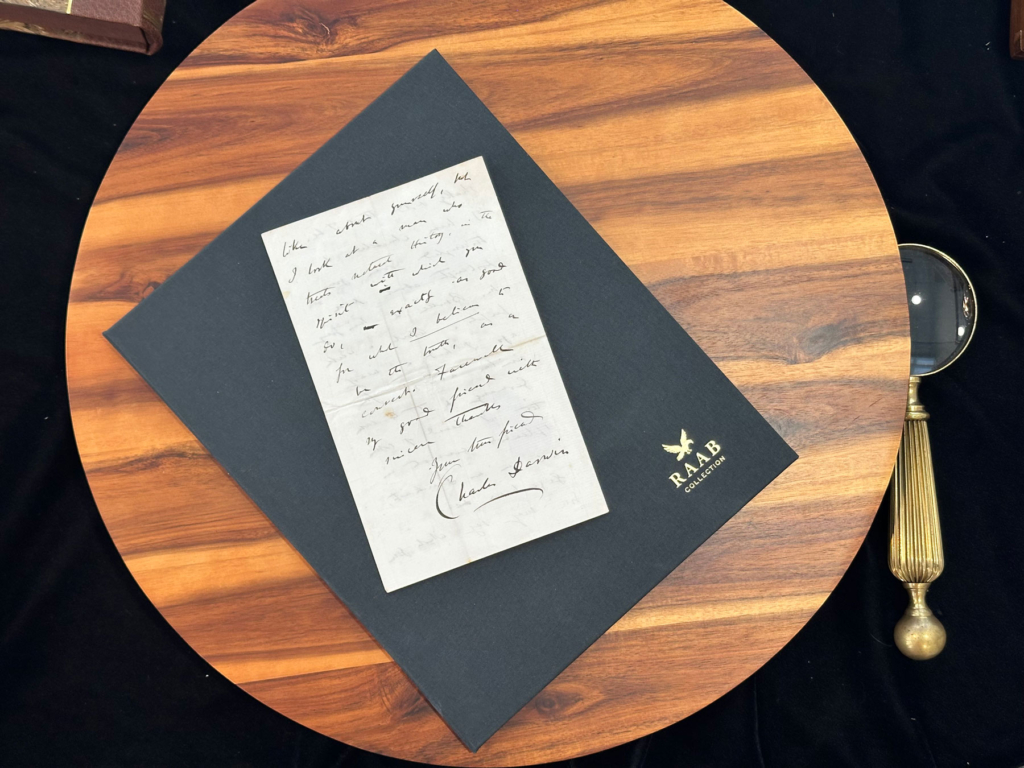
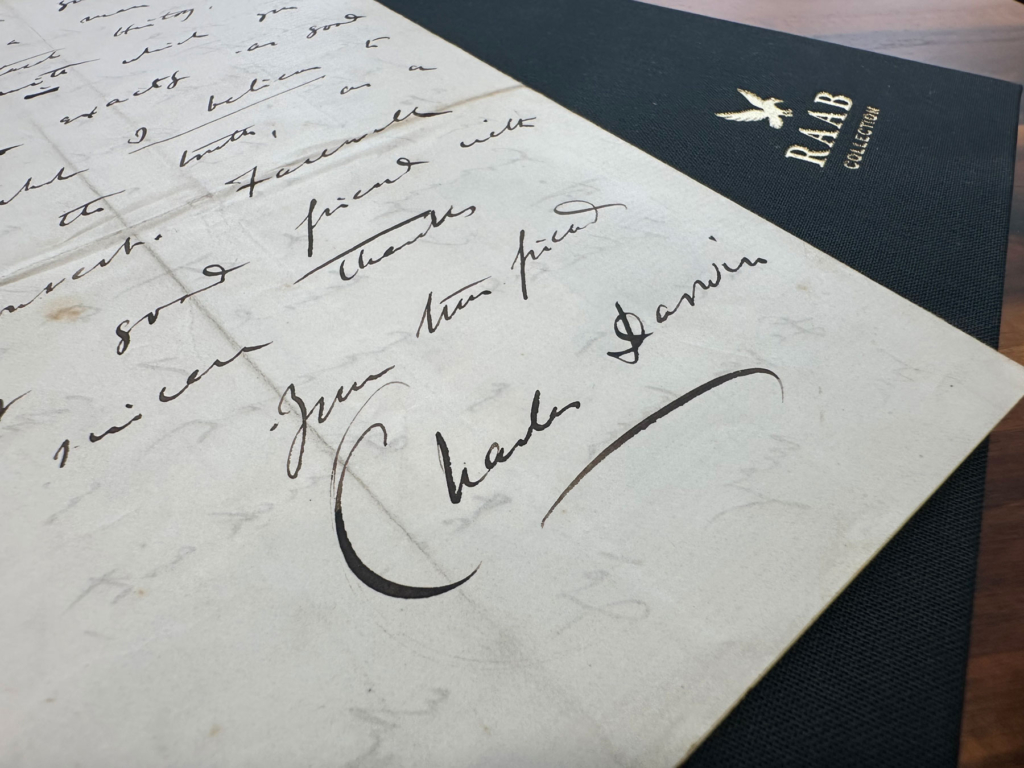
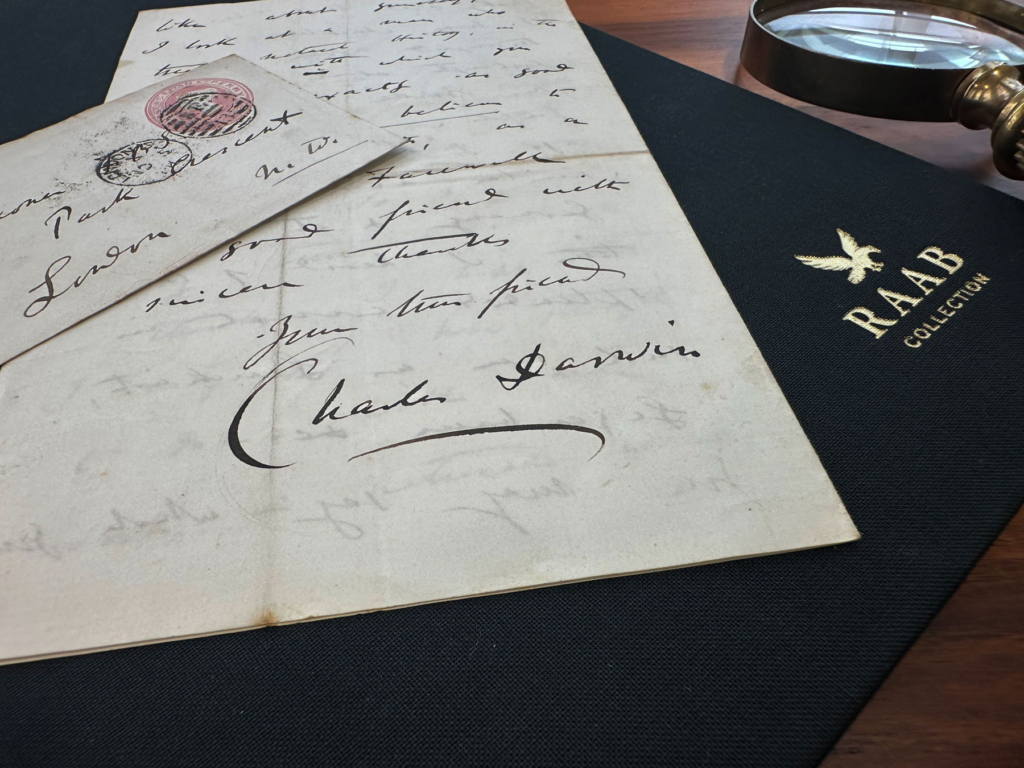




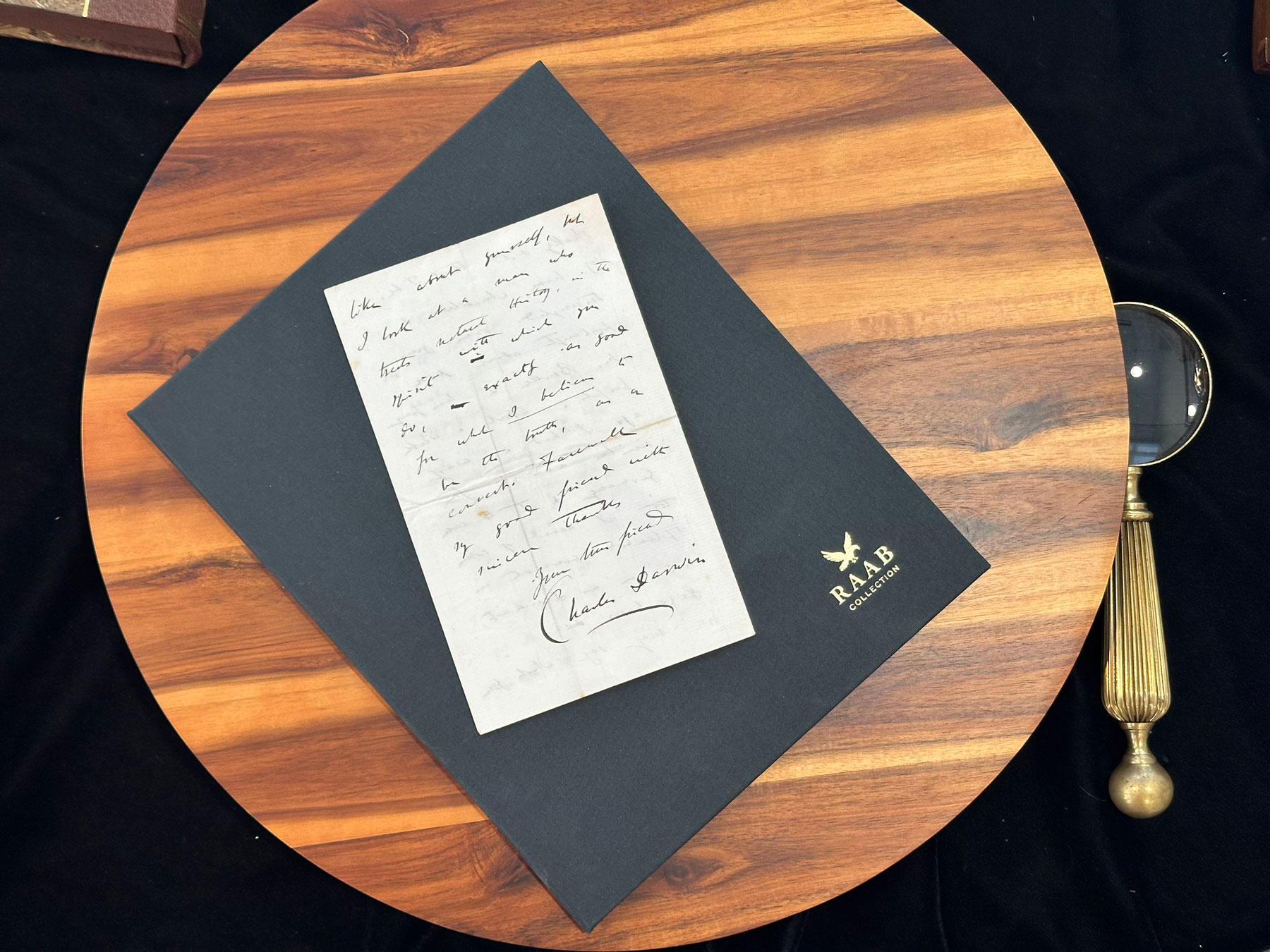
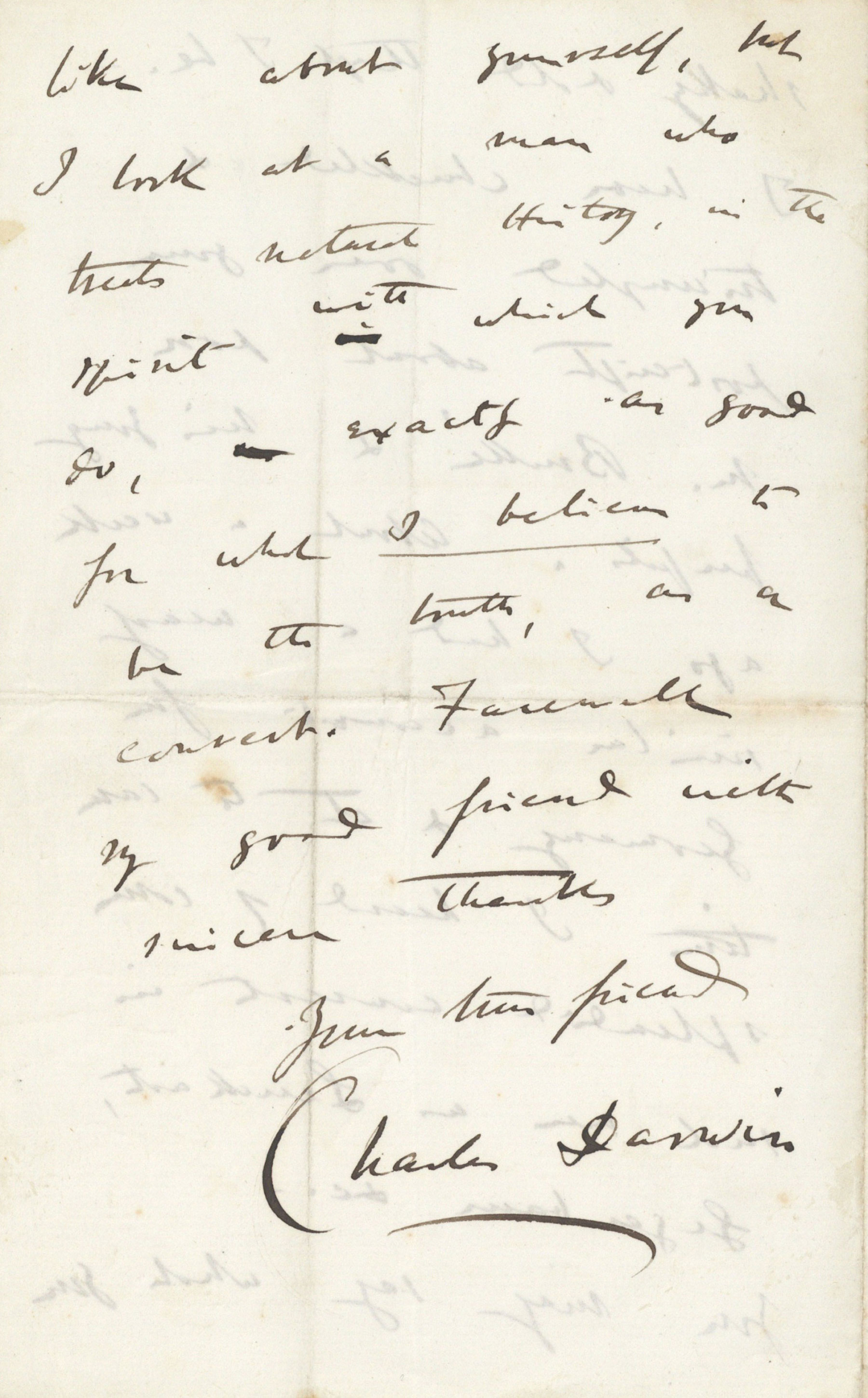
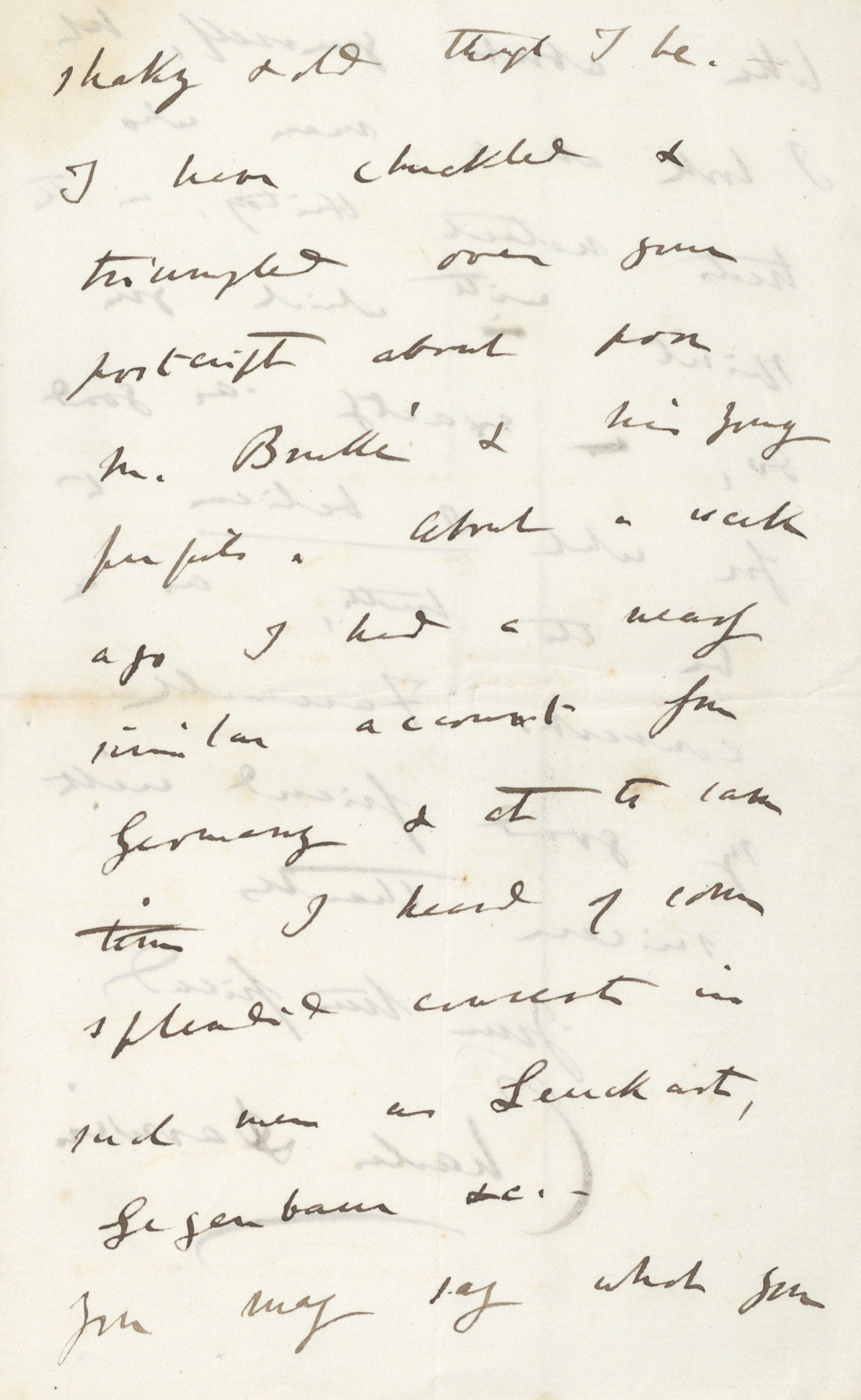
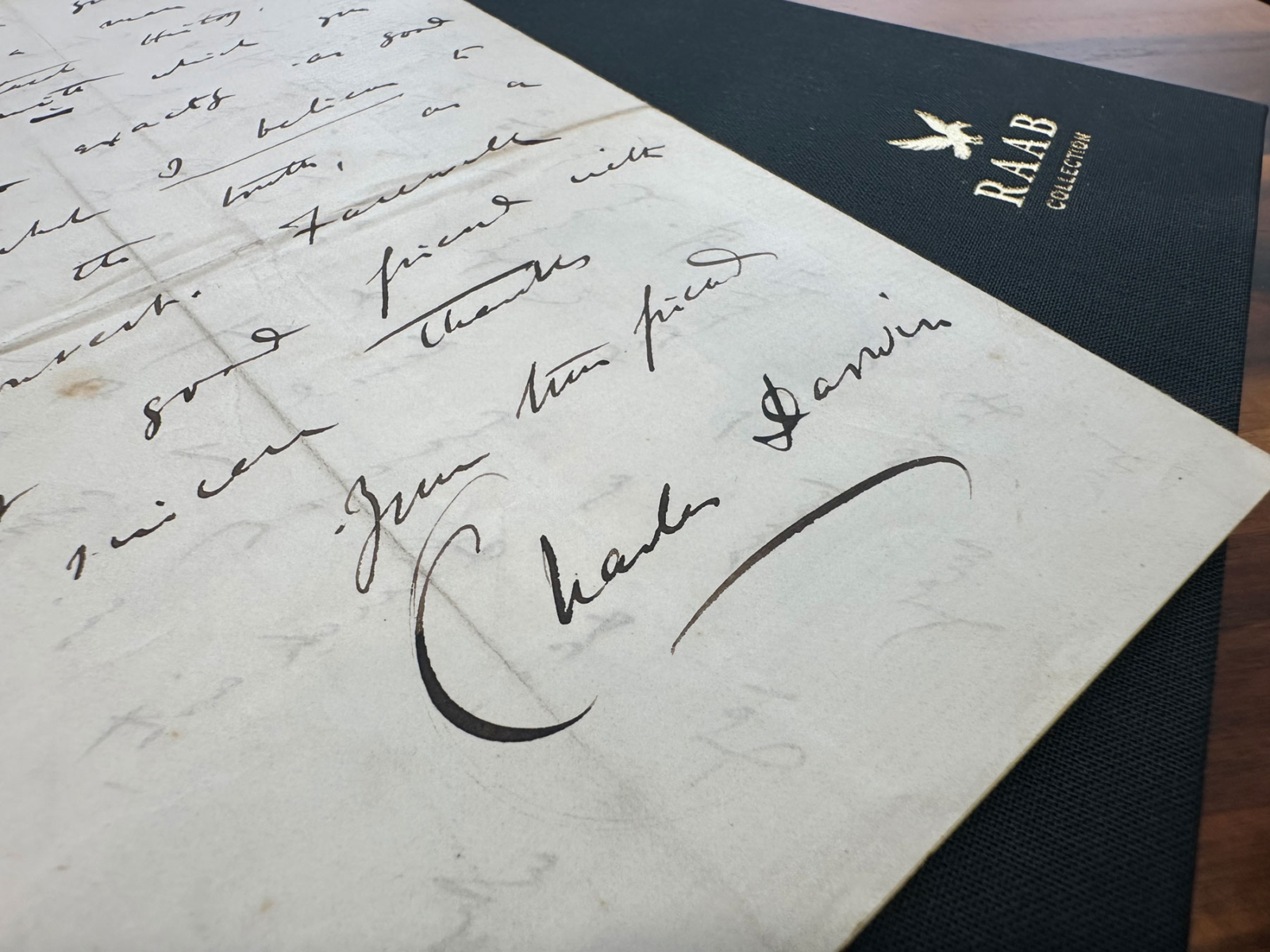
"I look at a man who treats Natural History in the spirit with which you do, exactly as good for what I believe to be the truth, as a convert."
- Currency:
- USD
- GBP
- JPY
- EUR
- CNY
 This currency selector is for viewing only.
The Raab Collection only accepts USD payments at checkout.
Exchange rates are updated hourly. Rates may be inaccurate.
Darwin’s work had profound implications for the relationship between science and religion and here he opposed anyone who would seek to profess religious over scientific faith
Scientists, Darwin felt, should work in the spirit of seeking “truth,” with no preconceived notions
The adoption of the Theory of Evolution by scientists...


Darwin’s work had profound implications for the relationship between science and religion and here he opposed anyone who would seek to profess religious over scientific faith
Scientists, Darwin felt, should work in the spirit of seeking “truth,” with no preconceived notions
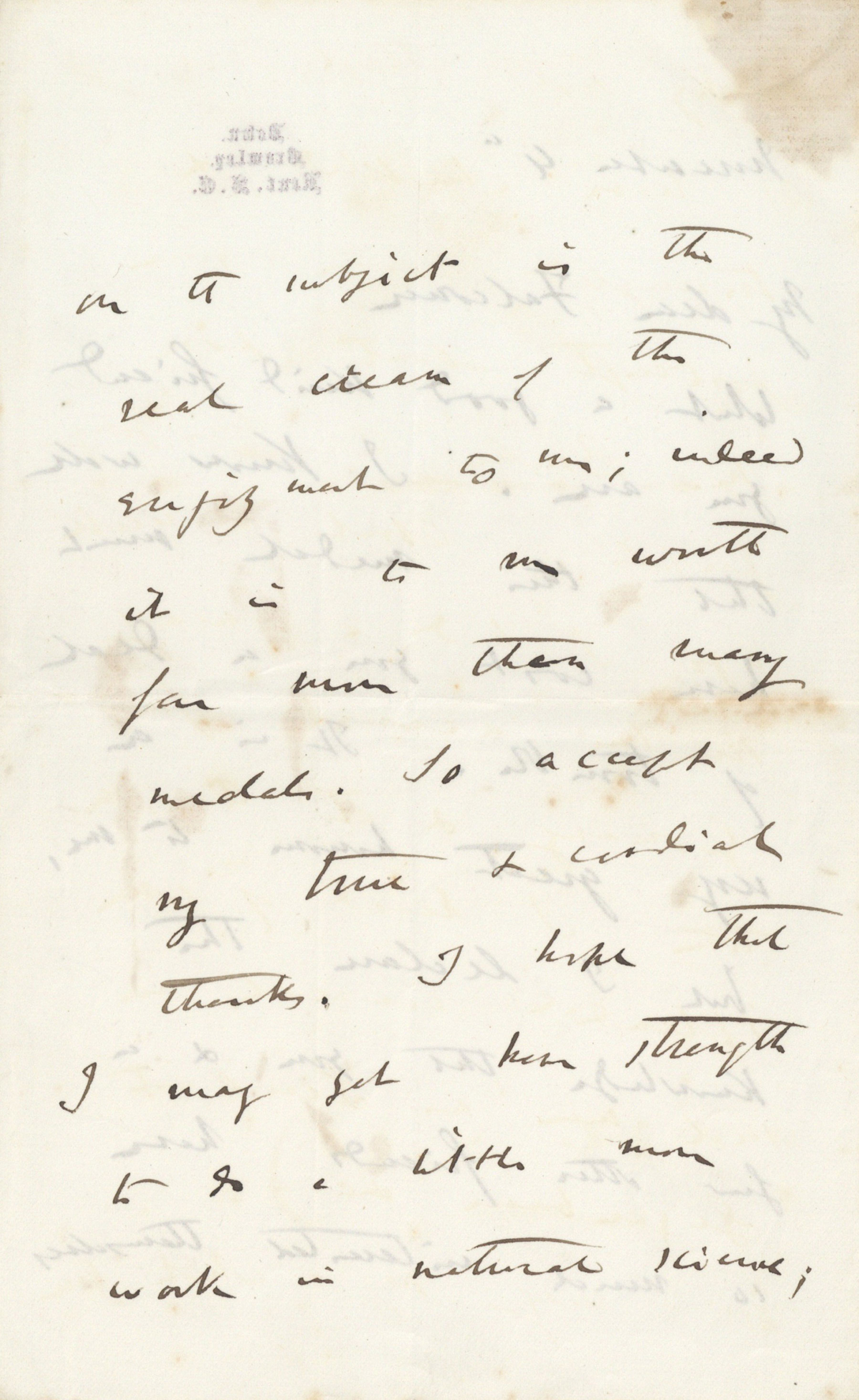
The adoption of the Theory of Evolution by scientists is “the real cream of the enjoyment to me; indeed it is to me worth far more than any medal.”
Significantly, he hopes to continue his work in science
One of the most important Darwin letters we have carried
Charles Darwin’s “On the Origin of Species” was one of the most important books of all time. When it was published in 1859, there was skepticism within (as well as without) the scientific community about the central premise, that species changed through time by a process Darwin labeled natural selection. The idea that human beings evolved from other, previous species struck at the heart of the generally accepted belief that humans were different from other animals, and that species were fixed or immutable. Everyone had learned the story of creation from the Bible, and Darwin’s ideas presented a challenge to those who looked at the question through a literal, religious perspective. But Darwin hoped that scientists as well as others would be able to accommodate, adopt an essentially new view and accept evolution. Yet, at the same time, he realized that many who had grown up in the previous scientific school would have a hard time doing so. It seemed that perhaps a new generation of scientists might have to rise before his work was generally accepted.
The Copley Medal, the highest award of the Royal Society, is given for “sustained, outstanding achievements in any field of science”. In 1864, Darwin was nominated to receive the medal, and was awarded it “For his important researches in geology, zoology, and botanical physiology”. Previous winners included scientists like Benjamin Franklin, William Herschel, Alessandro Volta, Humphry Davy, and Michael Faraday.
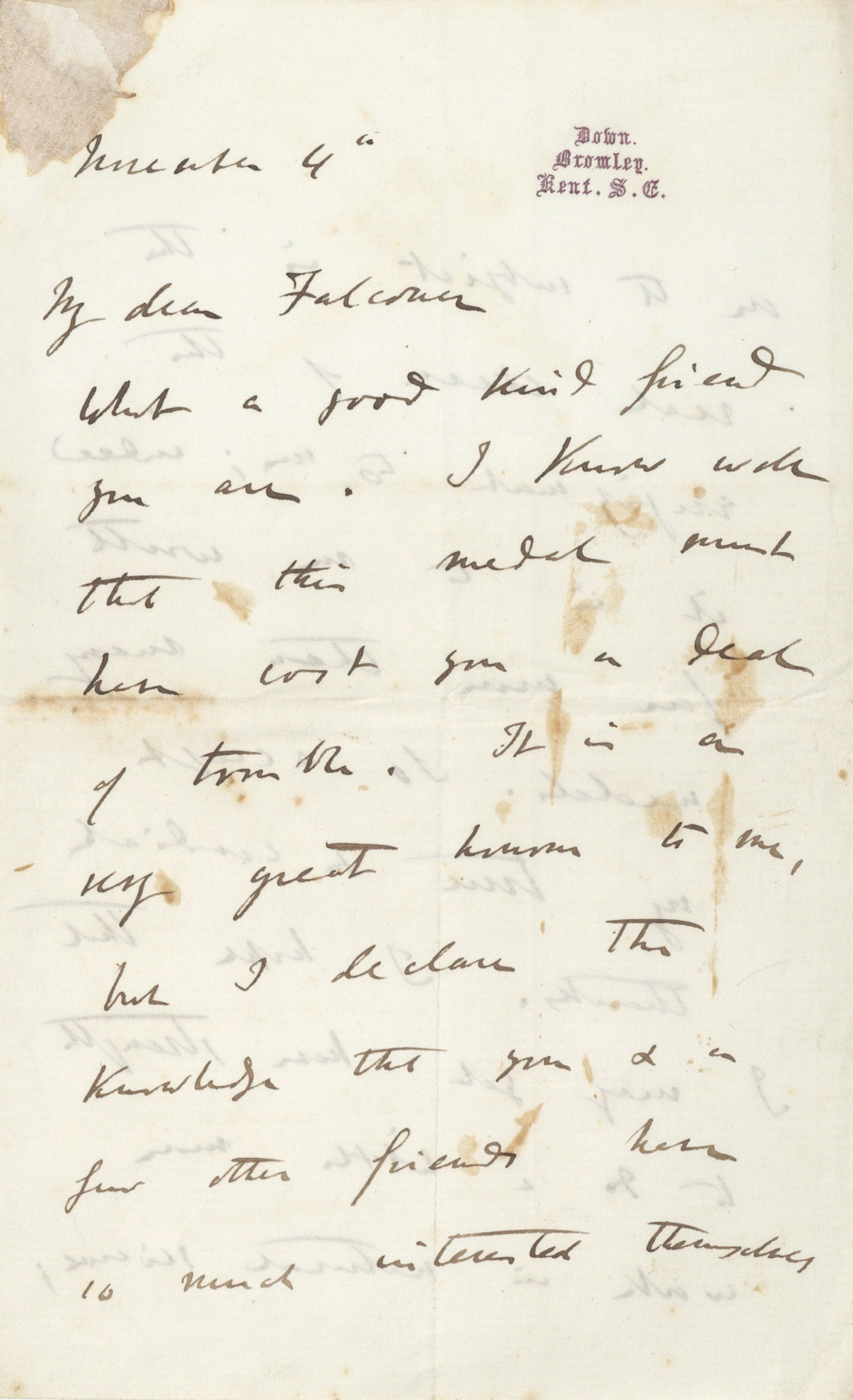
Hugh Falconer was a paleontologist and botanist who was an admirer of Darwin, though not a convert to his theory of evolution. He seconded the nomination of Darwin for the medal, and Darwin wrote to thank him for doing so. In his letter, Darwin made some points of great importance: 1. That more and more scientists were becoming converts to his theory of evolution; 2. That he hopes to continue his work in science, despite advancing age; 3. That scientists should work in the spirit of seeking truth, with no preconceived notions, and 4. That the support of scientists he respected (like Falconer) meant more than the medal to him.
Falconer was outraged by a petition that was circulating within Britain’s learned societies that attempted to limit the bounds of scientific enquiry. The petition claimed that scientific research was being “‘perverted by some…into occasion for casting doubt upon the Truth and Authenticity of the Holy Scriptures” and was specifically aimed against evolutionary theory and investigations into the antiquity of man. Falconer made clear to Darwin that he aimed to “protest against the profession of religious against scientific faith”.
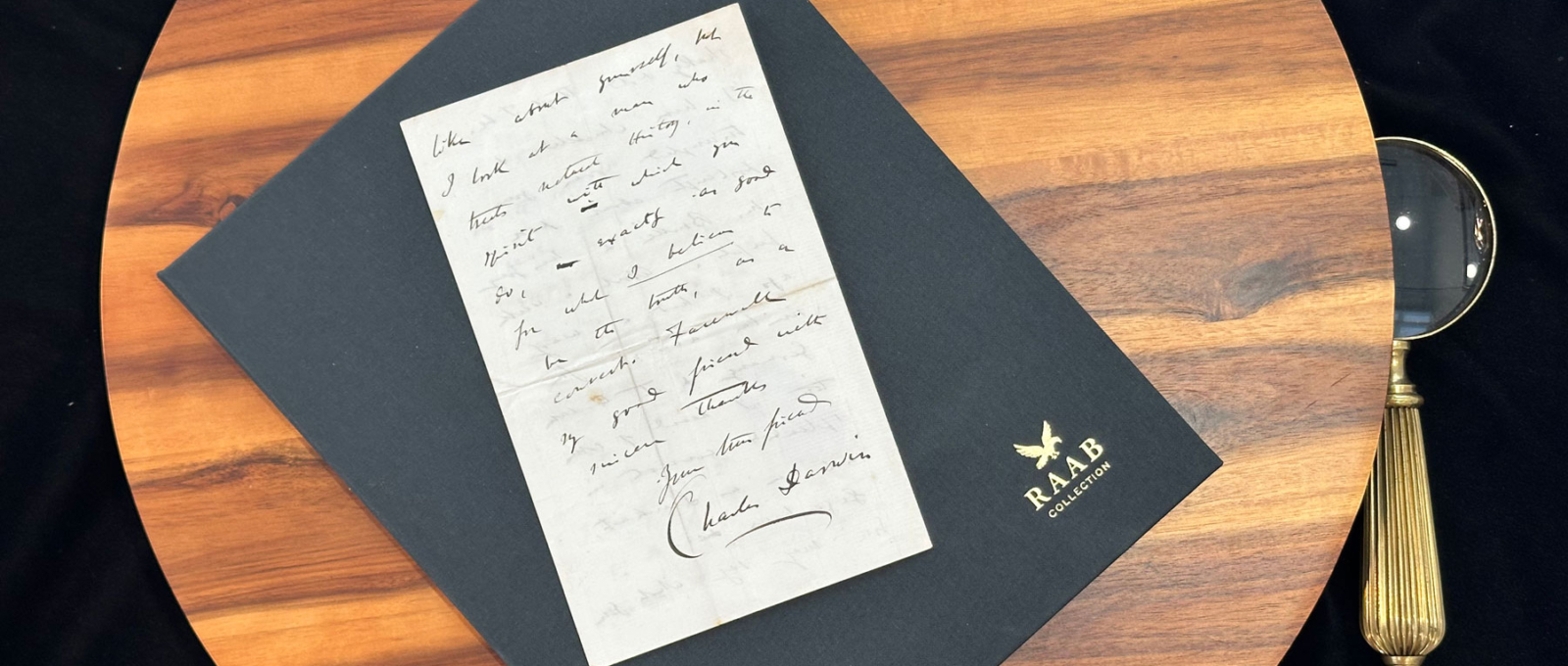
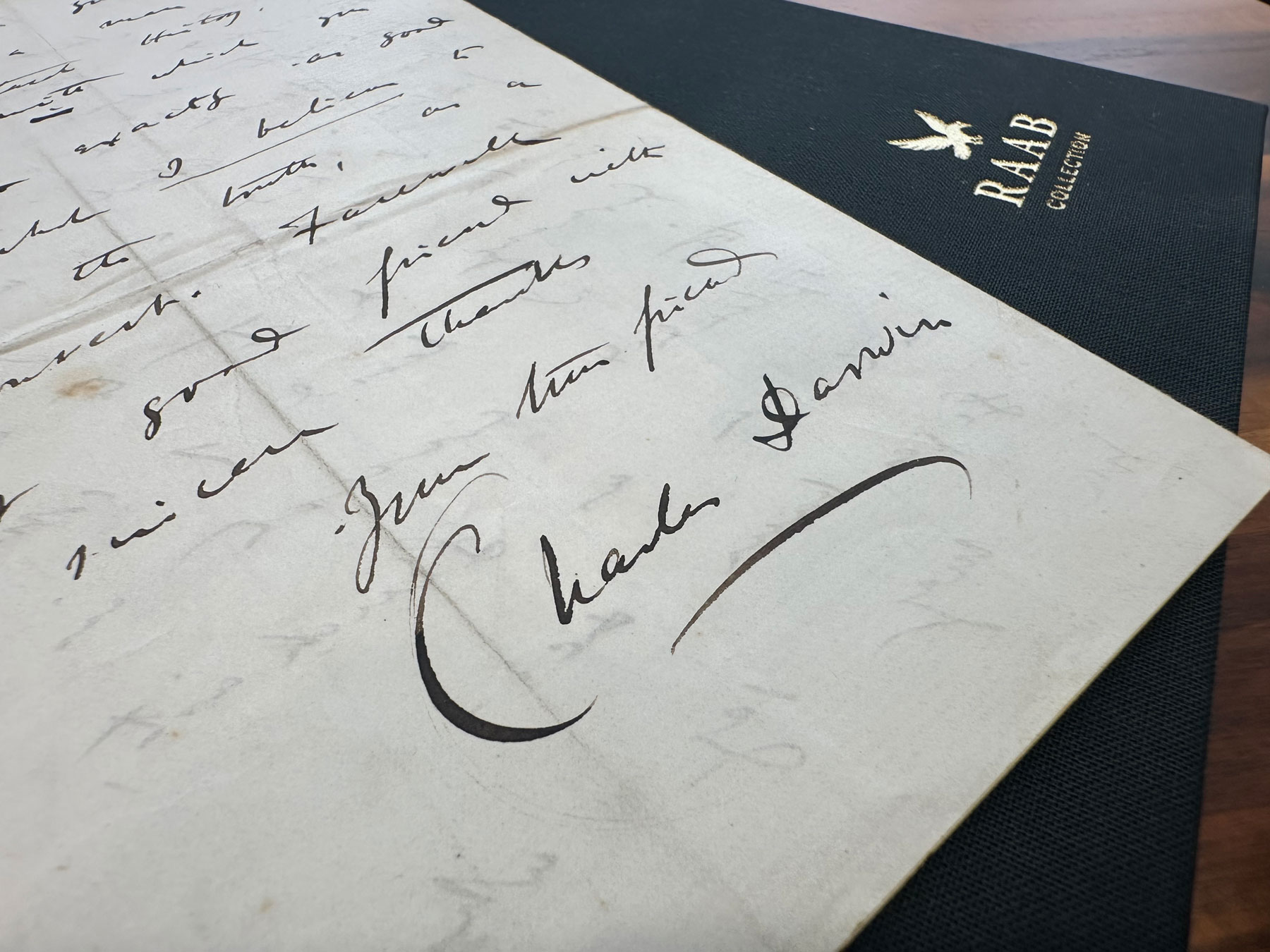
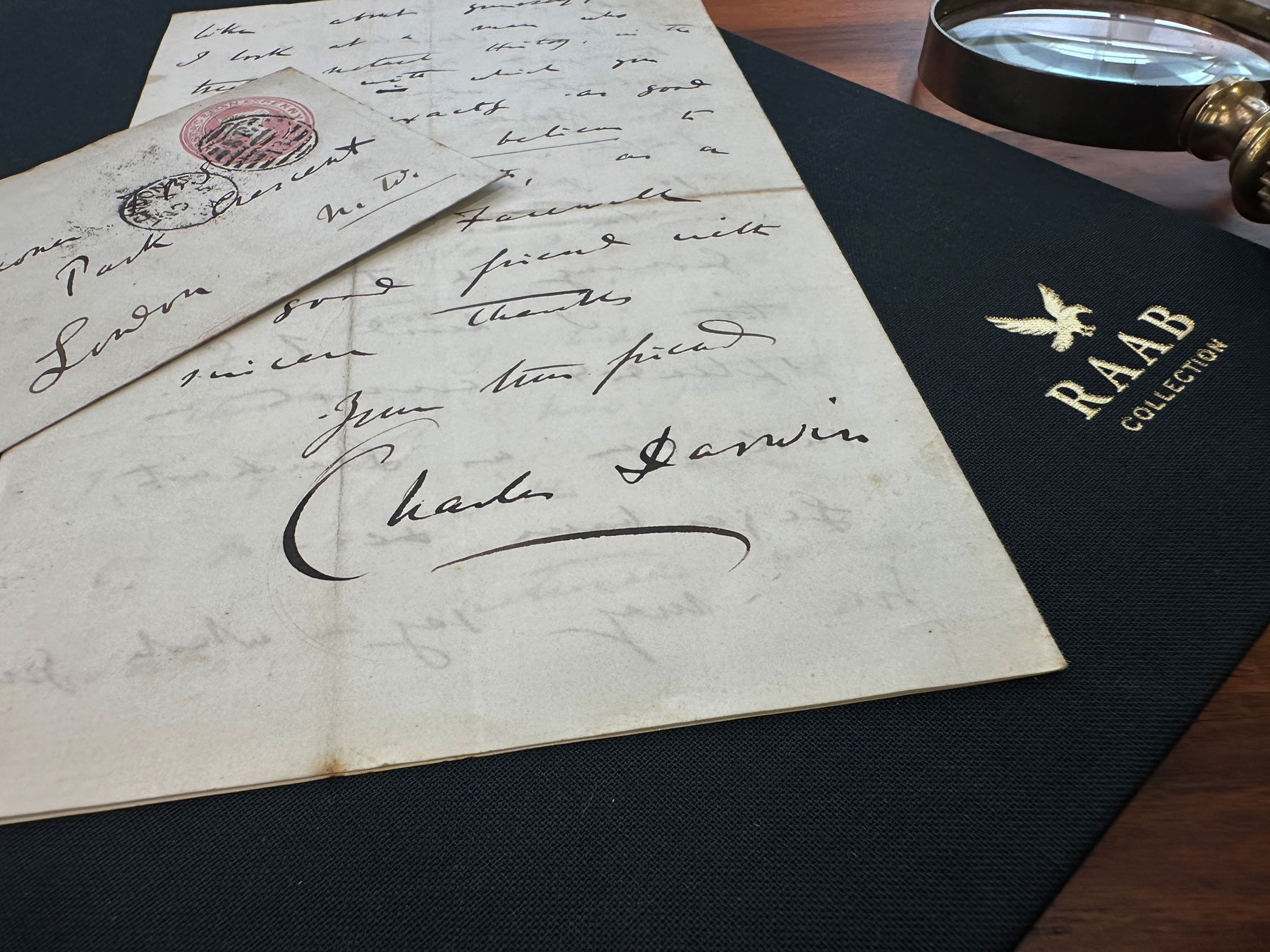
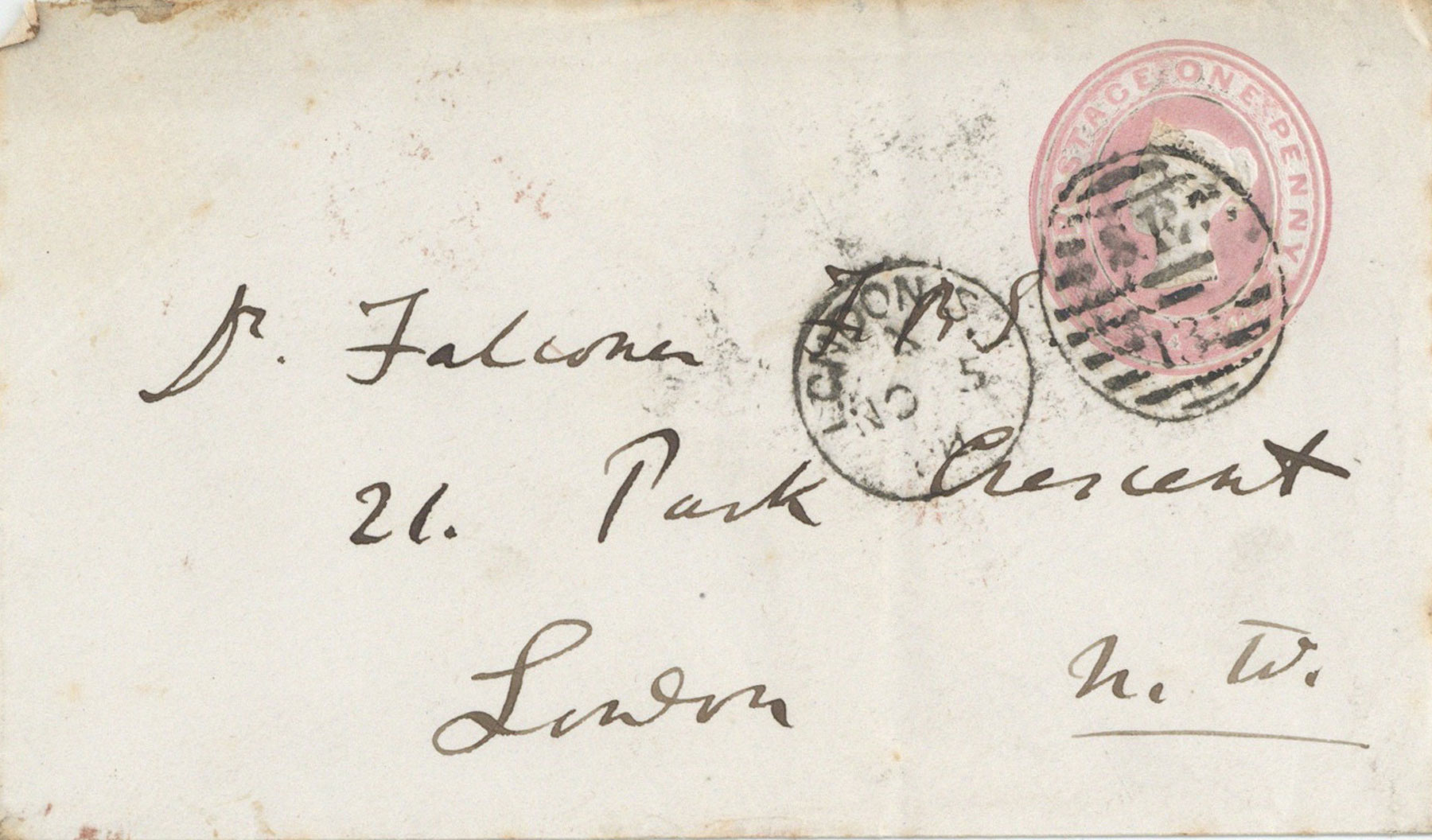
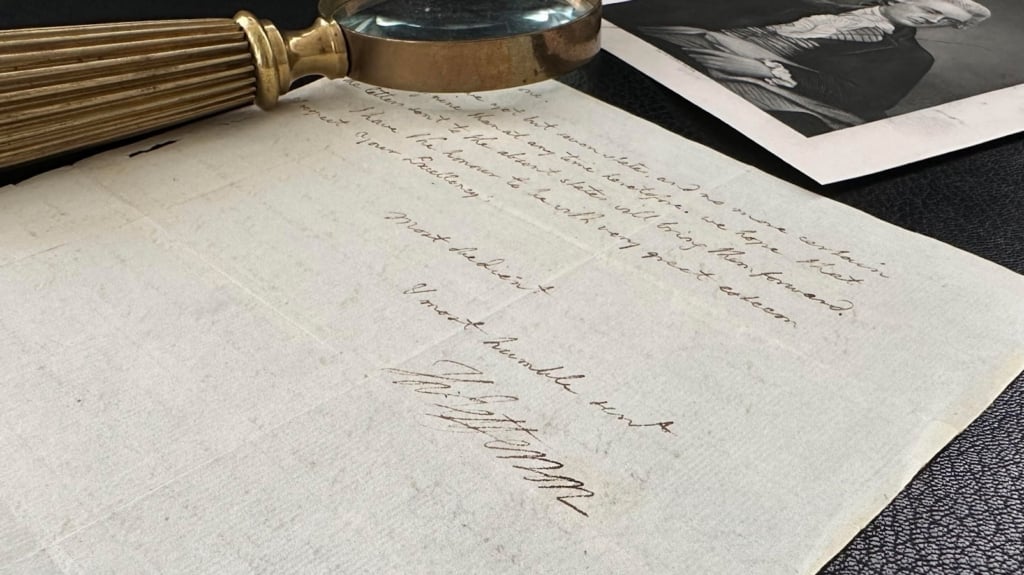
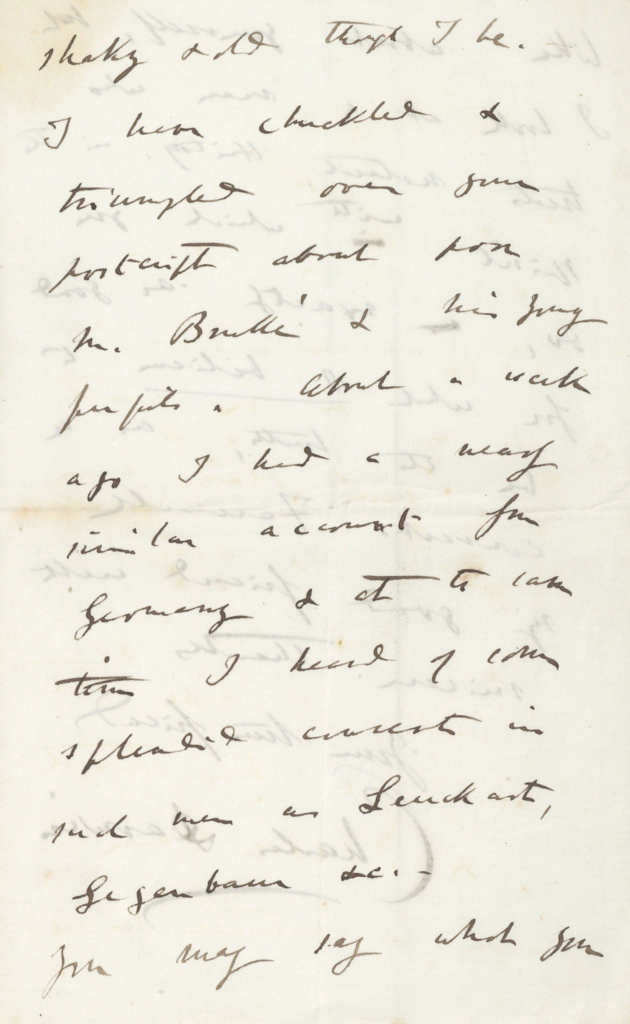
Autograph letter signed, four pages with the addressed envelope, Down House headed stationery, Kent, November 4, 1864, to Hugh Falconer, making all the important points cited above. “What a good, kind friend you are. I know well that this medal must have cost you a great deal of trouble. It is a very great honor to me, but I declare that the knowledge that you & a few other friends here so much interested themselves in the subject is the real cream of the enjoyment to me; indeed it is to me worth far more than any medal. So accept my true and cordial thanks. I hope that I may yet have strength to do a little more work in natural science; shaky and old though I be.”
“I have chuckled and triumphed over your postscript about poor M. Brullé and his young pupils. About a week ago I had a nearly similar account from Germany and at the same time I heard of some splendid converts in such men as [Rudolf] Leuckart, [Carl] Gegenbaur &c. You may say what you like about yourself, but I look at a man who treats Natural History in the spirit with which you do, exactly as good for what I believe to be the truth, as a convert. Farewell my good friend, with sincere thanks, your true friend, Charles Darwin.”
In mentioning M. Brullé, Darwin alludes to an amusing story told by Falconer to him in a previous letter, relaying the complaint of the entomologist Gaspard Auguste Brullé that he heard of nothing but Darwin from his students.
Darwin need not have worried about his future productivity in this 1864 letter. Afterwards, he wrote several more books, which include “The Variation of Animals and Plants Under Domestication” (1868), which explored the principles of heredity and how variations occur in domesticated species; his famous “The Descent of Man” (1871), applying the theory of natural selection to human evolution and discussing sexual selection; “The Expression of the Emotions in Man and Animals” (1872), examining the evolutionary origins of emotions and facial expression; and “The Formation of Vegetable Mould through the action of worms” (1881).
Falconer replied to Darwin’s letter on November 7, and the spirit with which he treated Natural History, and the reason for his support for Darwin, were evidenced in that reply. Falconer explained that he believed the award of the Copley medal to Darwin was doubly important: “1. As regards due appreciation of yourself. 2d. As a determined protest against the profession of religious against scientific faith”.
Falconer was right to be concerned about the reaction of the religious community and its sympathizers to the theory of evolution. Darwin’s ideas provoked a harsh response from religious leaders and their allies, of which this petition was one example. As examples of the criticism of evolution, England’s highest-ranking Catholic official, Henry Cardinal Manning, denounced Darwin’s views as “a brutal philosophy – to wit, there is no God, and the ape is our Adam.” And Samuel Wilberforce, the Anglican Archbishop of Oxford and one of the most highly respected religious leaders in 19th-century England, also condemned natural selection in a now-famous speech on what he deemed the theory’s deficiencies.
This is one of the most important Darwin letters we have carried, dealing as it does with support for his theory of evolution, his hopes for future work in science, and the role of science in seeking truth.

Frame, Display, Preserve
Each frame is custom constructed, using only proper museum archival materials. This includes:The finest frames, tailored to match the document you have chosen. These can period style, antiqued, gilded, wood, etc. Fabric mats, including silk and satin, as well as museum mat board with hand painted bevels. Attachment of the document to the matting to ensure its protection. This "hinging" is done according to archival standards. Protective "glass," or Tru Vue Optium Acrylic glazing, which is shatter resistant, 99% UV protective, and anti-reflective. You benefit from our decades of experience in designing and creating beautiful, compelling, and protective framed historical documents.
Learn more about our Framing Services