






George Washington Carver Writes a Protege on Greatness, Goodness, and the Golden Rule


"The people who I adore are those who are willing and trying to live the 'Golden Rule' way of life"
Although George Washington Carver did not found Tuskegee Institute itself (it was established in 1881 by Booker T. Washington), his arrival in 1896 functioned as the founding of its agricultural and scientific mission. Carver envisioned transforming the school into a center where Black students could learn modern, research-based farming, soil conservation, botany,...

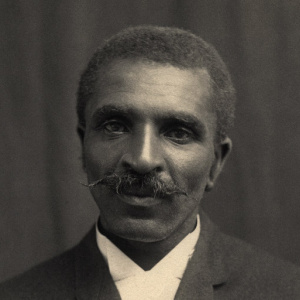
Although George Washington Carver did not found Tuskegee Institute itself (it was established in 1881 by Booker T. Washington), his arrival in 1896 functioned as the founding of its agricultural and scientific mission. Carver envisioned transforming the school into a center where Black students could learn modern, research-based farming, soil conservation, botany, and industrial chemistry in order to break the economic dependence that bound Southern Black farmers to cotton and debt. Through crop rotation, legumes, sweet potatoes, peanuts, and other soil-restoring plants, Carver hoped to rebuild exhausted Southern land while creating new markets and cottage industries that would strengthen rural Black communities. In this sense, his “founding” contribution was not institutional but ideological: he sought to make Tuskegee a laboratory for self-sufficiency, scientific uplift, and dignity, using agriculture as the route to economic and social advancement for Black Americans in the post-Reconstruction South.
In his talks and letters to students, he taught that true success lay in service—helping others, improving their conditions, and doing “the common things in life in an uncommon way.” This philosophy echoed the Golden Rule, even when he did not cite it explicitly: one lived rightly by treating others with generosity, patience, and usefulness. Carver’s Christianity informed this ethic, but so did his deep sense of social responsibility toward Black farmers and rural communities in the South. For him, scientific knowledge and moral character were inseparable, and the dignity of a life was measured by the good it did for those who could offer nothing in return.
Ford Davis was a young Tuskegee student during the period when George Washington Carver was directing the agricultural and industrial training programs, and he seems to have been among the students who gravitated toward Carver’s laboratory and classroom work. Like many of Carver’s protégés, Davis would have taken part in the practical agriculture, botany, and laboratory exercises that underpinned Tuskegee’s mission to train Black students in scientific farming, soil conservation, and rural uplift. Students in this circle often assisted Carver with experiments, field plots, or extension demonstrations, while receiving close guidance and moral instruction in return. In this context Davis was not merely a pupil, but one of the younger men Carver hoped to shape into a technically skilled and civically minded agricultural leader who could carry Tuskegee’s model of improvement into Black communities across the South.
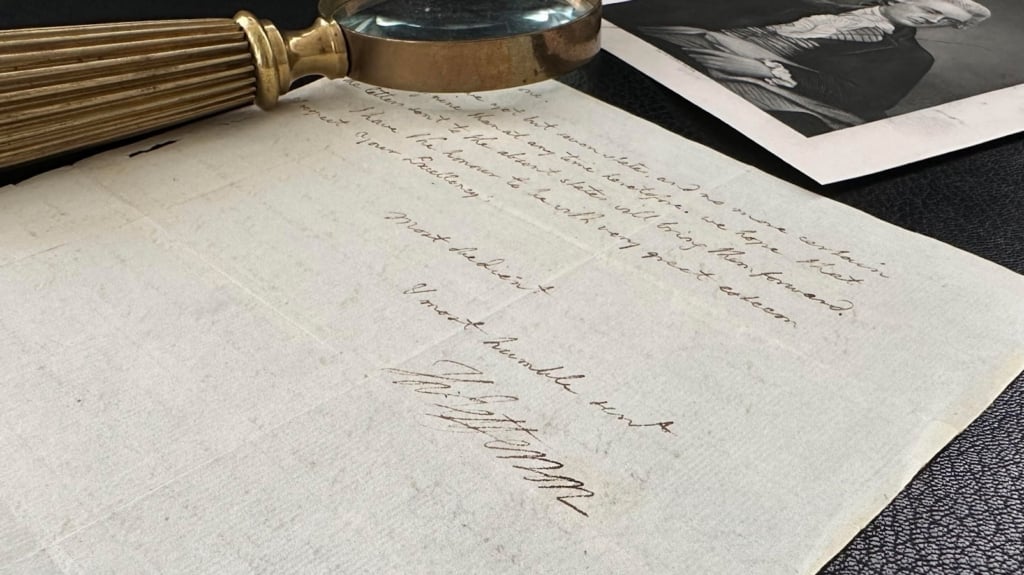
Autograph letter signed, on Tuskegee Normal and Industrial Institute letterhead, February 14. 1933 to Mr. Davis. “My beloved boy, Mr. Davis. Just returned and found your fine letter. I had a cold trip – was in both snow and rain. But spoke to overflowing houses.
“This spring when the weather gets good I do hope we can get out on your brother’s farm where we can have a really good time.
“I would so love to see you on a farm of your own with all the things you love about yourself. I would love to see my dear handsome boy take a small place, possibly rundown, and add to it little by little with your own hands, building it up here, improving it there, making it an ideal place for when the evening shadows of life begin to hover about you.
“My precious boy, the people who I adore are those who are willing and trying to live the ‘Golden Rule’ way of life.
“Yes dear you are right. You say the same thing in a different way.
“Greatness is needed much more than goodness. Greatness cannot and will not stoop to little things. Goodness is so flexible that it can and does adjust itself to anything that suits its needs.
“I hope my precious boy will run over the first opportunity. I am so sincerely and admiringly yours. G.W. Carver.”

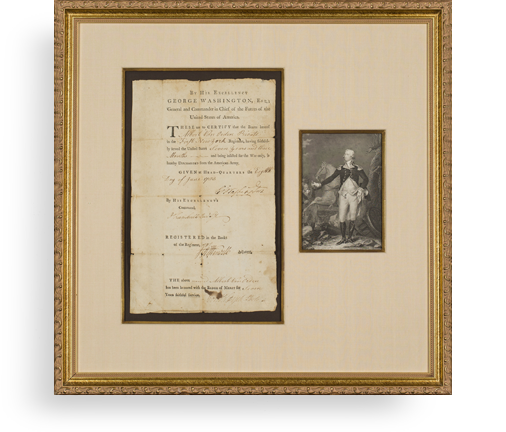
Frame, Display, Preserve
Each frame is custom constructed, using only proper museum archival materials. This includes:The finest frames, tailored to match the document you have chosen. These can period style, antiqued, gilded, wood, etc. Fabric mats, including silk and satin, as well as museum mat board with hand painted bevels. Attachment of the document to the matting to ensure its protection. This "hinging" is done according to archival standards. Protective "glass," or Tru Vue Optium Acrylic glazing, which is shatter resistant, 99% UV protective, and anti-reflective. You benefit from our decades of experience in designing and creating beautiful, compelling, and protective framed historical documents.
Learn more about our Framing Services

