






Napoleon Writes from the Kremlin in Moscow During His Ill-Fated Invasion


Rare letter of Napoleon to a senior advisor from one of the most famous and portentous military invasions in human history
- Currency:
- USD
- GBP
- JPY
- EUR
- CNY
 This currency selector is for viewing only.
The Raab Collection only accepts USD payments at checkout.
Exchange rates are updated hourly. Rates may be inaccurate.
In 1812, Napoleon was still at the height of his fortunes. The Peninsular War in Spain against Britain, he believed, would soon end in triumph. All that remained to complete his “Continental System”–a unilateral European blockade designed to economically isolate Britain and force its subjugation–was the cooperation of Russia. Czar Alexander I...


In 1812, Napoleon was still at the height of his fortunes. The Peninsular War in Spain against Britain, he believed, would soon end in triumph. All that remained to complete his “Continental System”–a unilateral European blockade designed to economically isolate Britain and force its subjugation–was the cooperation of Russia. Czar Alexander I kept a tenuous peace, but was unwilling to submit to the Continental System, which would be ruinous to the Russian economy. To intimidate Alexander, Napoleon massed his forces in Poland in the spring of 1812, but still the Czar resisted.
Napoleon determined to act. On June 24, Napoleon commenced his famed campaign in Russia, ordering his Grande Armée, the largest European military force ever assembled to that date, into Russia. The enormous army featured more than 500,000 soldiers and staff and included contingents from Prussia, Austria, and other countries under the sway of the French empire. The campaign would be characterized by the massive toll on human life: in less than six months Napoleon lost near half of his men because of the extreme weather conditions, battle, disease and hunger. On both sides, nearly a million soldiers and civilians died.
Napoleon’s military successes traditionally lay in his ability to move his armies rapidly and strike quickly, but he was instead forced to pursue the Russian army, which was refusing to give in and was falling back. The fleeing Russian forces adopted a “scorched earth” strategy, seizing or burning any supplies that the French might utilize as they pillaged from the countryside. Meanwhile, Napoleon’s supply lines became overextended as he advanced deeper and deeper into the Russian expanse.
Many in Russia were critical of the Russian army’s refusal to engage Napoleon in a more direct confrontation. Under public pressure, in late August Alexander named General Mikhail Kutuzov supreme commander, but initially the veteran of earlier defeats against Napoleon continued the retreat. Finally, Kutuzov agreed to halt at the town of Borodino, about 70 miles west of Moscow, and engage the French. The Russians built fortifications, and on September 7 the Grande Armée attacked. Napoleon was uncharacteristically cautious that day; he didn’t try to outflank the Russians, and he declined to send much-needed reinforcements into the fray. His exhausted Grand Armée was unable to encircle and destroy the opposing force as it had done in Napoleon’s earlier campaigns. Instead, Napoleon’s direct attacks against entrenchments resulted in heavy losses. He failed to destroy the Russian army, and as a result he was not in the position of overwhelming superiority he had hoped to achieve. After the battle, Kutuzov decided not to defend Moscow but to launch a general withdrawal to save the Russian army.
Napoleon was sure that once Moscow was taken Alexander would be forced to capitulate. On September 14, the French entered Moscow, only to find it abandoned. All but a few thousand of the city’s 275,000 people were gone. Napoleon retired to a house on the outskirts of the city for the night, but two hours after midnight he was informed that a fire had broken out in the city. He went to the Kremlin, where he watched the flames continue to grow. Reports began to come in telling of Russians starting the fires and stoking the flames. Suddenly a fire broke out within the Kremlin, apparently set by a Russian military policeman who was immediately executed. With the firestorm spreading, Napoleon and his entourage were forced to flee down burning streets to Moscow’s outskirts and narrowly avoided being asphyxiated. When the flames died down three days later, more than two-thirds of the city was destroyed.
On September 18, Napoleon wrote Jean-Jacques Régis de Cambacérès, his trusted advisor who was constantly consulted for advice, saying the fires were calming down and “I have taken up lodging in the residence of the Tsars, the Kremlin…”
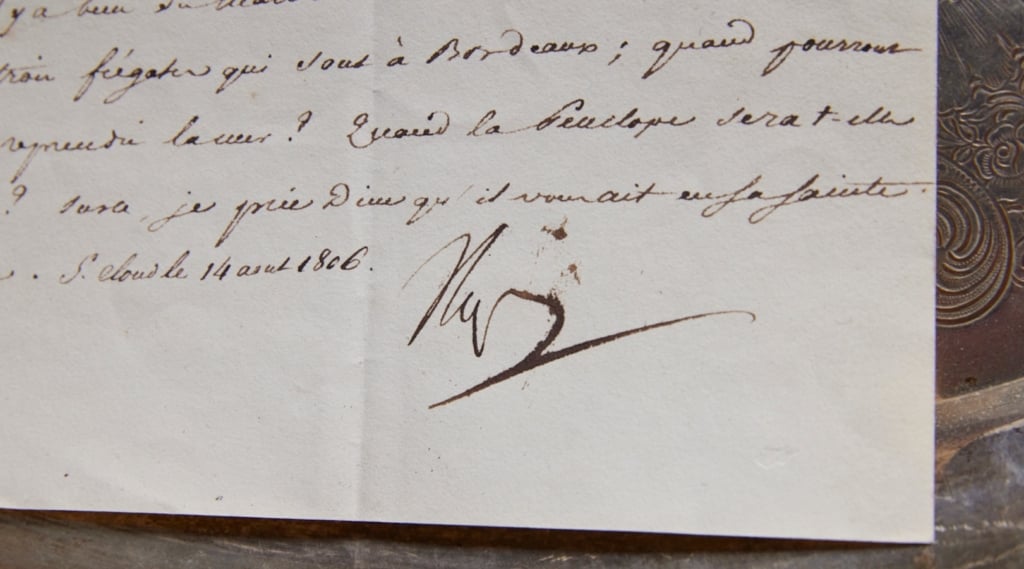
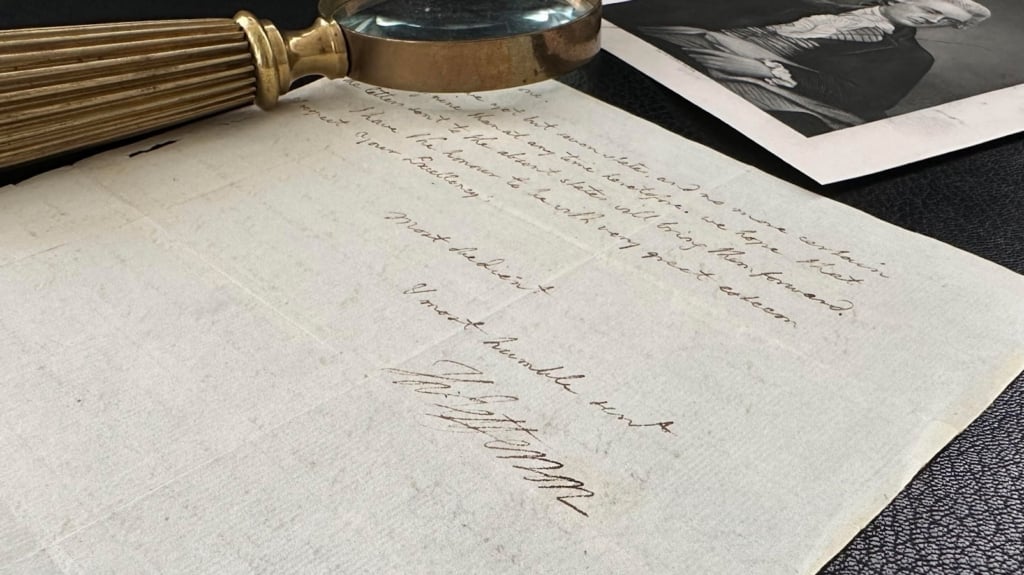
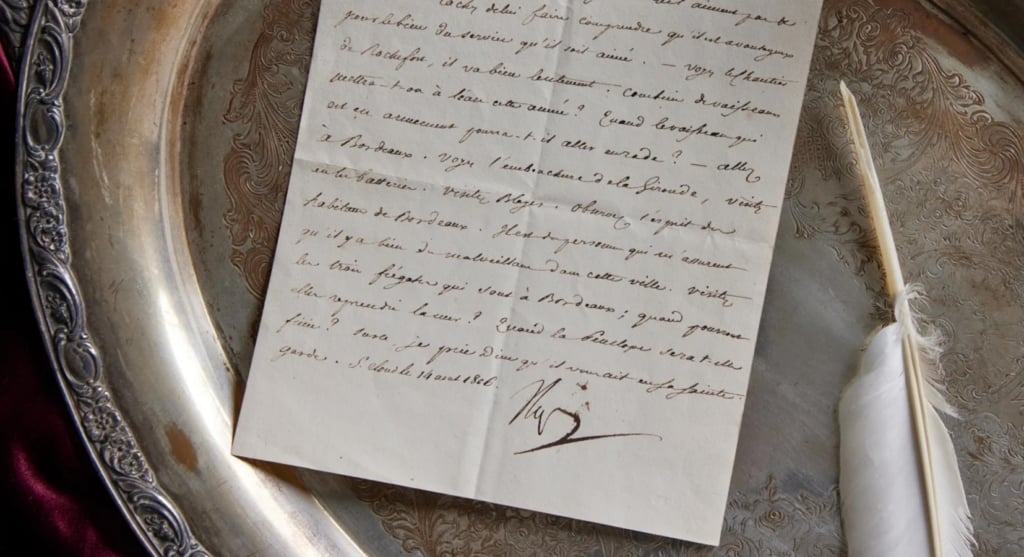
Nine days later, he updated his advisor. Letter signed, Moscow, September 27. 1812, to Jean-Jacques Régis de Cambacérès. “My cousin, I have received your letter. There is nothing new at present. I pray that God keeps you in his holy and worth guard.”
A very uncommon letter of Napoleon in Moscow during the great invasion.

Frame, Display, Preserve
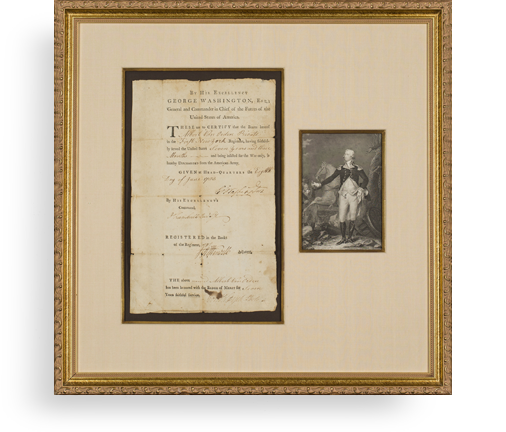
Each frame is custom constructed, using only proper museum archival materials. This includes:The finest frames, tailored to match the document you have chosen. These can period style, antiqued, gilded, wood, etc. Fabric mats, including silk and satin, as well as museum mat board with hand painted bevels. Attachment of the document to the matting to ensure its protection. This "hinging" is done according to archival standards. Protective "glass," or Tru Vue Optium Acrylic glazing, which is shatter resistant, 99% UV protective, and anti-reflective. You benefit from our decades of experience in designing and creating beautiful, compelling, and protective framed historical documents.
Learn more about our Framing Services
