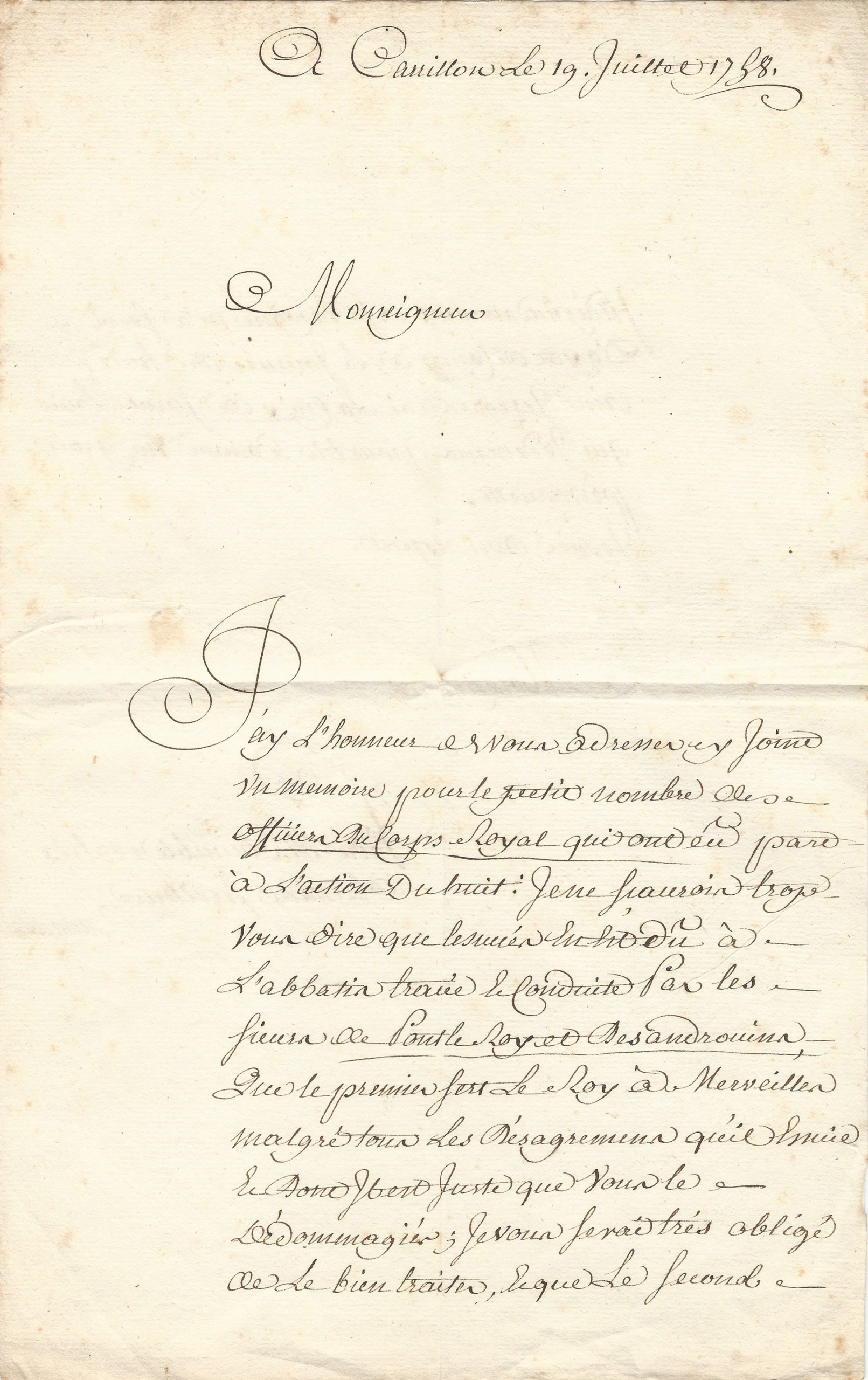






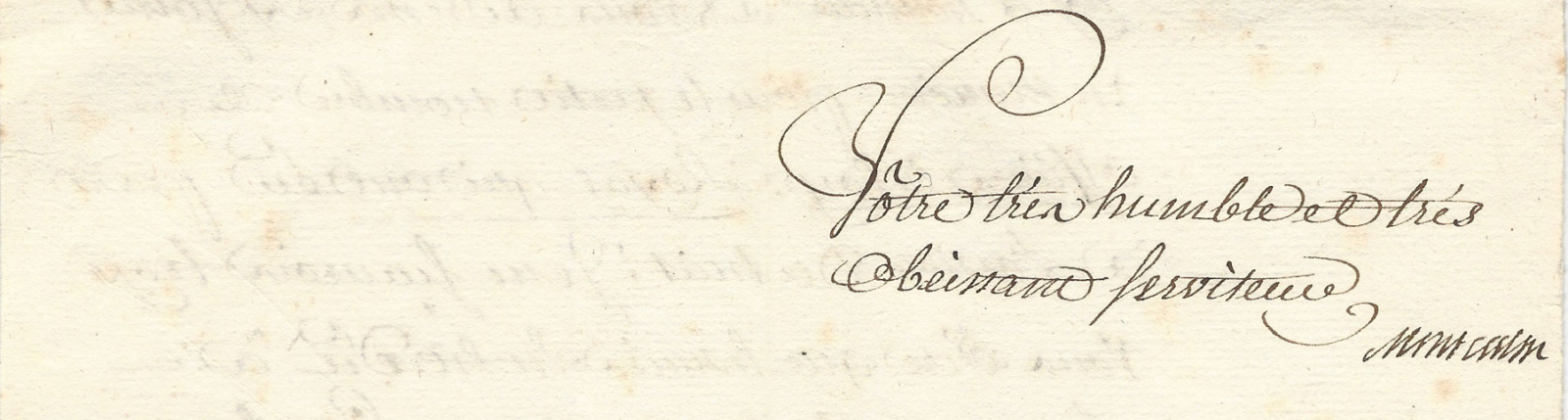
In 1758 During the French and Indian War, General Montcalm of France Sends his Official Report of the Victory Against the British and General Abercrombie at the Battle of Fort Ticonderoga (Carillon) to the King’s Secretary of War
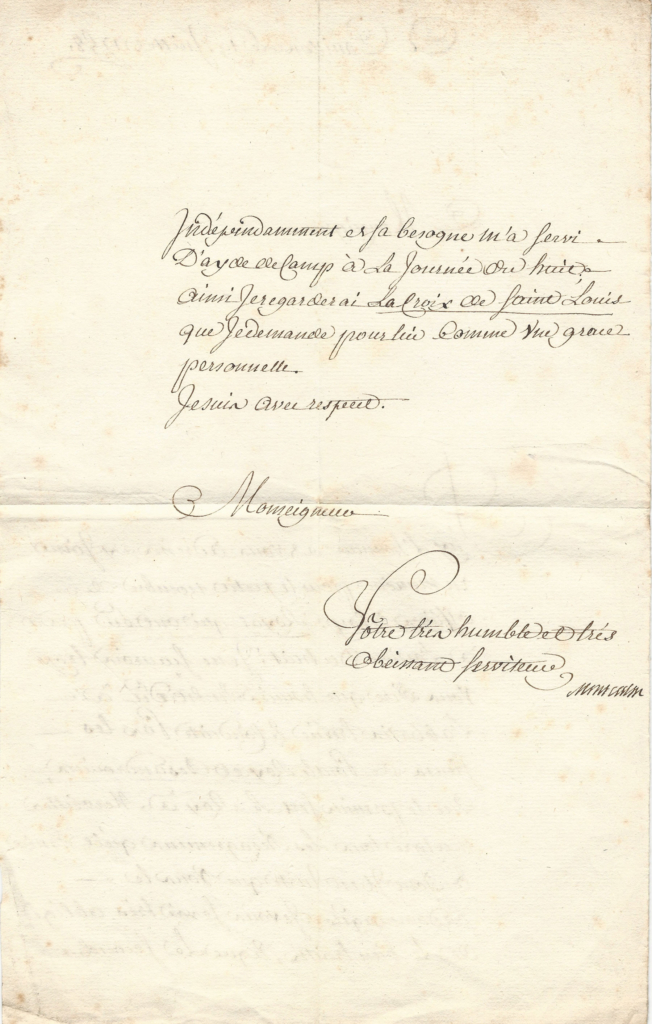
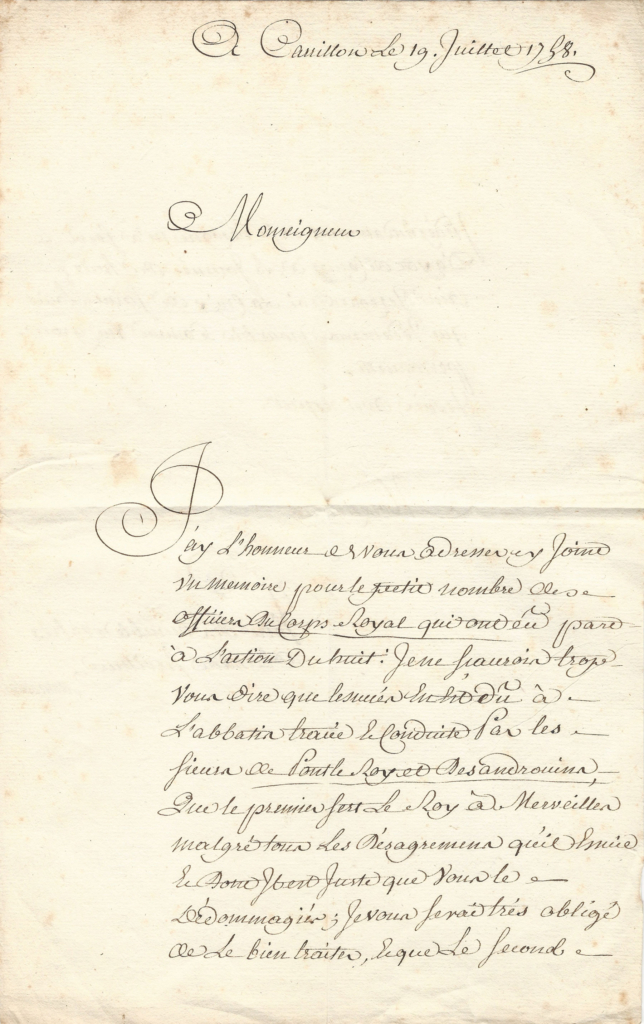

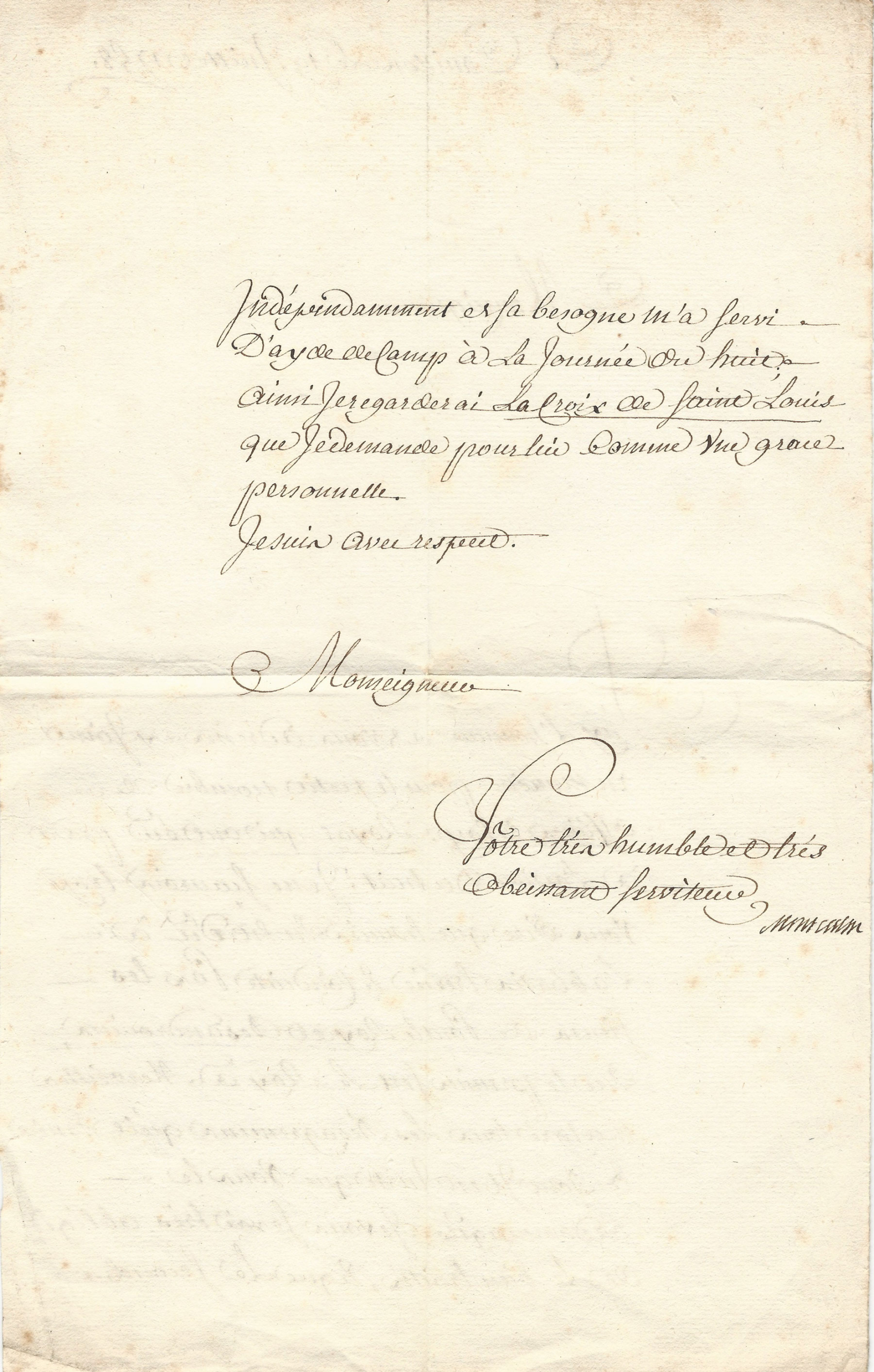
He credits the success over the British to the fortifications drawn up by his Chief Engineers and asks the Crown to reward them with honors, including for one the Cross of Saint-Louis
Had the British won this battle, the French and Indian War might well have ended years earlier
Long in a private collection, this is a rare important document of Montcalm during this crucial stretch for primacy in the New World
The French and Indian War settled the fate of the...

Had the British won this battle, the French and Indian War might well have ended years earlier
Long in a private collection, this is a rare important document of Montcalm during this crucial stretch for primacy in the New World
The French and Indian War settled the fate of the North American continent by driving the French out of Canada and the American West, and it kindled the fire that resulted in the American Revolution very soon after. It was thus the most important conflict in which the American people participated prior to the Revolution, and without it the Revolution would never have happened when it did, nor would its westward expansion have been possible in any case. And the man who more than any other was responsible for the massive scope of the British victory, and for the colonial policy that helped make it possible, was William Pitt the Elder.
The war started in a dispute over possession of the Ohio Territory in 1753. King George II granted leading Virginia planters, who were interested in developing the region, 200,000 acres in the Ohio River valley in 1749. But the French, determined to secure the territory against encroaching British and American traders and land speculators, built a chain of forts along Pennsylvania’s Allegheny River to prevent it. The British ministry determined to repel the French advance. However, their early efforts, including the French defeat of George Washington at Fort Necessity, were dismal failures.
In 1757 William Pitt was named secretary of state and given charge of the war effort. Viewing America as the place “where England and Europe are to be fought for,” he resolved to commit whatever resources were necessary to defeat the French, not only in the Ohio but over the entirety of North America. This grand vision of driving out the French altogether was coupled by Pitt’s realization that the British government and armed forces could only succeed in his plan by directly involving the American colonies and their legislatures to an unprecedented extent. So he consulted with their governors extensively on all wartime matters, and even more crucially, he funded the expansion, equipage, training and weaponry of provincial militias. So under his tutelage, the American armed forces greatly increased in organization and military knowledge, and its leaders received experience that would serve them in good stead less than two decades later when they formed the backbone of the Continental Army officer corps. His policy of all working together on one grand design also united the previously divided colonies, who first at this time began to see themselves as one. Benjamin Franklin even presented a plan of union in 1754 which would have established a council to levy taxes, raise troops, and regulate trade; but this plan proved to be 12 years premature.
Pitt’s strategy worked. By the summer of 1758, the British had 50,000 men in uniform in North America, serving as British regulars or in colonial provincial regiments—a number equal to the entire white population of New France. That year the British, with colonial forces directly involved, seized Louisbourg, a French fortress guarding the mouth of the St. Lawrence River.
The Battle of Fort Carillon (Battle of Fort Ticonderoga) took place on July 8, 1758, at Ticonderoga, south of Lake Champlain (in present-day New York State) as part of the Seven Years’ War. A French army of about 3,600 men under General Marquis de Montcalm and the Chevalier de Levis defeated a numerically superior force of British troops under General James Abercrombie, which frontally assaulted an entrenched French position without using field artillery, a lack that left the British and their allies vulnerable and allowed the French to win a complete victory. The battle was the bloodiest of the American theater of the war, with over 3,000 casualties suffered. French losses were about 400, while more than 2,000 were British.
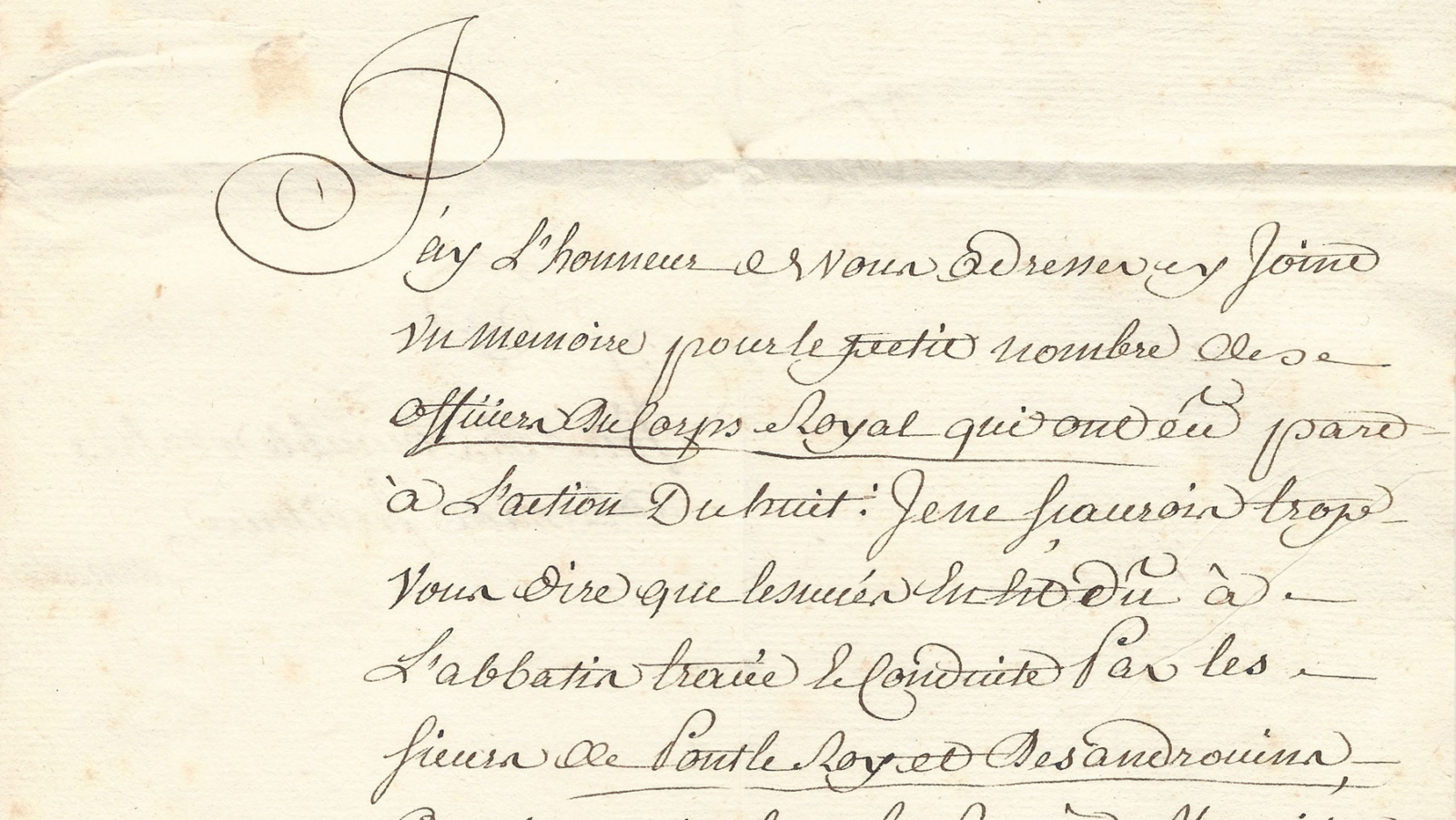
Montcalm had earlier decided not to hold up in the front but to find a field better to his liking. He decided to make his stand on a ridge, also called the Heights of Carillon, about a half-mile outside the fort. Montcalm reconnoitered the area on July 1 with his engineer officers, Nicholas Sarrebource de Pontleroy and Jean Nicholas Desandrouin. The next day, July 2, Montcalm gave the order to commence building blocking defenses. He created abatis, a defensive barrier that would create an obstacle, making it difficult for attackers to approach.
The Royal and Military Order of Saint Louis (French: Ordre Royal et Militaire de Saint-Louis) is a dynastic order of chivalry founded 5 April 1693 by King Louis XIV, named after Saint Louis (King Louis IX of France). It was intended as a reward for exceptional officers, notable as the first decoration that could be granted to non-nobles. By the authorities of the French Republic, it is considered a predecessor of the Legion of Honour.
In 1758, Charles Louis Auguste Fouquet was the Duke of Belle-Isle. And in March of that year, he became Secretary of State for War.
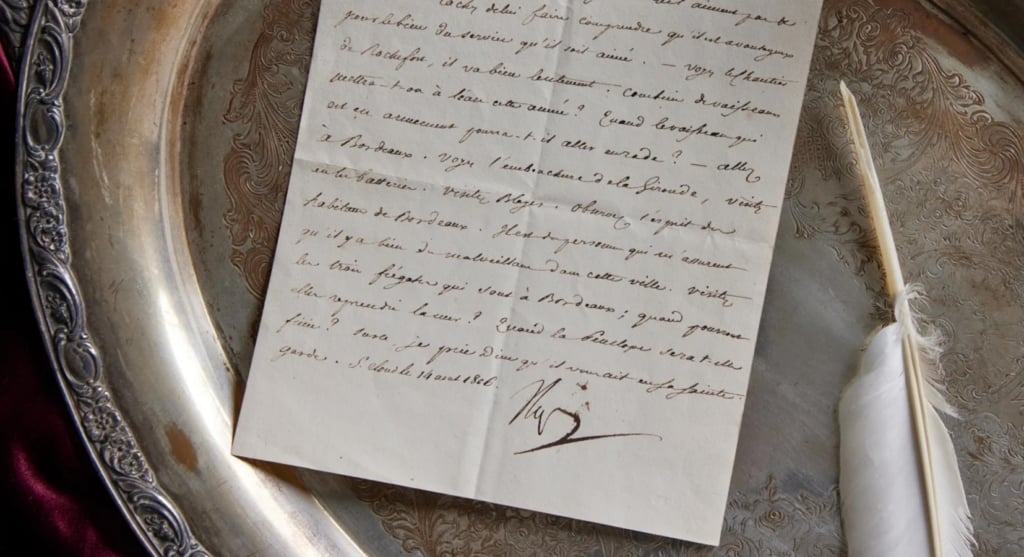
Letter signed, in French, July 19, 1758, from Fort Ticonderoga (Carillon), “I have the honor to send you herewith a report for the small number of officers of the Royal Corps who took part in the action of the eighth: I could not overstate to you that our success was due to the abatements drawn up and put into effect by Messrs. Pont le Roy and Desandrouins, that the first serves the King marvelously despite all the inconveniences he suffers and therefore it is only right that you reward him; I would be very obliged to you if you treated him well. And that the second, independent of his need, served me as aide-de-camp on the day of the eighth; thus I will regard the Cross of Saint-Louis that I request for him as a personal favor.”
Interestingly, Desandrouis would become in 1780 commander of engineers in the Comte de Rochambeau’s expeditionary force to America.
News of the battle was received in England shortly after news of the fall of Louisbourg, putting a damper on the celebrations marking that victory. The full scope of British victories in 1758 did not reach English shores until later in the year, when Pitt learned of the successes at Forts Duquesne and Frontenac, key steps in completing the conquest of New France. Had Carillon also fallen in 1758, the conquest might have been completed in 1758 or 1759; as it happened, Montreal (the last point of resistance) did not surrender until 1760, with campaigns launched from Fort Oswego, Quebec, and Carillon, which was captured and renamed Ticonderoga in 1759 by forces under the command of Jeffery Amherst, the victor at Louisbourg. Thus were the British ultimately successful in ousting the French from North America, despite the French victory referenced in this letter.

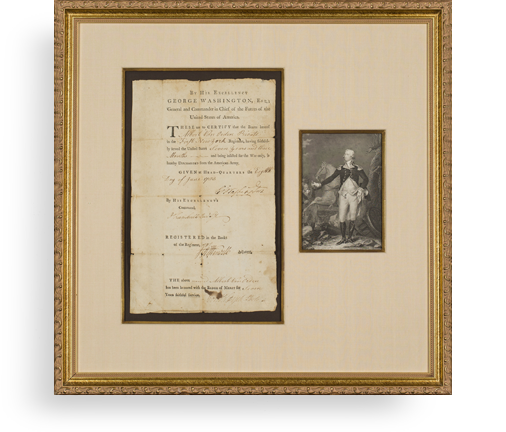
Frame, Display, Preserve
Each frame is custom constructed, using only proper museum archival materials. This includes:The finest frames, tailored to match the document you have chosen. These can period style, antiqued, gilded, wood, etc. Fabric mats, including silk and satin, as well as museum mat board with hand painted bevels. Attachment of the document to the matting to ensure its protection. This "hinging" is done according to archival standards. Protective "glass," or Tru Vue Optium Acrylic glazing, which is shatter resistant, 99% UV protective, and anti-reflective. You benefit from our decades of experience in designing and creating beautiful, compelling, and protective framed historical documents.
Learn more about our Framing Services