






Queen Isabella, In a Document Referencing Her Deceased Son and Only Male Heir to the Spanish Throne (“may he rest in holy glory”) Works to Build the Great Hospital of the Alhambra of Granada


This document is also signed by Columbus Confidant, Royal family aide, and Servant to the deceased heir, Juana del la Torre
- Currency:
- USD
- GBP
- JPY
- EUR
- CNY
 This currency selector is for viewing only.
The Raab Collection only accepts USD payments at checkout.
Exchange rates are updated hourly. Rates may be inaccurate.

Isabella was distraught over the loss of the only heir the two produced, a fact which had huge implications for the Iberian Peninsula; We have never before seen such a reference
When Isabella’s half-brother Henry died in 1474, she asserted her claim to the throne of Castille, which was contested by thirteen-year-old...


Isabella was distraught over the loss of the only heir the two produced, a fact which had huge implications for the Iberian Peninsula; We have never before seen such a reference
When Isabella’s half-brother Henry died in 1474, she asserted her claim to the throne of Castille, which was contested by thirteen-year-old Joanna, who was connected to Portuguese royalty. Juana sought the aid of her husband (who was also her uncle), Afonso V of Portugal, to claim the throne. This dispute between rival claimants led to the War of 1475–79. Isabella called on the aid of Aragon, with her husband, the heir apparent, and his father, Juan II of Aragon providing it. Juan II died in 1479, and Ferdinand succeeded to the throne in January 1479. In September 1479, Portugal and the Catholic Monarchs of Aragon and Castile resolved major issues between them through the Treaty of Alcáçovas, including the issue of Isabella’s rights to the crown of Castile. Through close cooperation, the royal couple were successful in securing political power in the Iberian peninsula.
The death of Prince John of Asturias in 1497—only nine months after his marriage to Margaret of Austria—was a profound dynastic shock to the House of Trastámara and to the broader politics of Spain. As the sole surviving son of Ferdinand and Isabella, John had embodied the hope of a unified Castile-Aragon succession and a stable line to carry forward the new imperial ambitions made possible by the Atlantic discoveries. His sudden death at age nineteen threw the succession into uncertainty, redirected the family’s diplomatic strategy, and heightened Castile’s dependence on Habsburg alliance networks; Margaret’s brother, the future Emperor Charles V, would ultimately inherit the composite monarchy through John’s elder sister Joanna. In this sense, John’s passing proved crucial for Spain’s future: it opened the path by which a Habsburg, not a Trastámara, became king of Spain, linking Iberian interests to Central European dynastic politics and shaping the geopolitical structure of the sixteenth century.
Chroniclers are unanimous that Isabella took John’s death with profound and very visible grief, and several note that it affected her health and outlook for the remainder of the decade. Contemporary reports describe her as withdrawing from public life, fasting, and dressing in deep mourning, and even foreign observers remarked on the queen’s desolation.
Juana de la Torre was the wife of Pedro de la Torre. She was the “ama” (wetnurse / servant / housekeeper) of Prince John. She was close to the family and was a correspondent of Christopher Columbus, who tried to reach the Queen’s ear through her. She was also the sister of Antonio, who accompanied Columbus on his second voyage.
The Royal Hospital of the Alhambra (Hospital Real de la Alhambra) was founded by Ferdinand and Isabella in 1501, during their long post-conquest stay in Granada. It was one of several institutions the Catholic Monarchs created in the city after 1492, alongside the Royal Chapel and the Chancery, as part of a broader program to “Christianize” and administratively integrate Granada into the Castilian crown.
The hospital’s founding charter framed it as both a work of charity and a royal assertion of care for the conquered population. It was intended to serve soldiers, poor residents, and travelers, and it leveraged existing Nasrid palace structures in the Alhambra precinct rather than erecting an entirely new building. In practice it became part of the emerging network of Hospitales Reales—the best known being the large Hospital Real of Granada begun in 1504—through which Isabella in particular articulated her late reign’s blend of piety, welfare, and monarchic statecraft.
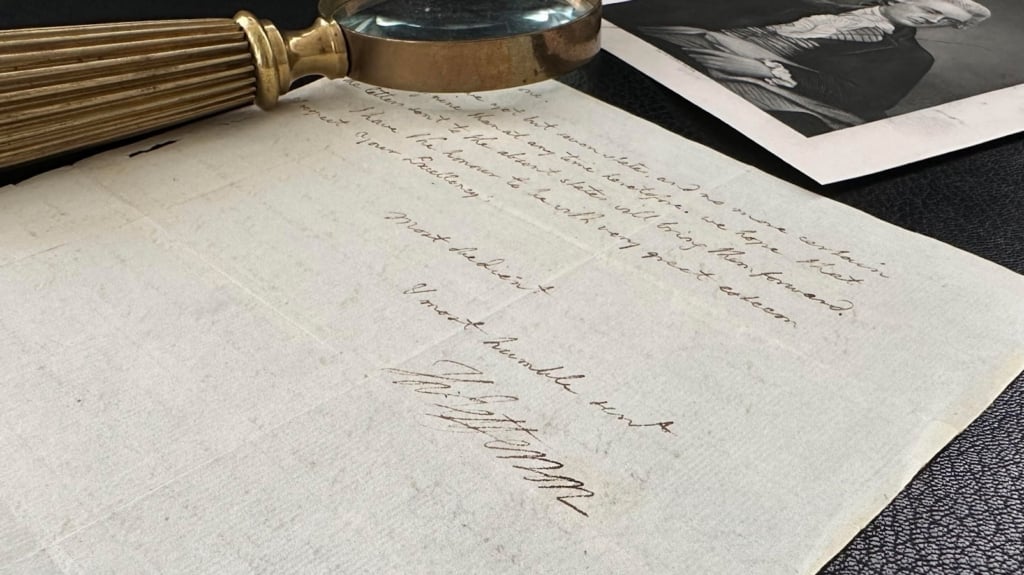
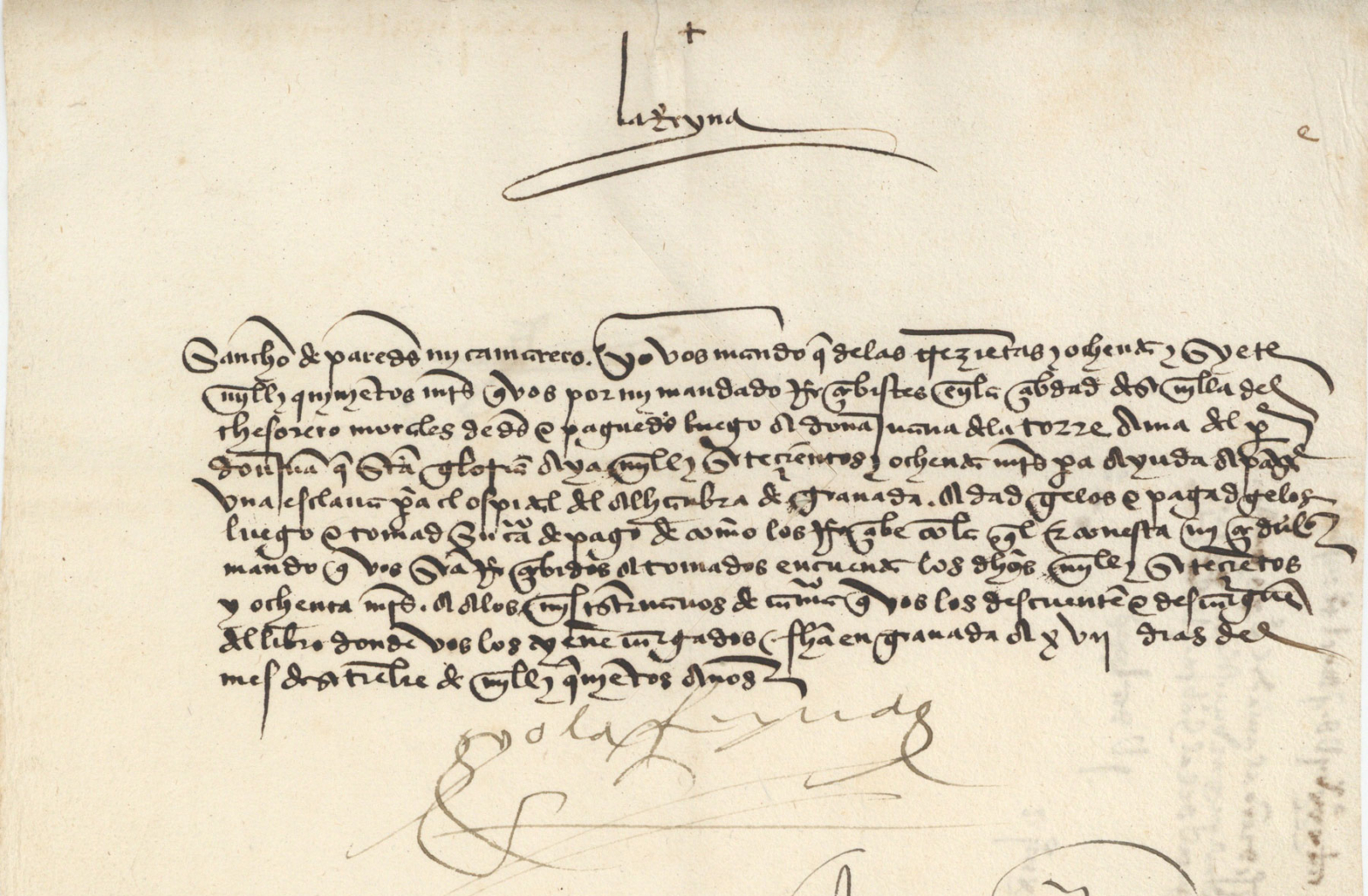
Document signed by Isabella “Yo la Reyna” [“I the Queen”), Juana del Torre and Gaspar de Gricio, Granada, September 17, 1500, mentioning her son and working to build the new hospital. “Sancho de Paredes, my chamberlain I order you that, from the 387,500 maravedís that you received in the city of Seville by my command from treasurer Morales, you are to give and immediately pay to Doña Juana de la Torre, the servant of Prince Don Juan (may he rest in holy glory), 1,780 maravedís as assistance toward the payment for a female slave for the Hospital of the Alhambra of Granada. Send them to her and pay her at once, and take her receipt acknowledging that she has received them; with which, and with this my warrant, I order that the said 1,780 maravedís be accepted from you and entered into account, and that the scribes of my chamber deduct and discharge them from the ledger in which they are charged to you. Given in Granada on the 17th day of the month of September of the year 1500.”
“By command of the Queen, Gaspar de Gricio”
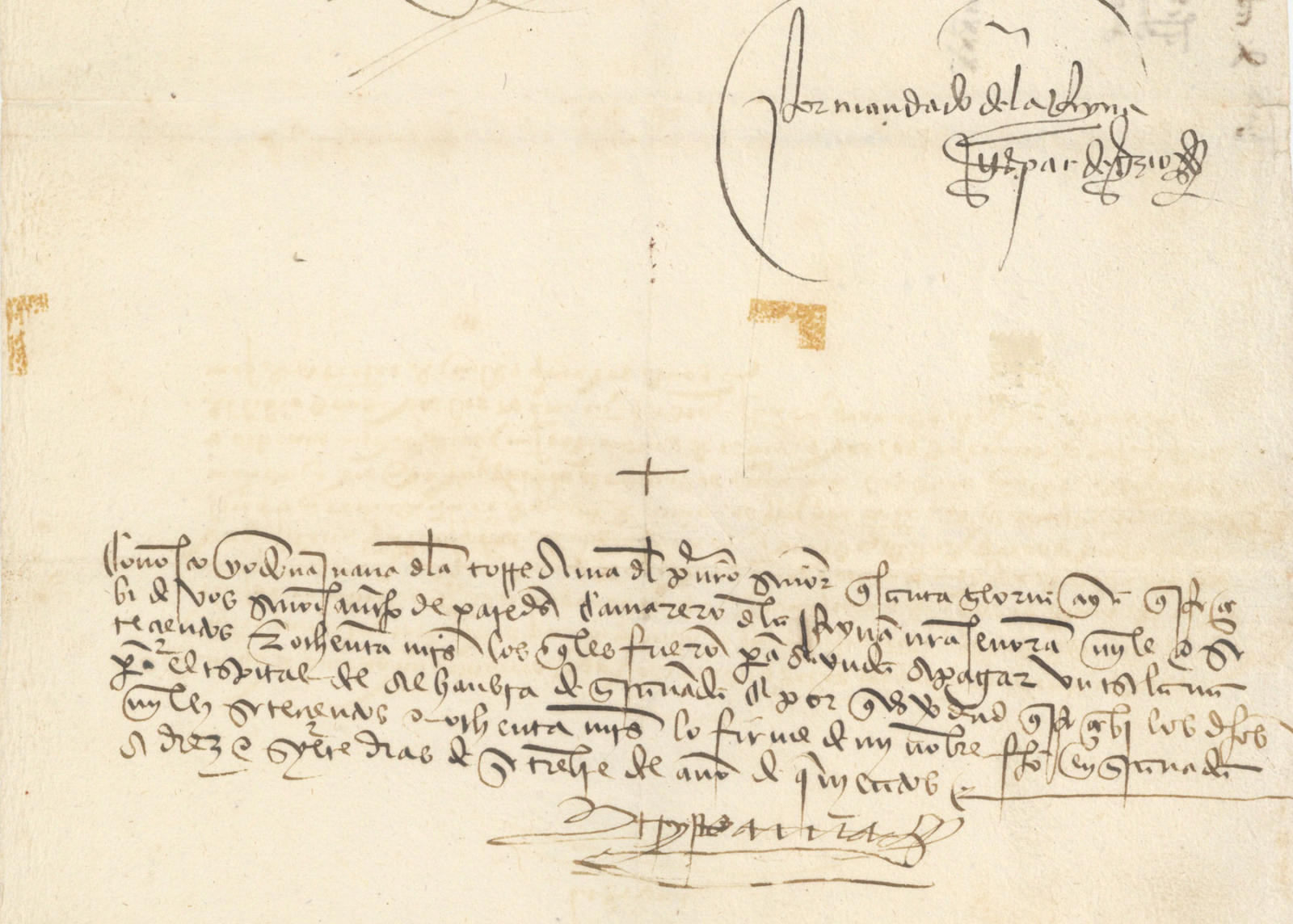
Juana has signed her receipt: “I, Doña Juana de la Torre, servant of the Prince Our Lord (may he rest in holy glory), acknowledge that I received from you, señor Sancho de Paredes, chamberlain of the Queen our lady, 1,780 maravedís, which were for assistance toward the payment for a female slave for the Hospital of the Alhambra of Granada. And because it is true that I received the said 1,780 maravedís, I signed it with my name. Done in Granada on the 17th day of September of the year 1500. [Signed:] Juana”
It is remarkable to see this combination of signatures on such an important document, but even more so, to see Isabella reference here her deceased son and only male heir. After 1500 there were no male heirs, and the combined inheritance passed through Juana, daughter of the Catholic Monarchs, and her husband Philip the Handsome, a Habsburg prince, which is precisely what opened the door for the Habsburgs (Charles and then Philip II) to rule Spain and link Iberian power to the Austrian/Imperial world.

Frame, Display, Preserve
Each frame is custom constructed, using only proper museum archival materials. This includes:The finest frames, tailored to match the document you have chosen. These can period style, antiqued, gilded, wood, etc. Fabric mats, including silk and satin, as well as museum mat board with hand painted bevels. Attachment of the document to the matting to ensure its protection. This "hinging" is done according to archival standards. Protective "glass," or Tru Vue Optium Acrylic glazing, which is shatter resistant, 99% UV protective, and anti-reflective. You benefit from our decades of experience in designing and creating beautiful, compelling, and protective framed historical documents.
Learn more about our Framing Services
