






King Henry VIII: A Rare Document Signed as King in 1541, Granting Lands Passed Down from of one of Richard the Lionheart’s Commanders in the Third Crusade


The Torrell family had a long storied history; this would be their final land grant for this historic land, as the grantee died with one female heir
The grant is subject to tax considerations – all the property must be fully inspected and assessed by the King’s valuers
Henry VIII’s reign is usually remembered for the King’s six wives and his legendary appetites. Infamously, he sent two of his queens, Ann Boleyn (mother of future Queen Elizabeth I) and...
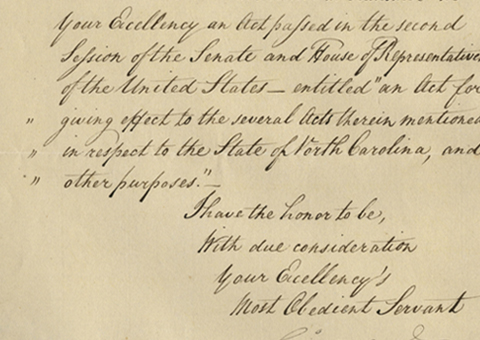

The grant is subject to tax considerations – all the property must be fully inspected and assessed by the King’s valuers
Henry VIII’s reign is usually remembered for the King’s six wives and his legendary appetites. Infamously, he sent two of his queens, Ann Boleyn (mother of future Queen Elizabeth I) and Catherine Howard, to their deaths on the executioner’s block at the Tower of London. But Henry was an important king, and many of his actions as King still resonate today. It could be said that in key ways Henry VIII impacted our modern world: his break with Rome, his shaping the consolidation and growth of the Reformation, his Dissolution of the Monasteries, and encouragement of the age of discovery, all had profound and lasting effects.
On his father’s death in 1509, Prince Henry became King Henry VIII. He was the first adult prince to inherit the throne peacefully from his father in almost 100 years. Henry was only 17, but his youthful vigor and his dual Yorkist and Lancastrian blood made him the physical embodiment of a new beginning for the English nation. Everywhere he went, Henry surrounded himself with rich displays of gold and silver. He was called the best-dressed sovereign in the world: his robes were the richest and most superb that could then be imagined. Henry’s armor made a powerful statement, too. Henry believed he had a royal duty to lead his nation to glory in war, against traditional enemies, especially the French. He believed he could even rekindle England’s ancient claim for the throne of France. In 1513, the King led an army across the Channel and captured the French town of Thérouanne and city of Tournai. Such military victories were designed to force the enemy to the negotiating table to agree to a favorable peace treaty. In 1520, Henry travelled to France for a two-week summit with the new young French king, Francis I. This summit, remembered as the ‘Field of Cloth of Gold’, was one of the most extravagant and expensive European royal festivals in history.
Glorious victories on the battlefield and magnificent European summits were all very well, but Henry VIII needed a son and heir to ensure the future of the Tudor dynasty and to avoid ensuing bloody competition over the crown. In a world dominated by war and men, countries ruled by women were considered vulnerable to being acquired by others through marriage. It was a king’s principal responsibility to secure the peace and prosperity of his realm by having a son – a king-in-waiting. Queen Katherine gave birth to Princess Mary, later Queen Mary I, but at least five other pregnancies ended in a heart-breaking series of miscarriages and still-births. Henry then went from wife to wife looking for a son and heir. Henry wanted a divorce from first wife Katherine to let him marry his first new love, Anne Boleyn. So all-consuming was Henry’s desire for a divorce that it became known as the King’s ‘Great Matter’. Katherine resisted, and without her consent, Henry needed the Pope to grant him a divorce. Katherine’s nephew was the Holy Roman Emperor Charles V, the most powerful ruler in Europe, and Charles controlled the Pope, who would not agree to the divorce.
Encouraged by Protestant reformers who denied the authority of the Pope, Henry declared his independence from Rome in a series of Acts passed between 1532 and 1534. Thus was born the Protestant Church of England. As well as establishing this new church, he authorized the translation and publication of the Bible in English. His dissolution of the monasteries created a land market and a source of economic prosperity for a new middle class of lawyers and administrators. Henry’s development of the navy would lead to a British ‘golden age’ of discovery, colonial expansion, and imperial power. Soon Britain would have colonies around the world. Only Henry VIII’s force of will and use of his executive royal power made it all possible.

Of all British kings and queens, Henry VIII remains one of the most familiar and controversial. His search for wedded bliss alone makes him extraordinary, but there was so much more to the King and his age. In many ways, Henry VIII created modern Britain, with a corresponding effect on its colonies.
The Torrells held substantial land from the time of Henry II. In Henry II’s reign, William Torrell acquired Torrell’s Hall, according to a later history, by virtue of his position of “being Napperer to the King, or having the care of the King’s Nappery, or Table-Linen, on the day of his Coronation.” The next owner, Amauri de Torrell, is recorded in the Abbey records was “one of the great men that accompanied Coeur de Lion to the Holy Land.” The last heir, Humphrey, served as Sheriff of Essex and died in 1544, leaving an only child, ending the Torrell family ownership of this property.
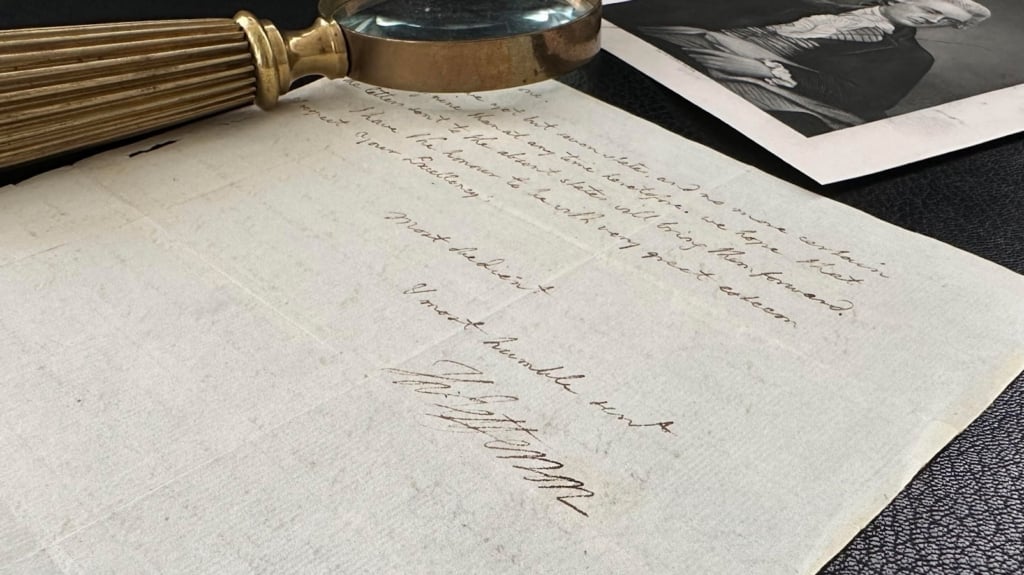
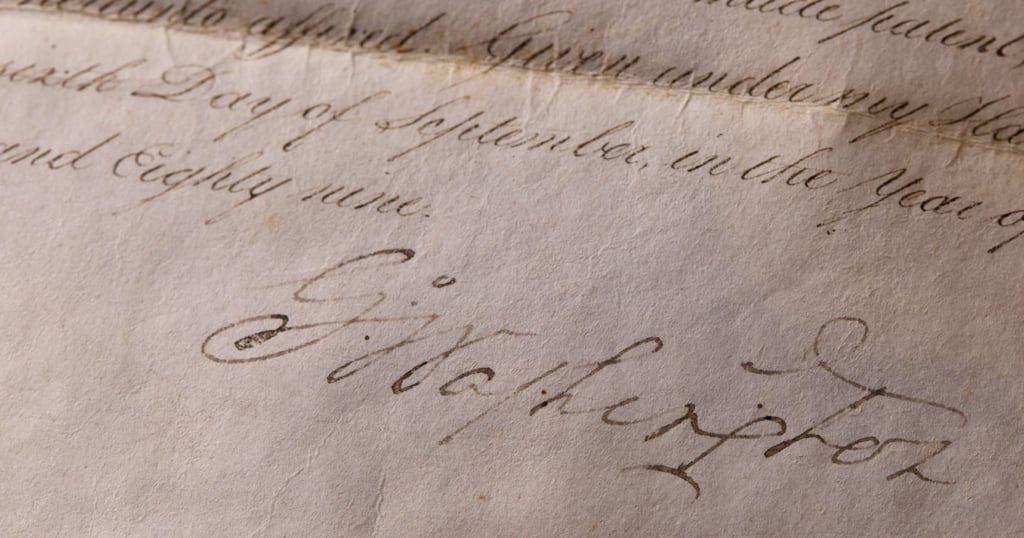
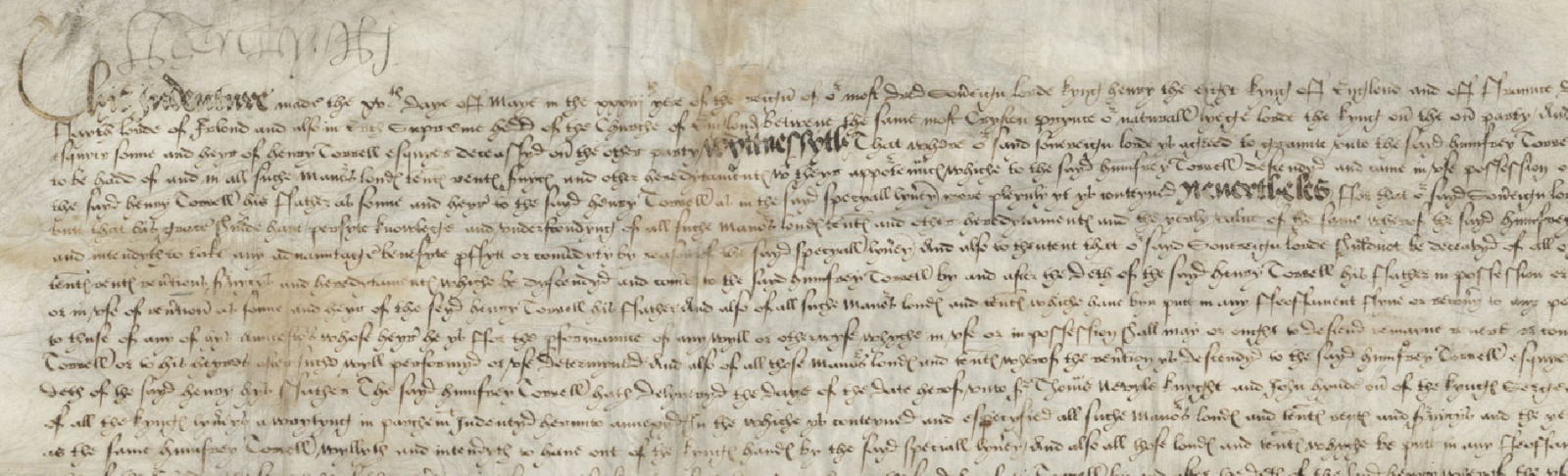
Document signed “Henry R”, “King of England and France,” on vellum, 19 x 13.5 inches, May 15, 1541, an indenture of livery between King Henry VIII (‘the same most Crysten prynce or naturall lyege lorde’ [most Christian prince or natural Liege Lord]) and Humphrey Torrell, granting the latter lands inherited from his father Henry Torrell, with the stipulation that all the property be fully inspected and assessed by the King’s valuers. These lands, tenements, rents, and other hereditaments were chiefly located in Essex; the family home was Torrell’s Hall in Willingale Doe, Essex. Humphrey Torrell died in 1544, leaving an infant daughter Anne, who went on to marry Henry, son of Sir Thomas Joscelyn.

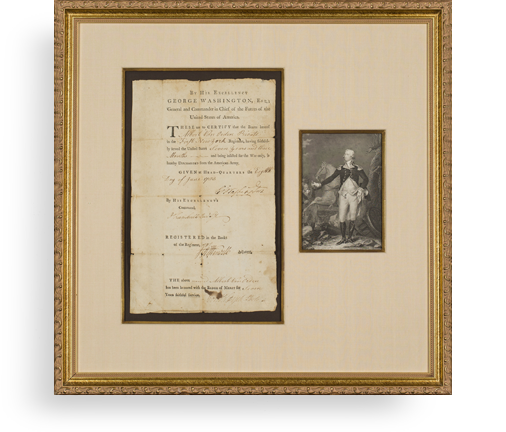
Frame, Display, Preserve
Each frame is custom constructed, using only proper museum archival materials. This includes:The finest frames, tailored to match the document you have chosen. These can period style, antiqued, gilded, wood, etc. Fabric mats, including silk and satin, as well as museum mat board with hand painted bevels. Attachment of the document to the matting to ensure its protection. This "hinging" is done according to archival standards. Protective "glass," or Tru Vue Optium Acrylic glazing, which is shatter resistant, 99% UV protective, and anti-reflective. You benefit from our decades of experience in designing and creating beautiful, compelling, and protective framed historical documents.
Learn more about our Framing Services

