





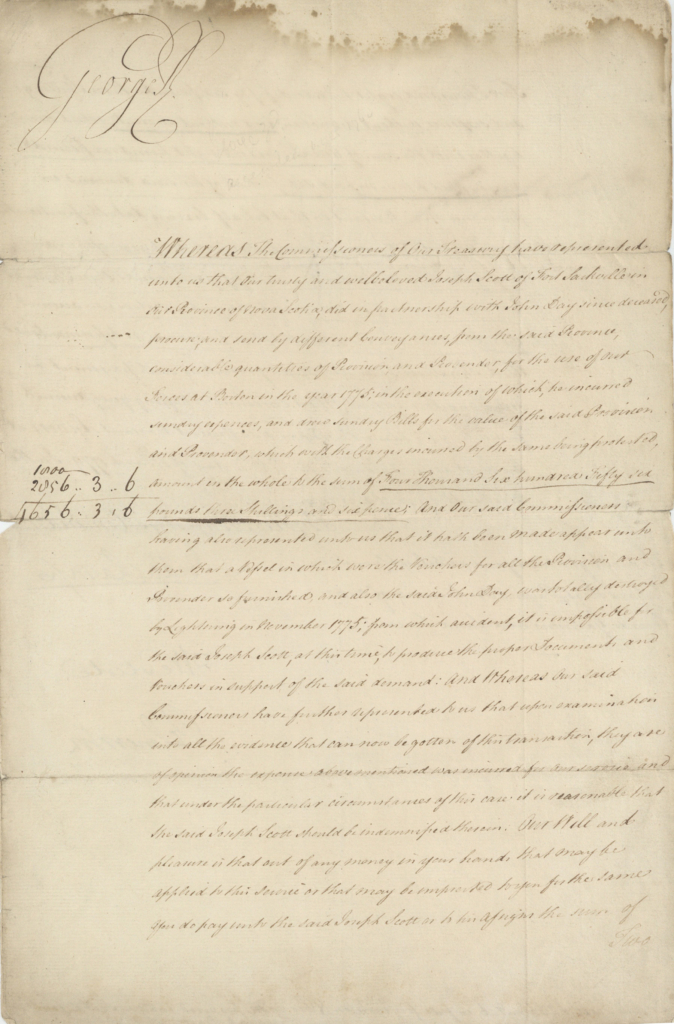
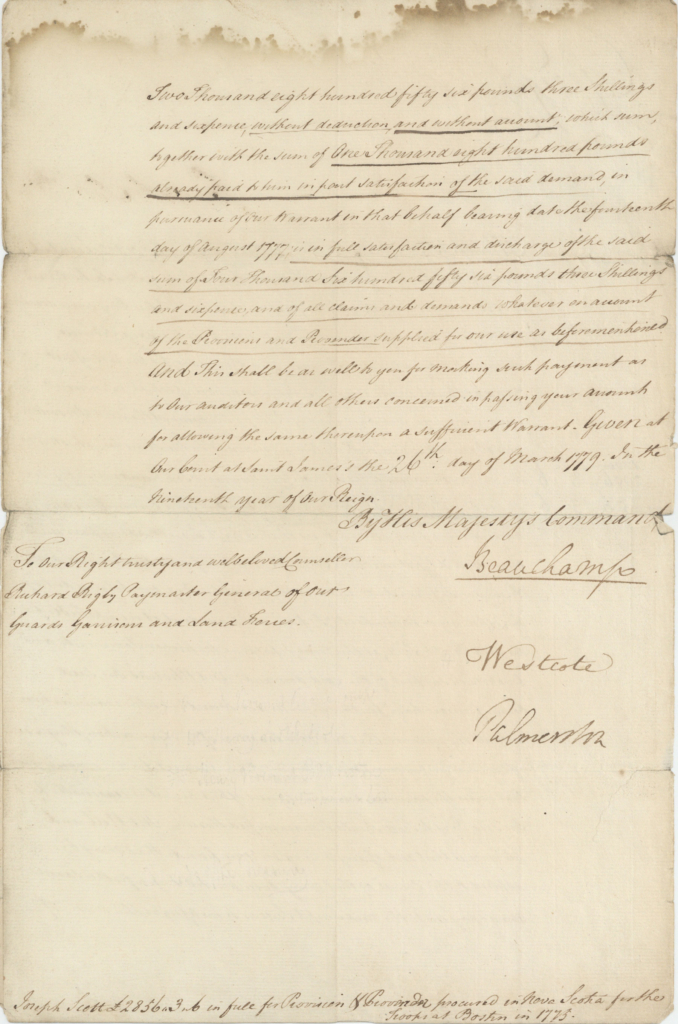
King George III Signed Order to Pay the Suppliers of British forces in Boston in 1775


These were the very forces that marched to Lexington and Concord and started the American Revolution
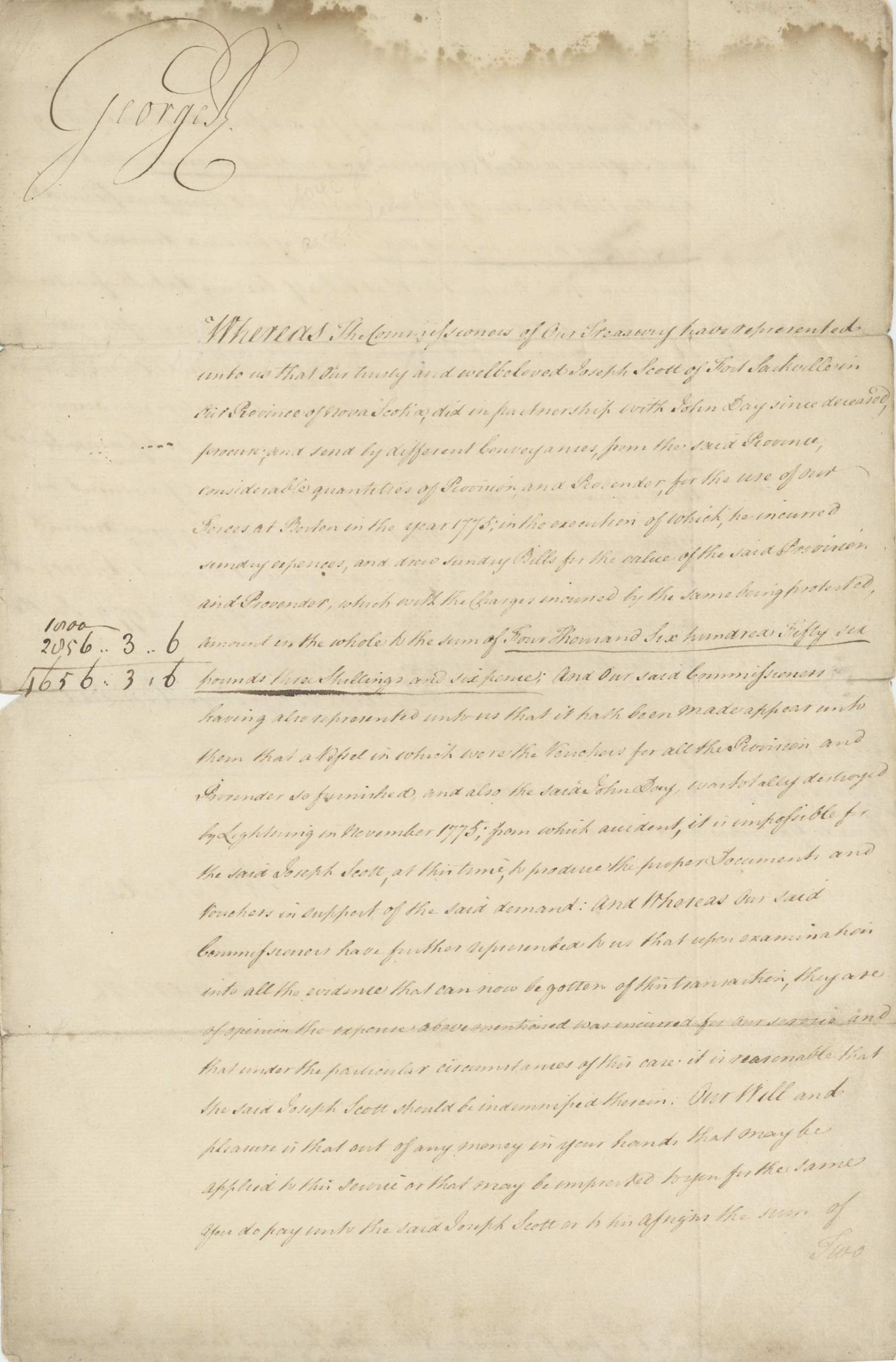
The document states that the funds were for provisions “for the use of our Forces at Boston in the year 1775”
The major colonial port of Boston was the very hub of anti-British resistance that led up to the American Revolution. This resistance started with the Townsend Acts, passed by the British...


The document states that the funds were for provisions “for the use of our Forces at Boston in the year 1775”
The major colonial port of Boston was the very hub of anti-British resistance that led up to the American Revolution. This resistance started with the Townsend Acts, passed by the British Parliament in 1767, which levied taxes on goods imported into the American colonies. Colonists protested these Acts vigorously, and in an attempt to enforce the acts and quell the unrest, in 1768 the British government sent troops to Boston. The arrival of British troops did not ease tensions but rather exacerbated them, leading to clashes between soldiers and colonists.
One key clash, known as the Boston Massacre, occurred on March 5, 1770. British soldiers fired upon a crowd of civilians, resulting in the deaths of five colonists and injuries to several others. The event became a major point of contention in the growing tensions between the American colonies and Great Britain. Another historic act of protest, known as the Boston Tea Party, took place on December 16, 1773, when the Sons of Liberty, disguised as Native Americans, boarded three British ships and dumped 342 chests of tea into the harbor to protest the Tea Act and taxation without representation. This act of defiance was a key event leading to the American Revolution.
Matters came to a head in 1775. On April 19 British troops marched from Boston into the countryside to seize and destroy military supplies that the colonists were storing in Concord. They also aimed to capture prominent Patriot leaders Sam Adams and John Hancock, believed to be hiding in Lexington. The British thought this was a clandestine operation, but the colonists had been warned. The British encountered colonial militia in Lexington, and the ensuing confrontation, known as the Battle of Lexington, marked the start of the Revolutionary War. They also were challenged by militia in Concord, and a battle took place there too. Ralph Waldo Emerson later wrote of the battle at Concord Bridge, “By the rude bridge that arched the flood, Their flags to April’s breeze unfurled, Here once the embattled farmers stood, And fired the shot heard round the world.”
The British troops, after facing the organized resistance at Lexington and Concord, were forced to retreat back to Boston, suffering casualties all along the way. News of the events at Lexington and Concord spread quickly through the colonies, galvanizing support for the Patriot cause. The British being holed up in Boston, the colonists instituted the Siege of Boston, which in time George Washington would command. Boston was held by British troops until their evacuation in 1776.
British troops in Boston needed supplies. Joseph Scott and his business partner, John Day, procured provisions for the troops at Boston, but all of their vouchers and business papers were lost when Day went down with his ship after it was struck by lightning in November 1775. Scott made a special claim to King George III for compensation, which was here authorized. Both men are documented in the Dictionary of Canadian Biography.
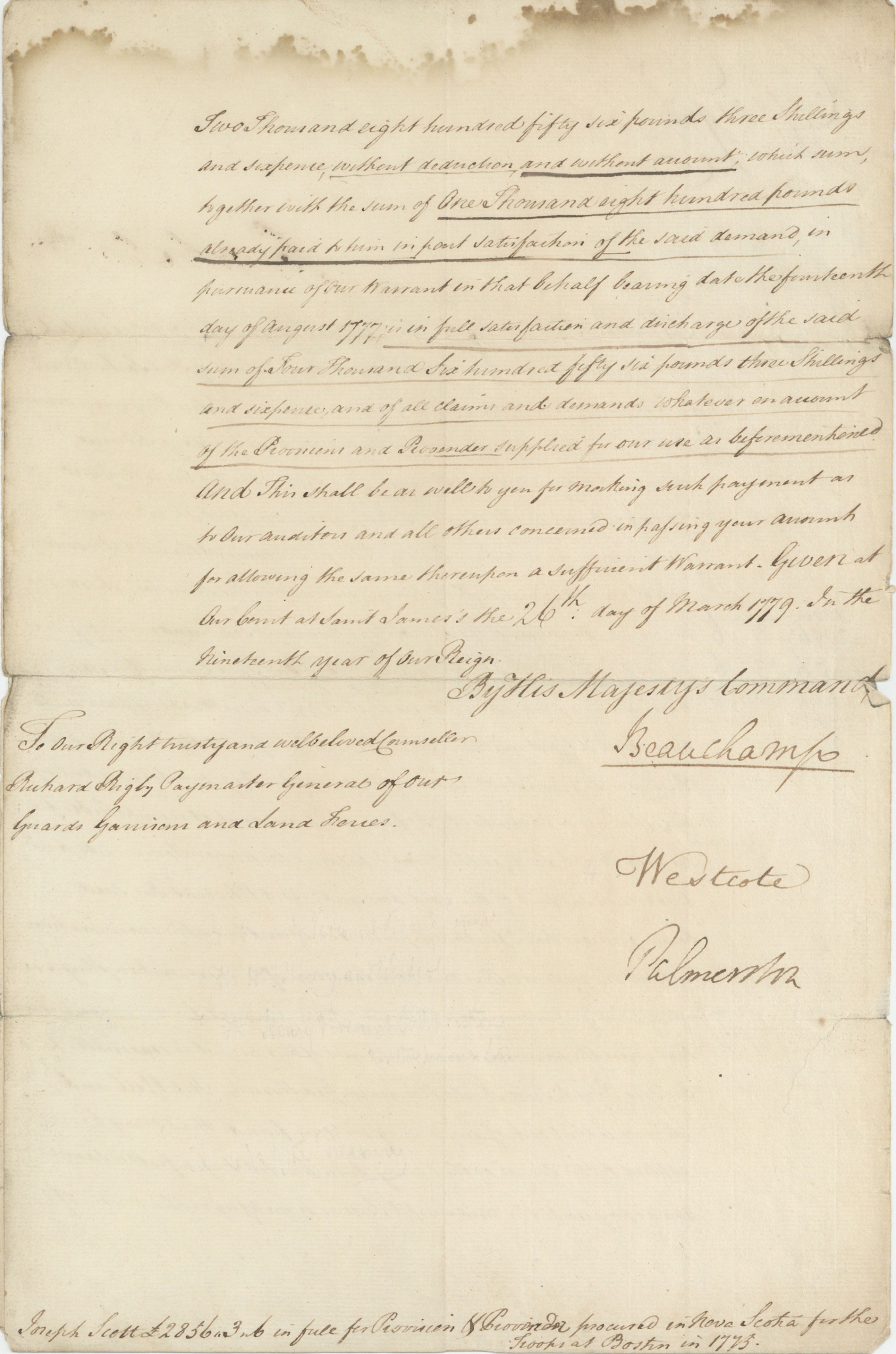
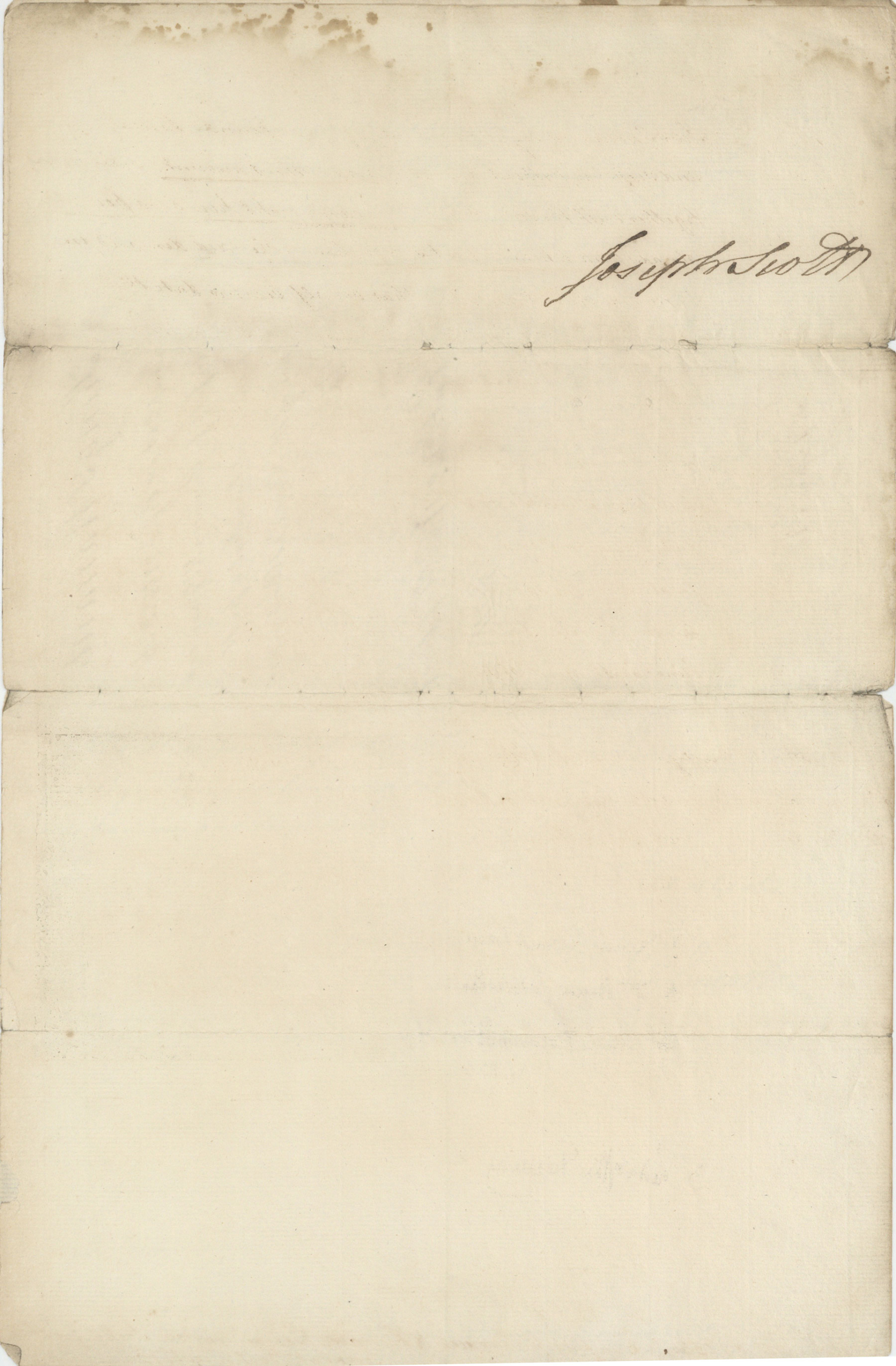
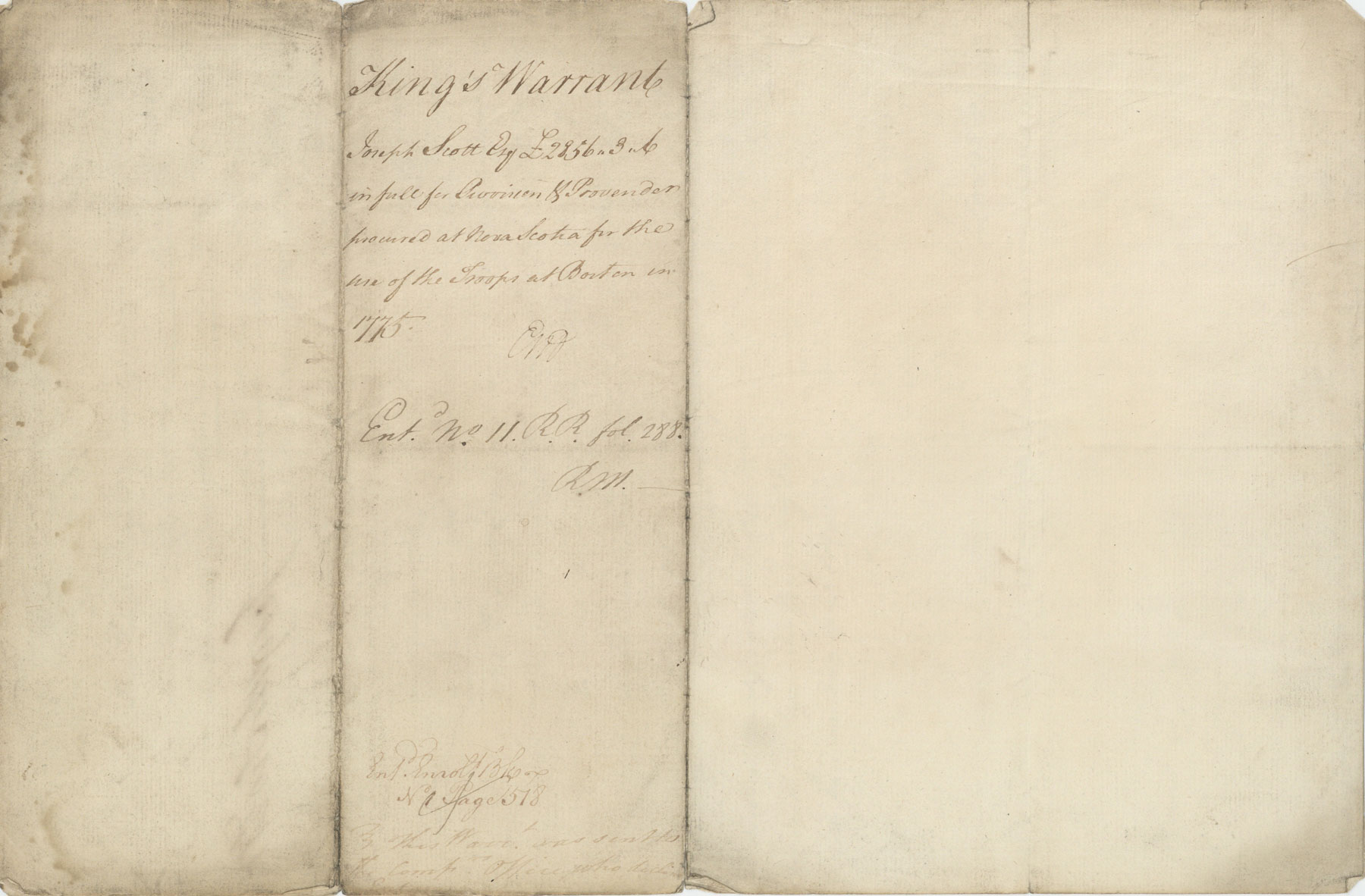
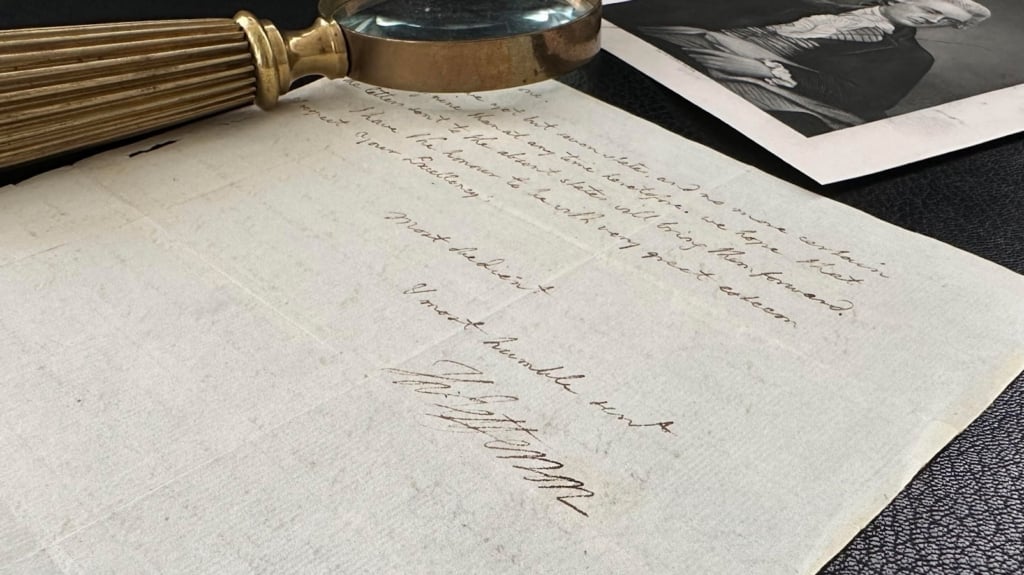
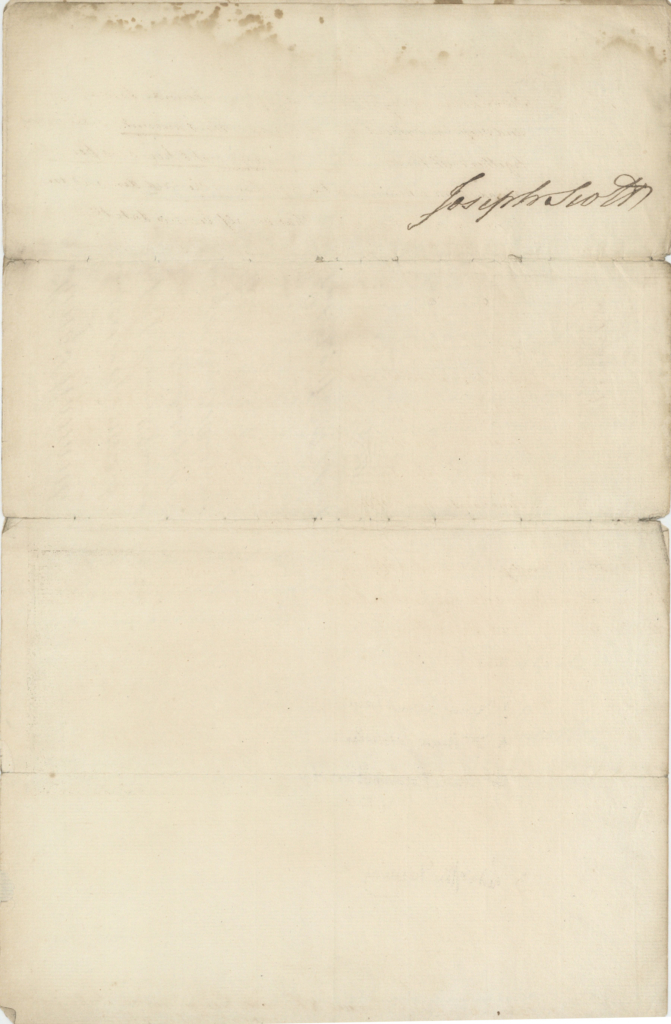
Here King George III orders payment for provisions “for the use of our Forces at Boston in the year 1775”, the very troops and very year that started the Revolution. Manuscript document signed “George R,” one page both sides, 9.5 x 14.75, March 26, 1779, being a pay warrant for compensating a Nova Scotian merchant for provisions sent to supply British Forces in Boston in 1775. “Whereas the Commissioners of Our Treasury have represented unto us that our trusty and well beloved Joseph Scott of Fort Sackville in Our Province of Nova Scotia, did in partnership with John Day since deceased, procure, and send by different conveyances, from the said Province, considerable quantities of Provisions…for the use of our Forces at Boston in the year 1775; in the execution of which, he incurred sundry expenses…Our will and pleasure is that…you do pay unto the said Joseph Scott or to his assigns the sum of Two Thousand eight hundred fifty six pounds three shillings and six pence…together with the sum of One Thousand eight hundred pounds already paid to him.” Prominently signed at the head in ink by King George III, and countersigned at the conclusion by Viscount Beauchamp, Lord Westcote, and Viscount Palmerston as commissioners of the Treasury. Joseph Scott has also signed it.
This is the first time we have seen an order to pay the suppliers of British forces in Boston in 1775, the very forces that marched to Lexington and Concord and started the American Revolution.

Frame, Display, Preserve
Each frame is custom constructed, using only proper museum archival materials. This includes:The finest frames, tailored to match the document you have chosen. These can period style, antiqued, gilded, wood, etc. Fabric mats, including silk and satin, as well as museum mat board with hand painted bevels. Attachment of the document to the matting to ensure its protection. This "hinging" is done according to archival standards. Protective "glass," or Tru Vue Optium Acrylic glazing, which is shatter resistant, 99% UV protective, and anti-reflective. You benefit from our decades of experience in designing and creating beautiful, compelling, and protective framed historical documents.
Learn more about our Framing Services