






The Minuteman and Militia Pledge of 1775, Signed by 106 Soldiers of Elias Dayton’s Unit in June 1775


An Unpublished Newly Discovered Document, Acquired Directly from the Direct Descendants of the Militia Commander
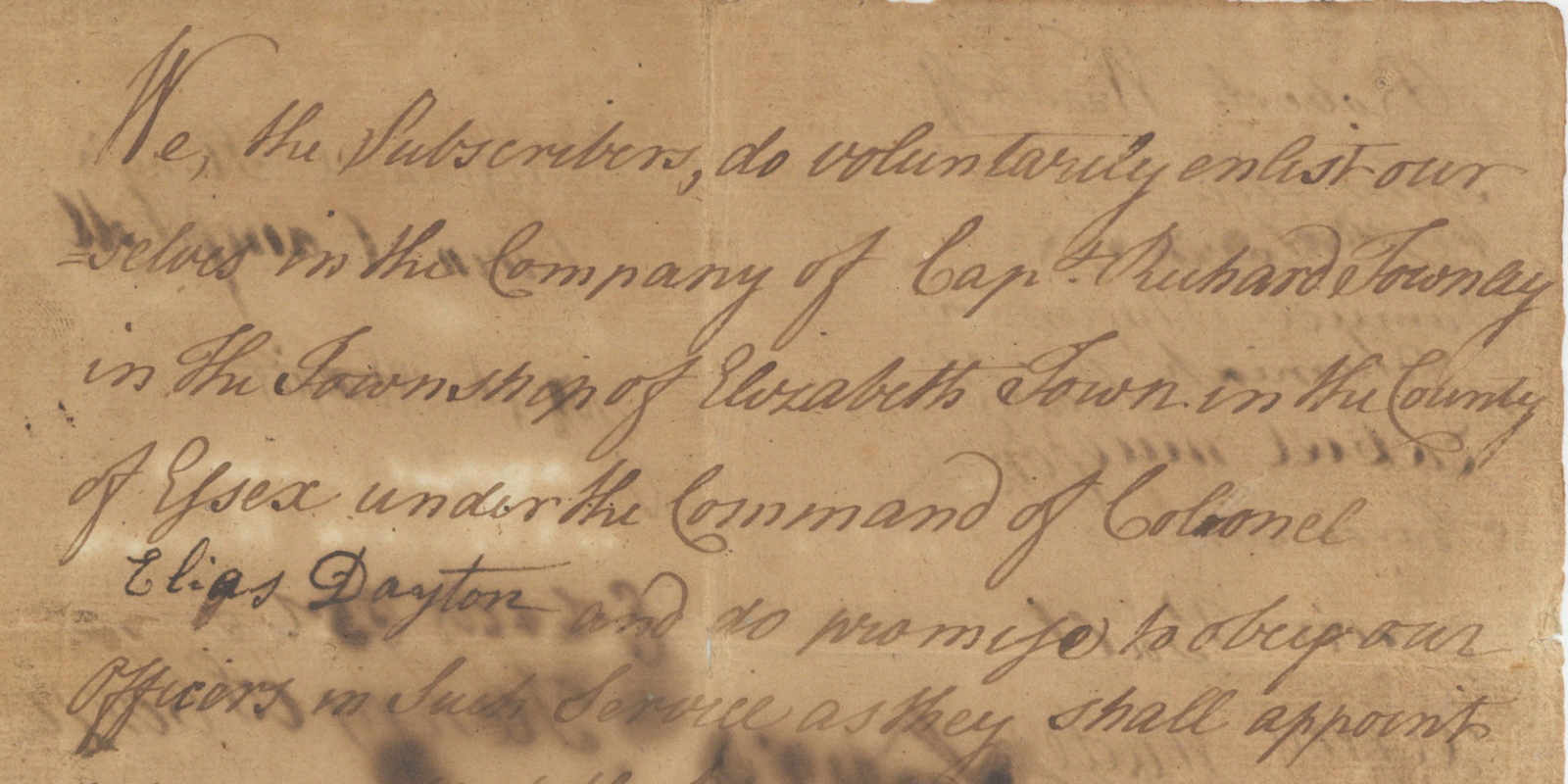
“We, the subscribers, do voluntarily enlist ourselves in the Company of Captain Richard Townley… under the command of Colonel Elias Dayton and do promise to obey our officers in the service”
These men, many of whose names have been lost to history, answered the call of Lexington and Concord
On April...


“We, the subscribers, do voluntarily enlist ourselves in the Company of Captain Richard Townley… under the command of Colonel Elias Dayton and do promise to obey our officers in the service”
These men, many of whose names have been lost to history, answered the call of Lexington and Concord
On April 18, 1775, about 700 British Regulars in Boston, under Lieutenant Colonel Francis Smith, received secret orders to capture and destroy colonial military supplies reportedly stored at Concord. Through effective intelligence gathering, Patriot leaders, among them John Adams and John Hancock, received word weeks before the British expedition that their supplies might be at risk and had moved most of them to other locations. On the eve before the battles of Lexington and Concord, a series of military movements by General Gage and Lt. Col. Smith raised the attention of many of the men in the Provincial Congress, among them Joseph Warren, who sent for Paul Revere under the highest level of secrecy, Revere barely evading the patrols of the British. He, along with a couple other men, was to warn area militias of the British plans and approaching British Army expedition from Boston.
Groups of impromptu militia had been raised and training, awaiting the British attack. These men, whose legacy and fame continues to this day, were the minutemen. They were not only in Massachusetts. Provincial Congresses sprung up to prepare themselves. Among the earliest was in New Jersey, which met in June 1775. They called for the organization of local militias. The Rules and Orders of the Provincial Congress of New Jersey were formally adopted the first week of June 1775. They established committees of safety, militia regulations, and ordered each county to organize companies — including those designated for “minute service.”
Early militia officers were often prominent local men—landowners, merchants, or officials. The soldiers were generally younger, unmarried volunteers drawn from county militia, expected to mobilize quickly for sudden threats. These men, whom the Congress referred to as “minutemen” were trained and to be ready on a moment’s notice. The 1st Regiment of Essex County Militia was part of the earliest organization of New Jersey’s Revolutionary-era militia forces, and among the earliest in the entire nation-to-be. Colonel Elias Dayton, later a Continental Army leader, led Essex forces. Dayton would go on to fight in the Canadian campaign (1776) and be promoted to colonel of the 2nd New Jersey Regiment later in 1776, which he commanded for much of the war. He would command the garrison at Fort Stanwix (Fort Schuyler) in upstate New York, a strategically vital post against British and Native allies, be present at Yorktown, and be promoted to brigadier general in 1783, just before the war ended.
The regiment’s duty was home defense: Guarding the coastline and river approaches against British ships in New York Harbor; Providing detachments for patrolling and enforcing resolutions of the Continental Congress (such as stopping trade with Britain); Serving as minutemen to respond to unexpected attacks. They carried out raids, ambushes, and harassment of British troops and Loyalist militias. Later, they reinforced Continental Army operations, but also acted independently.
Richard Townley was from a prominent and early New Jersey family, the majority of which remained loyalists. But Townley took up the call from Massachusetts in June 1775 and set about forming a minuteman unit under Dayton.
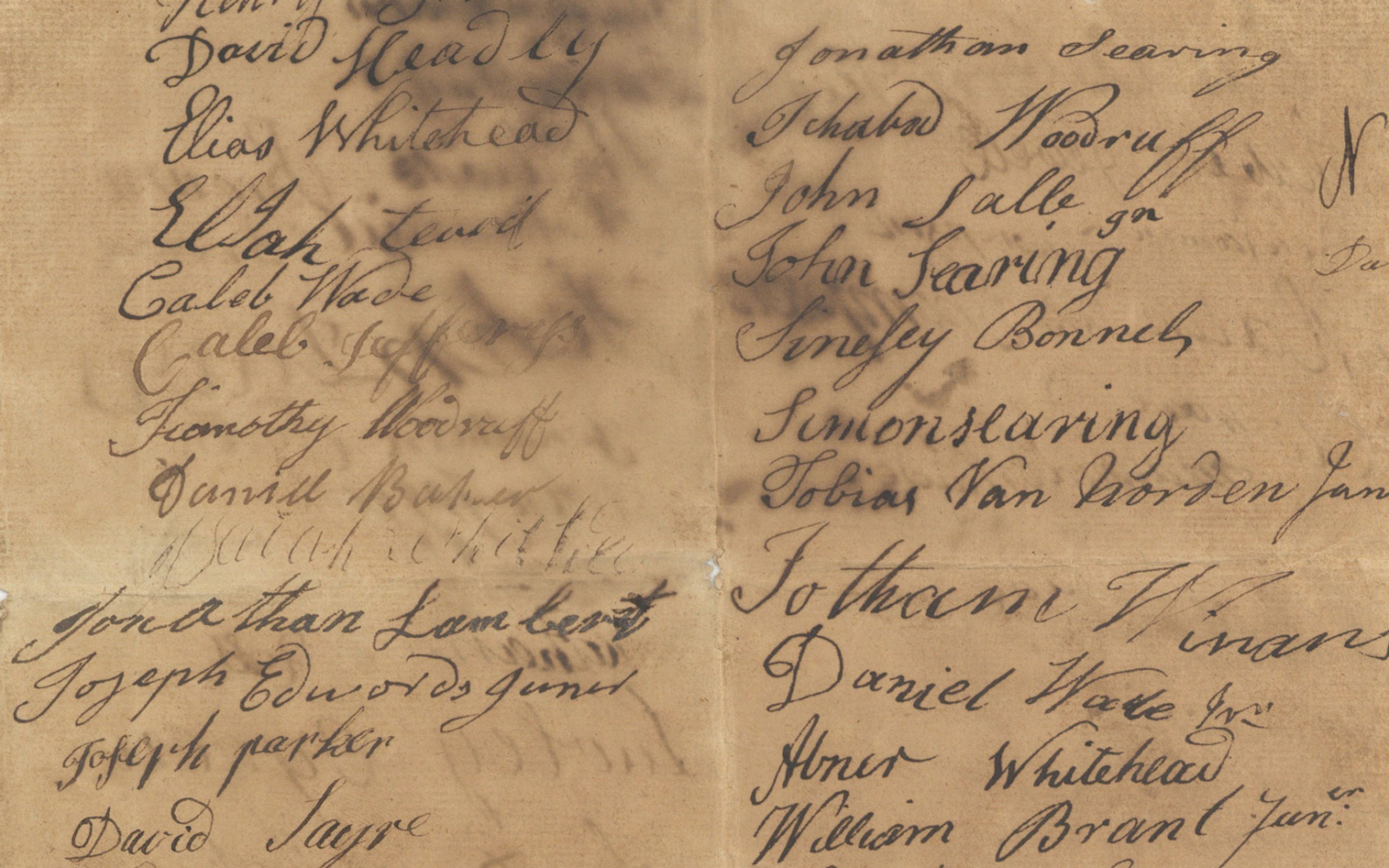
Document signed, June 29, 1775, in an unknown hand, filled in by Townley, signed by 106 soldiers who signed the pledge located at the top of the document. Some of these men would have trained and served as minutemen, pursuant to the rules and regulations of the New Jersey Congress. Others would have performed duties of the militiamen. “We, the subscribers, do voluntarily enlist ourselves in the Company of Captain Richard Townley in the Township of Elizabethtown in the County of Essex under the command of Colonel Elias Dayton and do promise to obey our officers in the service as they shall appoint us agreeable to the rules and regulations of the Provincial Congress. Witness our hands this twenty night day of June Ano Domina (sic) One thousand seven hundred and seventy five.”
We have found no similar, large scale minuteman or militia pledge from this early in the war, signed by the soldiers, having reached the market. This document was passed down in the Townley family and was acquired by us from his direct descendant.

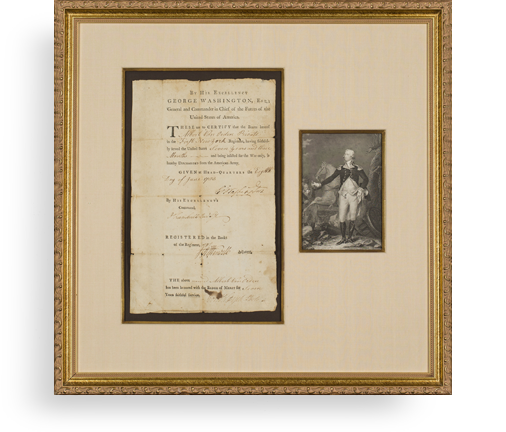
Frame, Display, Preserve
Each frame is custom constructed, using only proper museum archival materials. This includes:The finest frames, tailored to match the document you have chosen. These can period style, antiqued, gilded, wood, etc. Fabric mats, including silk and satin, as well as museum mat board with hand painted bevels. Attachment of the document to the matting to ensure its protection. This "hinging" is done according to archival standards. Protective "glass," or Tru Vue Optium Acrylic glazing, which is shatter resistant, 99% UV protective, and anti-reflective. You benefit from our decades of experience in designing and creating beautiful, compelling, and protective framed historical documents.
Learn more about our Framing Services


