






The Archive of the Patriot Church of Menotomy, Which Answered the Call on April 19, 1775, the First Day of the Revolutionary War, With at Least 10 Documents Signed by Separate Minutemen, Including the Commander of the Menotomy Minutemen, Benjamin Locke
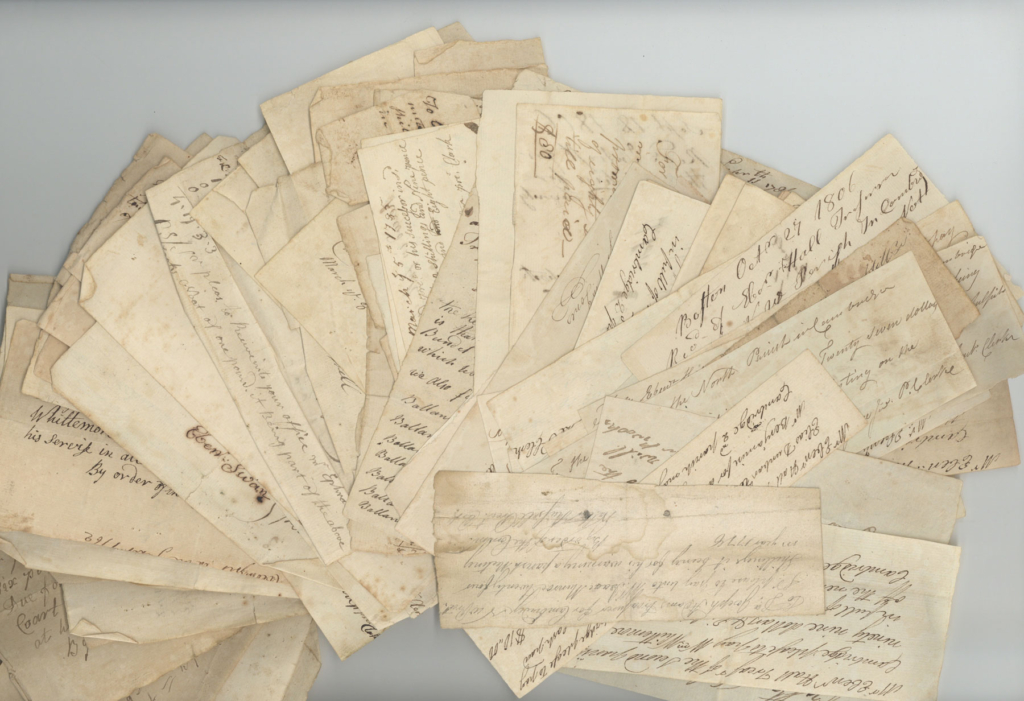


Locke, who signed in March 1775, met directly with Paul Revere on his midnight ride less than a month later
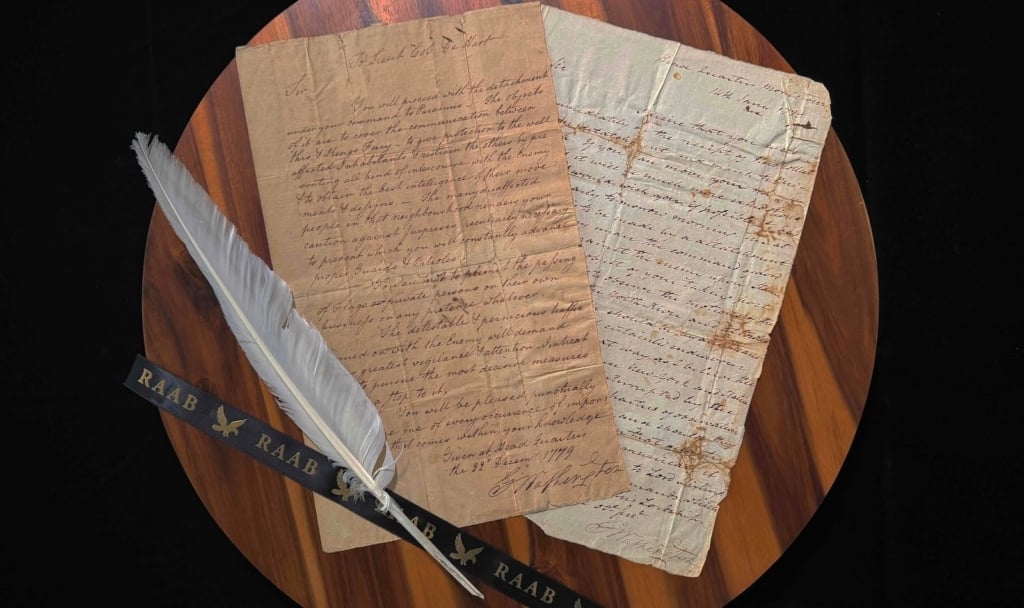
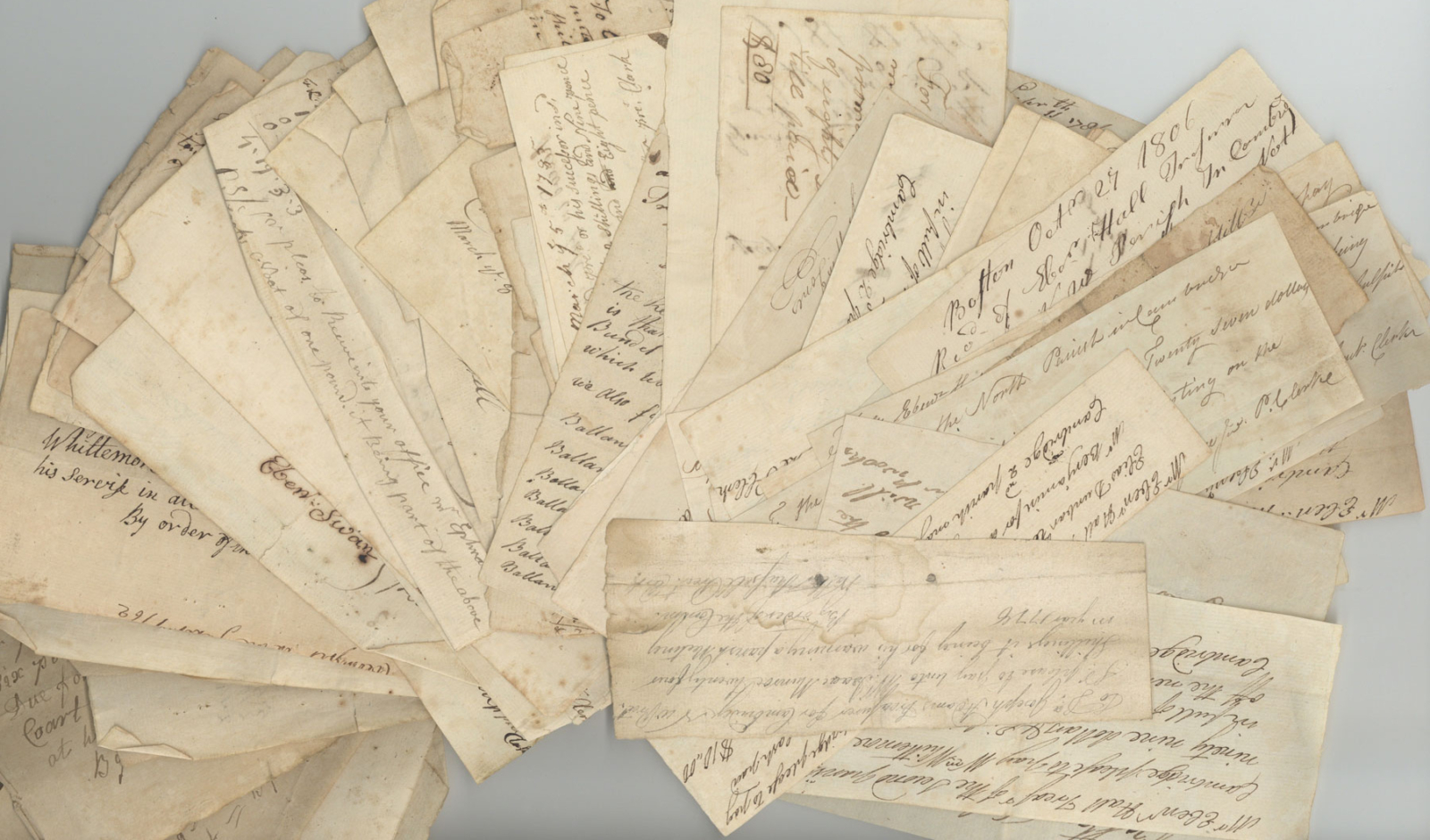
Nearly 100 documents, including autographs of Minutemen, particularly their commanders, all of which are scarce, this being the largest single source we have ever seen
From Colony to Republic: The documents span from the 1760s through the 1800s and relate to the maintenance of the patriot church at Menotomy, whose bell...

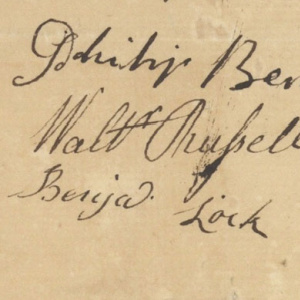
Nearly 100 documents, including autographs of Minutemen, particularly their commanders, all of which are scarce, this being the largest single source we have ever seen
From Colony to Republic: The documents span from the 1760s through the 1800s and relate to the maintenance of the patriot church at Menotomy, whose bell tolled the morning of April 19, 1775 to warn its citizens and the militia that the British were coming
Featured on the Inspired by History podcast
After the Boston Tea Party in 1773, the British Parliament passed the Intolerable Acts (early 1774), including the restrictive Massachusetts Government Act. Patriot leaders in Suffolk County, Massachusetts, adopted the Suffolk Resolves in resistance to the acts. The leaders formed a Patriot provisional government, the Massachusetts Provincial Congress, and called for local militias to train for possible hostilities. The Provincial Congress effectively controlled the colony outside of Boston. On September 17, 1774 the First Continental Congress endorsed the Suffolk Resolves. In response, in February 1775, the British government declared Massachusetts to be in a state of rebellion.
On April 18, 1775, about 700 British Regulars in Boston, under Lieutenant Colonel Francis Smith, received secret orders to capture and destroy colonial military supplies reportedly stored at Concord. Through effective intelligence gathering, Patriot leaders, among them John Adams and John Hancock, received word weeks before the British expedition that their supplies might be at risk and had moved most of them to other locations. On the eve before the battles of Lexington and Concord, a series of military movements by General Gage and Smith raised the attention of many of the men in the Provincial Congress, among them Joseph Warren, who sent for Paul Revere under the highest level of secrecy, Revere barely evading the patrols of the British. He, along with a couple other men, was to warn area militias of the British plans and approaching British Army expedition from Boston.
Revere crossed the Charles River and, receiving a horse, proceeded West toward Lexington, passing before through the town of Menotomy, or West Cambridge, now Arlington. There, at 2am, he met with Benjamin Locke and warned him of the activities and pending aggression of the British. Locke raised the minutemen he had been training and prepared for battle the next day. Revere had beaten Smith to Locke by just 3 hours. Smith’s men heard, as they marched West, the sounds of guns and church bells. All secrecy was lost; the countryside was alarmed to their presence. Smith dispatched a post rider to Boston with an urgent request for reinforcements and continued his march towards Lexington. Most Menotomy families sent their women and children to seek refuge in homes far removed from the Concord road.
On the retreat the British passed again through Menotomy and this time a battle took place with the heroes of Benjamin Locke’s minutemen and others taking center stage. Most were members of the Church there, the 2nd parish, the same whose bell had tolled in the dawn hours of April 19. They helped construct the church, clean it, make repairs, or were involved in the management or religious instruction there, including Benjamin Locke. This was a true patriot church.
These men of the 2nd parish took up arms. Indeed, Menotomy was a scene of unlikely heroism. Locke’s men and many others took part.
The archive:
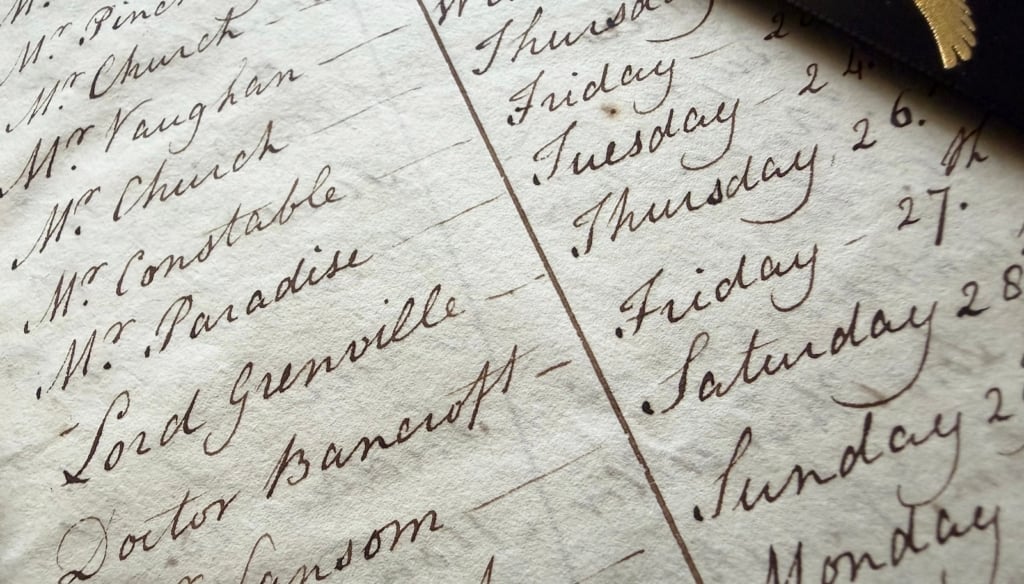
The archive consists of nearly 100 separate documents stretching from 1763 through 1809, attesting to the management and maintenance of the patriot church (2nd parish of West Cambridge) and schoolhouse. They are signed by many of the heroes of 1775. Among the signers of these documents are no fewer than 10 minutemen, including their commander and the man whom Revere warned that historic night, Benjamin Locke, as well as his second in command Solomon Bowman.
A brief on the signers of the archive and a few stories of their heroism. Some of the text comes from contemporary accounts by participants. Many signers are represented multiple times, having signed many documents. They relate to repairing the church, ringing the bell, collecting funds for the church, representing the church at councils, etc….
Benjamin Locke: Menotomy’s Minute Men Captain during the Lexington Alarm. After both Paul Revere and William Dawes rode past his house at the Foot of the Rocks, on present day Appleton Street in Arlington, MA., Captain Locke and his lieutenant Solomon Bowman mustered their troops in the early morning of April 19. In June 1775, Captain Locke also fought at Bunker Hill in Colonel Thomas Gardner’s regiment, where his musket became so hot from repeated firing that he had to wrap his handkerchief around it…and he kept on firing. This regiment was later stationed at Somerville’s Prospect Hill, a part of the Continental Army’s ring surrounding the British in Boston, 1775-6.
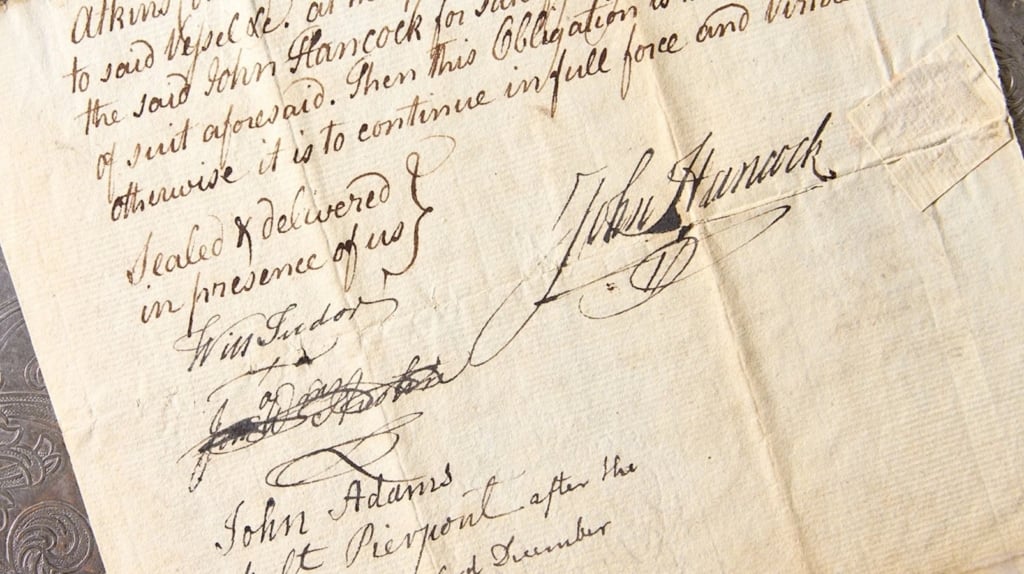
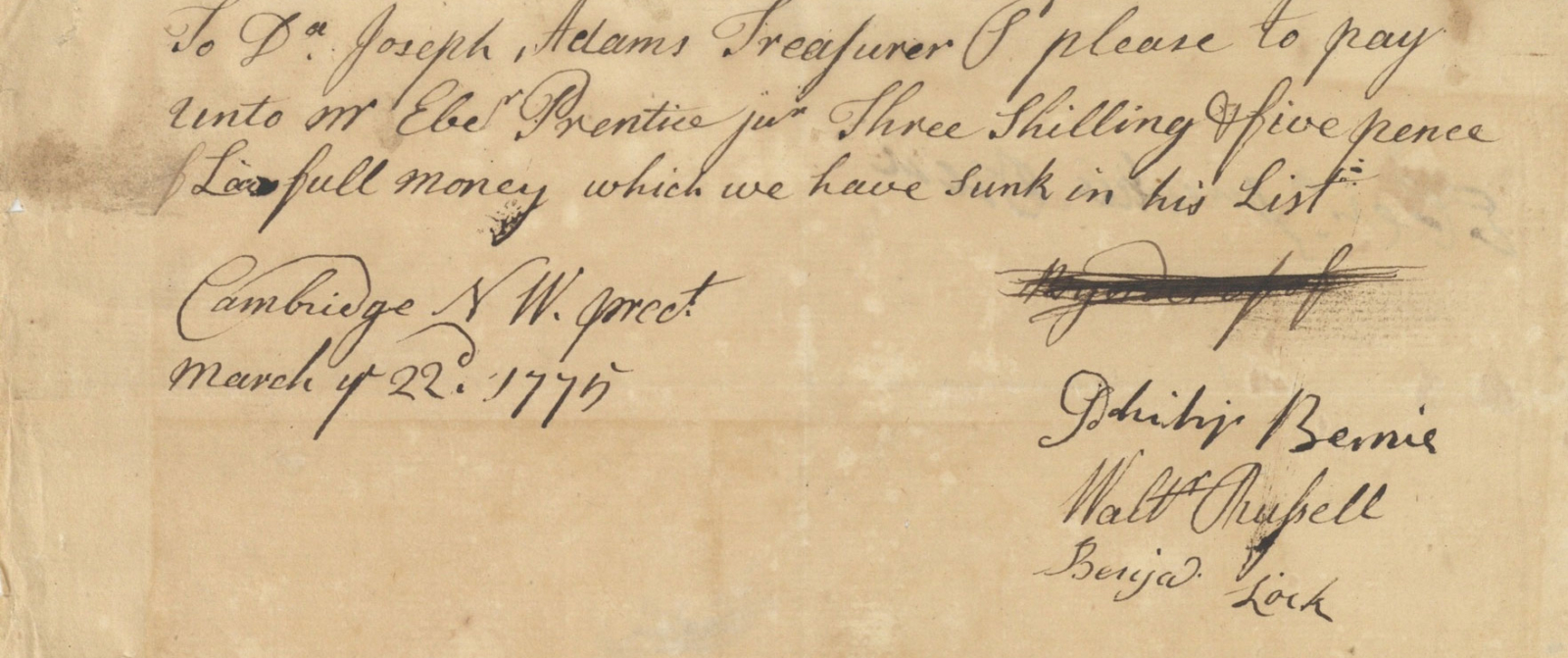
Document signed, Cambridge, March 22, 1775, just weeks before the midnight ride and Locke’s meeting with Revere, signed by Locke and others, directing Adams, Deacon and Treasure, to pay Ebenezer Prentice.
Solomon Bowman: Second in command of Benjamin Locke’s minuteman company. Lieut. Bowman met at North Cambridge a soldier who had straggled some distance away from his comrades. It was man to man in single combat and it happened that neither gun was loaded. The Briton rushed at his antagonist with fixed bayonet. Nothing daunted Bowman, who awaited the attack with clubbed musket and striking aside the bayonet with one blow felled the soldier to the ground and took him prisoner.
Document signed, Cambridge, Mach 6, 1773 signed by Solomon Bowman on verso. The document directs payment by Deacon Joseph Adams to Bowman for nails used to mend the meeting house.
8 other minutemen who appear on the muster rolls of Locke’s April 19 minutemen regiment, among them:
Seth Russell and Samuel Frost
Shortly after the Battle of Lexington and Concord, the Massachusetts Provincial Congress had issued a report that listed five men as missing. All five of those missing men must have been taken prisoner by the British column as it withdrew to Charlestown. Seth Russell and Samuel Frost, of Menotomy, were among them. The British put Frost on a horse, and cut his waist-band strings so that he could not easily run away. They were carried on board a guard-ship in the harbor, and were soon afterwards exchanged.
Document signed, Cambridge Samuel Frost and others, January 22, 1770 directing Deacon Joseph Adams to acknowledge payment to the list from future minuteman Benjamin Locke’s list.
John Cutter, whose house was burned by the retreating British.
Document signed by 2 fighters on that day: Seth Russell and John Cutter, Cambridge, November 7, 1763, to Deacon Joseph Adams of the Church, directing him to “pay unto Seth Russell the sum of fourteen pounds, fifteen shillings and nine pence” for repairing the Church’s meeting house. Signed Cutter on front and Seth Russell on verso
And: Thomas Cutter, Miles Greenwood, William Adams, Israel Blackington, Stephen Frost, Samuel Butterfield
Ammi Cutter (there are least 15 signed by Cutter alone) and Joseph Belknap
The first to engage the British, and to take a prisoner, was a collection of older men, who, though too old to join the minutemen, nonetheless grabbed their muskets and attacked. Locke’s men fought and two were among those listed as among the five missing by the Provincial Congress later that day. It was the third battle of the day, behind Lexington and Concord. They were the first to take a British prisoner of war.
Document signed by both Belknap and Cutter, Cambridge, February 9. 1773, directing Adams to pay Belknap. Signed on recto by Cutter and verso by Belknap.
Ephraim Frost
Frost housed the above first British soldier who wanted to protect himself after being fired on by Ammi Cutter and his older colleagues.
Document signed, Cambridge, March 5, 1767, signed by both Ammi Cutter and Ephraim on the verso, directing Joseph Adams, the Deacon, to pay Frost for his attending the General Court on behalf of the Church.
Samuel Whittemore
Quoting a contemporary account: Whittemore “was awakened in the night in his house under the great elms and as we mentioned before looking out saw the bayonets glistening in the moonlight. His wife early in the morning made her preparations to go for safety to her son’s house near Mystic River and when she was ready she looked around for her husband thinking that of course as he was more than eighty years old he would go with her. She found him oiling his musket and pistols and sharpening his sword for in his younger days he had been an officer in the militia. She urged him to go with her but no he was going up in town. As the British on their retreat were passing through the center they halted a moment by the church. He lay under cover of a wall near where the Russell school house now stands and fired some half dozen shots at the enemy. He had just loaded his gun when he heard the wall rattle and saw five soldiers of the flank guard approaching him shoulder to shoulder. Beside being eighty years old he was lame and knew that it was of no use to attempt to escape. With his musket he shot one of the soldiers and instantly drawing his pistol fired at another. He aimed the second pistol and discharged it just as they fired at him one of the soldiers was seen to clap his hand to his breast. As he fired the third time a ball struck him in the head and he fell senseless. The soldiers beat him with their muskets bayoneted him and left him for dead. After the British had passed by our people finding that there was some life left in him carried him to Cooper’s tavern where the surgeon Dr Tufts of Medford said that it was useless to dress his wounds for he could not live. Yet he did.״
Document signed, Cambridge, March 4, 1767, signed by Ammi Cutter and Samuel Whittemore (on verso), directing Deacon Joseph Adams to pay to Samuel Whittemore the sum of three shillings for attending the surveyor in measuring the line from Cambridge to Medford and from the two meetings houses in 1765.
Joseph Adams, Deacon of church – there are a great many documents signed Adams, and others
Quoting a contemporary account: “Hannah Adams wife of Deacon Joseph Adams of the second precinct in Cambridge testifieth and saith that on the nineteenth day of April last upon the return of the King’s troops from Concord divers of them entered our house by bursting open the doors and three of the soldiers broke into the room in which I then was laid on my bed being scarcely able to walk from my bed to the fire not having been to my chamber door from my being delivered in child birth to that time. One of said soldiers immediately opened my curtains with his bayonet fixed pointing the same at my breast. I immediately cried out For the Lord’s sake do not kill me. He replied Damn you. One that stood near said ‘We will not hurt the woman if she will go out of the house but we will surely burn it.’ I immediately arose threw a blanket over me and crawled into a corn house near the door with my infant in my arms where I remained until they were gone. They immediately set the house on fire in which I had left five children and no other person but the fire was happily extinguished when the house was in the utmost danger of being utterly consumed.״
Below is a partial list of the signers not mentioned above:
Francis Locke
James Robbins
Joseph Wellington
Isaac Watson
Daniel Brown
Seth Reed
Thomas Russell
Patten Russell
William Whittemore
Isaac Watson
Edward Richardson
Thomas Hall
Walter Russell
Nehemiah Cutter
Joseph Welsh
Ebenezer Prentice
Philip Bemis
William Bowman
Thomas Adams
Thomas Whittemore
Philemon Russell
Isaac Munroe
Samuel Hill
Samuel Butterfield
John Frost
Jonathan Wellington
John Cutter Jr
Daniel Oliver
Isaac Munroe
Nathaniel Russell
Thaddeus Fiske
John Davenport
Ebenezer Hall
James Russell
Samuel Locke
Abijah Cutter
Stephen Tufts
Amos Davis
John Frost Jr
Jonas Cutter
Ebenezer Cutter
Daniel Brown
Nathaniel Nason
Jonathan Russell
Samuel Winship
Jacob Converce
Thomas Fillebrown Jr
Eliakim Eastabrook
Levi Bates
Samuel F. Sawyer
Elizabeth Cutter
Asa Bancroft
Lewis Cutter
Benjamin Harrington
Benjamin Locke Jr
John Russell
John Niles
Artemis Kennedy
Jonathan Harrington
William Hill
John Brooks
The history of Arlington, MA
It is worth noting that this archive is a who’s who of the founders of Arlington, MA.
The warrant for the first meeting of the freeholders and other inhabitants of the town of West Cambridge was in 1807. Many of the signers of this archive were prominent members and part of the reorganization of the city at that time. Since the Church went about expanding and re-building around 1805, there are several documents also from this period relating to this particular project, although most of from the 18th century.

Frame, Display, Preserve
Each frame is custom constructed, using only proper museum archival materials. This includes:The finest frames, tailored to match the document you have chosen. These can period style, antiqued, gilded, wood, etc. Fabric mats, including silk and satin, as well as museum mat board with hand painted bevels. Attachment of the document to the matting to ensure its protection. This "hinging" is done according to archival standards. Protective "glass," or Tru Vue Optium Acrylic glazing, which is shatter resistant, 99% UV protective, and anti-reflective. You benefit from our decades of experience in designing and creating beautiful, compelling, and protective framed historical documents.
Learn more about our Framing Services


