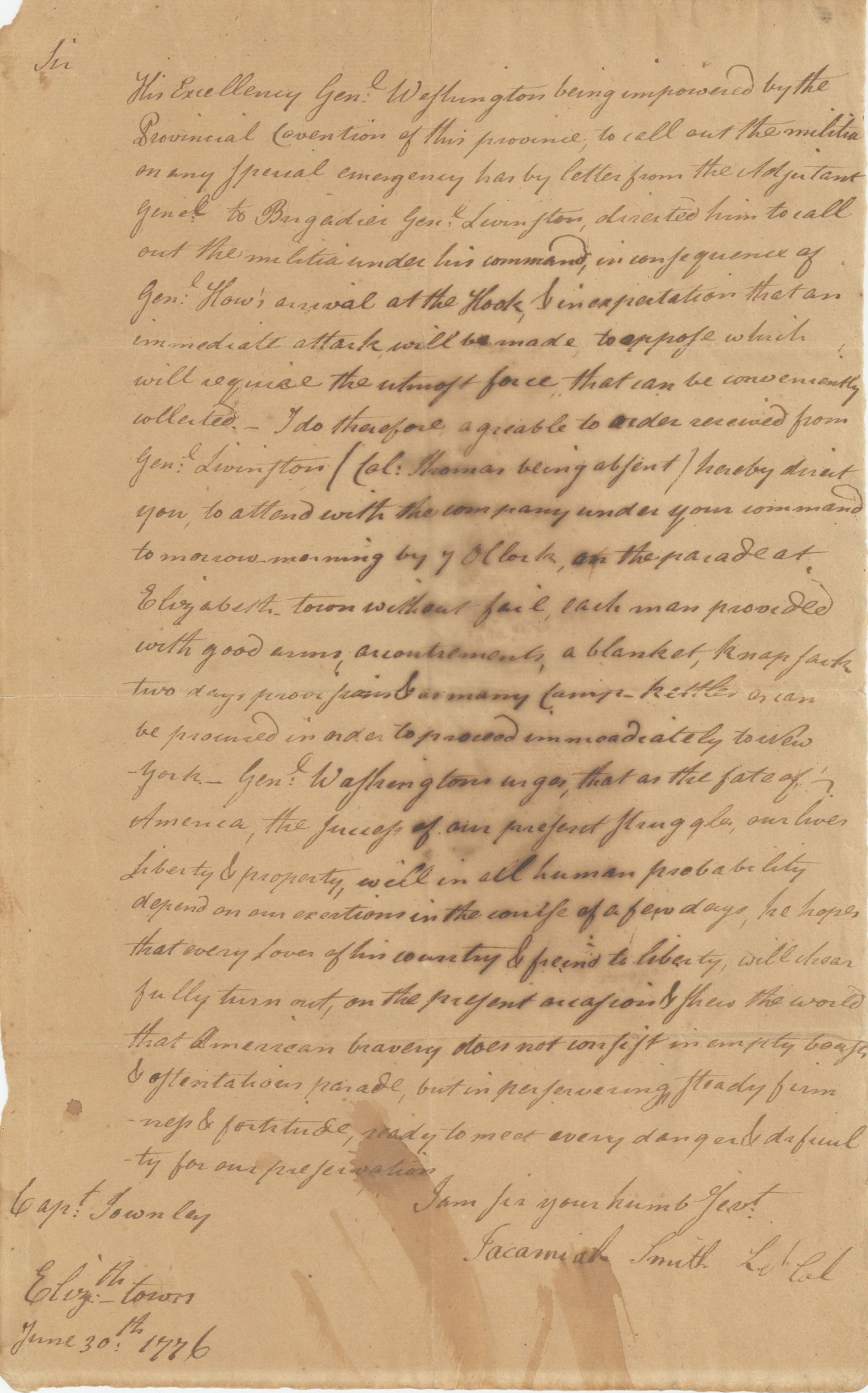






The Militia Will Answer General Washington’s Call in Late June 1776 to Defend New York, to “show the world that American bravery does not consist in empty boasts and ostentatious parade, but in persevering, steady firmness and fortitude, ready to meet every danger for our preservation.”
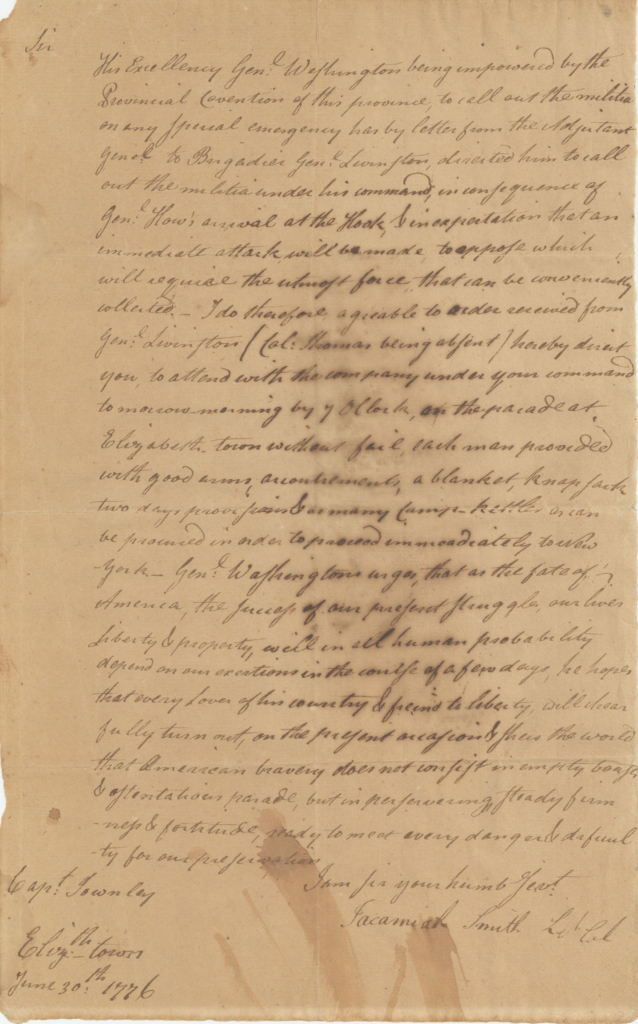

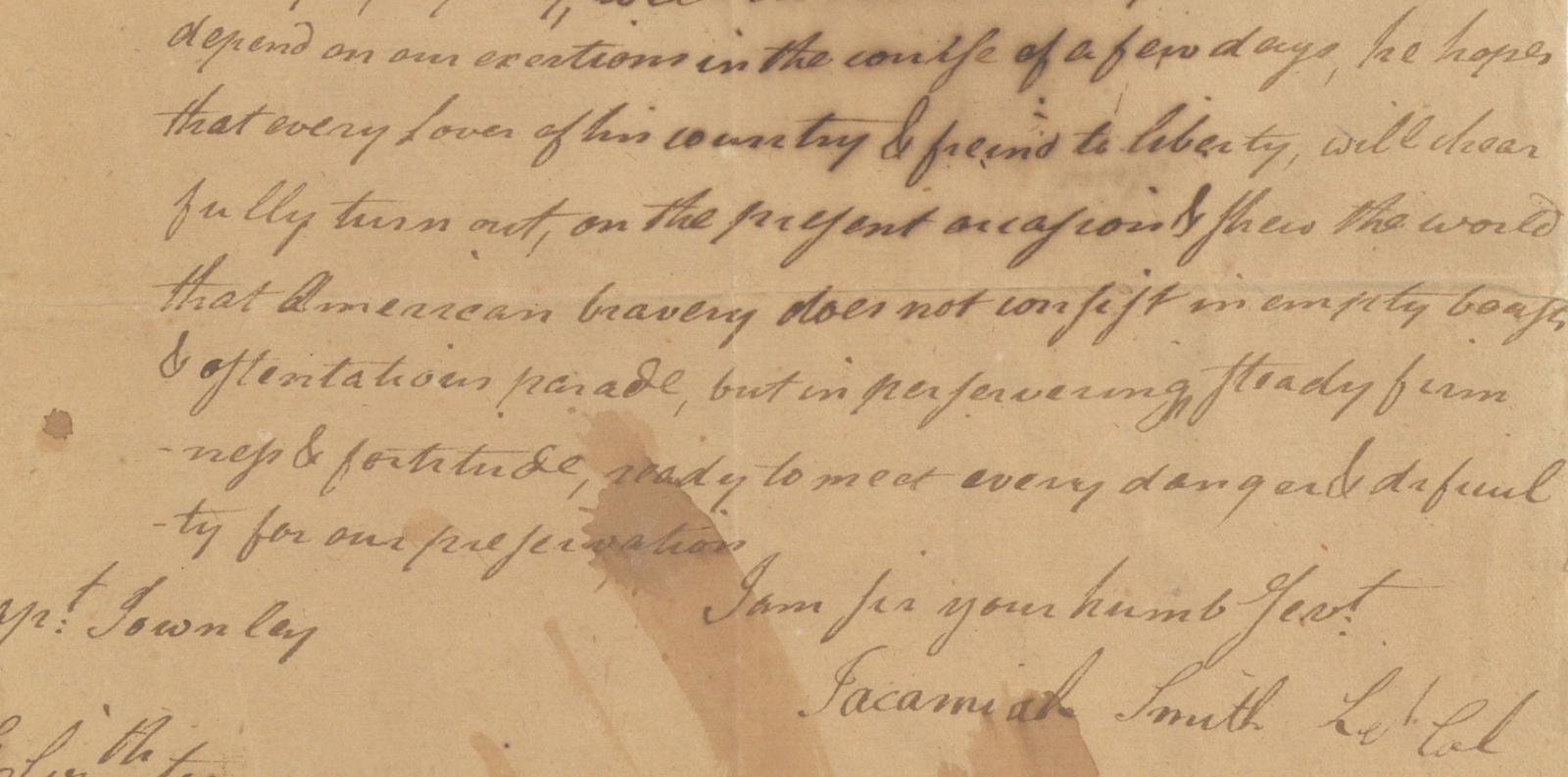
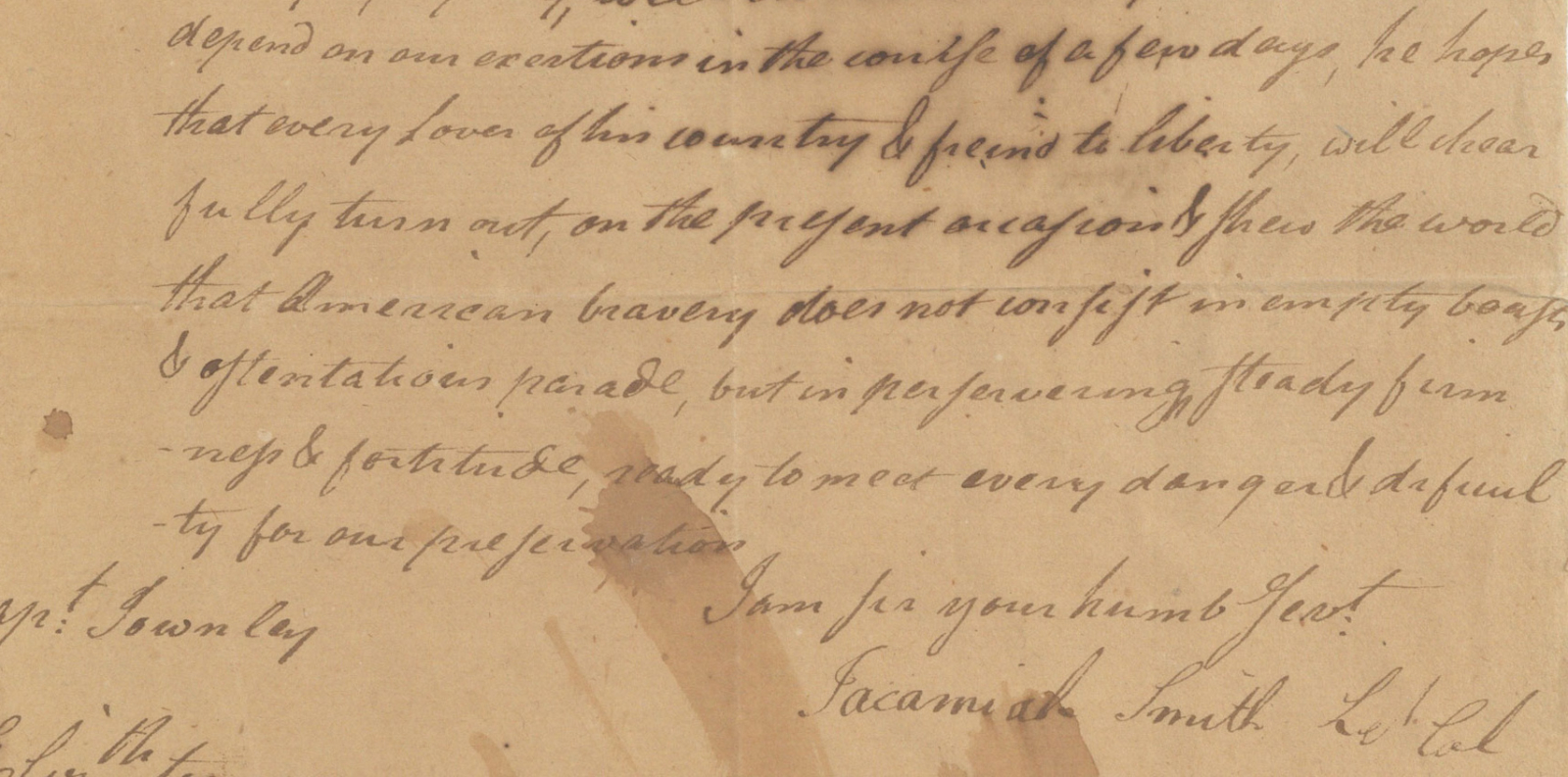
"I hereby direct you to attend with the company under your command tomorrow morning by 7 O'Clock... General Washington urges that the fate of America, the success of our own present struggle, our lives, liberty and property, will in all human probability depend on our exertions in the course of a few days"
This was written by a commander in Elias Dayton’s militia unit in response to Washington’s call for the aid of neighboring militia, the day after Howe’s forces arrived
Written just four days before the the Declaration of Independence was adopted
This document was passed down in the family of the...


This was written by a commander in Elias Dayton’s militia unit in response to Washington’s call for the aid of neighboring militia, the day after Howe’s forces arrived
Written just four days before the the Declaration of Independence was adopted
This document was passed down in the family of the recipient, the commander of one of Elias Dayton’s company and was acquired by us from his direct descendant
A remarkable document from the dawn of American independence, not known to have survived
Early militia officers were often prominent local men—landowners, merchants, or officials. The soldiers were generally younger, unmarried volunteers drawn from county militia, expected to mobilize quickly for sudden threats. These men, whom the Congress referred to as “minutemen” were trained and were to be ready on a moment’s notice. The 1st Regiment of Essex County Militia was part of the earliest organization of New Jersey’s Revolutionary-era militia forces, and among the earliest in the entire nation-to-be. Colonel Elias Dayton, later a Continental Army leader, led Essex forces. Dayton would go on to fight in the Canadian campaign (1776) and be promoted to colonel of the 2nd New Jersey Regiment later in 1776, which he commanded for much of the war. He would command the garrison at Fort Stanwix (Fort Schuyler) in upstate New York, a strategically vital post against British and Native allies, be present at Yorktown, and be promoted to brigadier general in 1783, just before the war ended.
The regiment’s duty was home defense: Guarding the coastline and river approaches against British ships in New York Harbor; Providing detachments for patrolling and enforcing resolutions of the Continental Congress (such as stopping trade with Britain); Serving as minutemen to respond to unexpected attacks. They carried out raids, ambushes, and harassment of British troops and Loyalist militias. Later, they reinforced Continental Army operations, but also acted independently.
The British, slow to fully appreciate the seriousness of the rebellion, did not initially take adequate measures to combat it. However, in the winter of 1775-6, as word reached London of the spread of interest in independence, they prepared a massive war fleet to send to America consisting of 30 battleships with 1200 cannon, 30,000 soldiers, 10,000 sailors, and 300 supply ships. The main portion of this armada arrived in New York harbor on June 29, 1776, and by mid-July it was all gathered there, dwarfing anything the Americans could field. It was the first large-scale deployment of troops into the colonies after the rebellion had begun.
The British commanders were General William Howe and his brother, Admiral Richard Howe. But it was not only war that the Howes had in mind. Their government was interested in making a conciliatory gesture to the Americans to stave off a full-scale war, and the Howes were selected to command in America because they were known to be sympathetic to the colonists. The Howe’s sister was a friend of Benjamin Franklin, and Richard had already contacted Franklin in his own peacemaking feeler. The King commissioned the Howes to “confer with persons of authority” in America on grievances of the colonies that had led “to the weakening of the Constitutional relation” between the colonies and the crown. Lord Drummond also appeared in New York purporting to be a secret emissary from the British government, seeking a negotiated peace. However, events were moving very fast.
Intelligence of this activity had reached the leadership in the colonies ahead of time. On May 16, the Continental Congress empowered General George Washington to call up militia, already anticipating Howe’s arrival. And civilian leadership also took up figurative arms. On June 7, Richard Henry Lee introduced a resolution for what would become the Declaration of Independence. On June 28, 1776, the day before the British fleet appeared in New York, Thomas Jefferson’s draft of the Declaration of Independence was presented to Congress, with changes made by Adams and Franklin. On July 2, 12 of the 13 colonial delegations voted in support of Lee’s resolution for independence, and on July 4, the Congress formally endorsed the Declaration of Independence, with all 13 of the new states concurring. The actual signing of the document would take place on August 2. So by the time the Howes arrived in New York to essentially offer pardons and amnesties, the Americans were committed to independence.
On June 3, 1776, Washington wrote to the New York Provincial Congress that, under Congress’s May resolution, he was first calling for the neighboring New Jersey militia to reinforce the Continental Army in New York. Among the first to arrive were the men under Elias Dayton from New Jersey. This was given more urgency when the British fleet itself arrived on June 29. Richard Townley was from a prominent and early New Jersey family, the majority of which remained loyalists. But Townley took up the call in June 1775 and set about forming a minuteman unit under Dayton. This was the unit called into action, among others, by Washington.
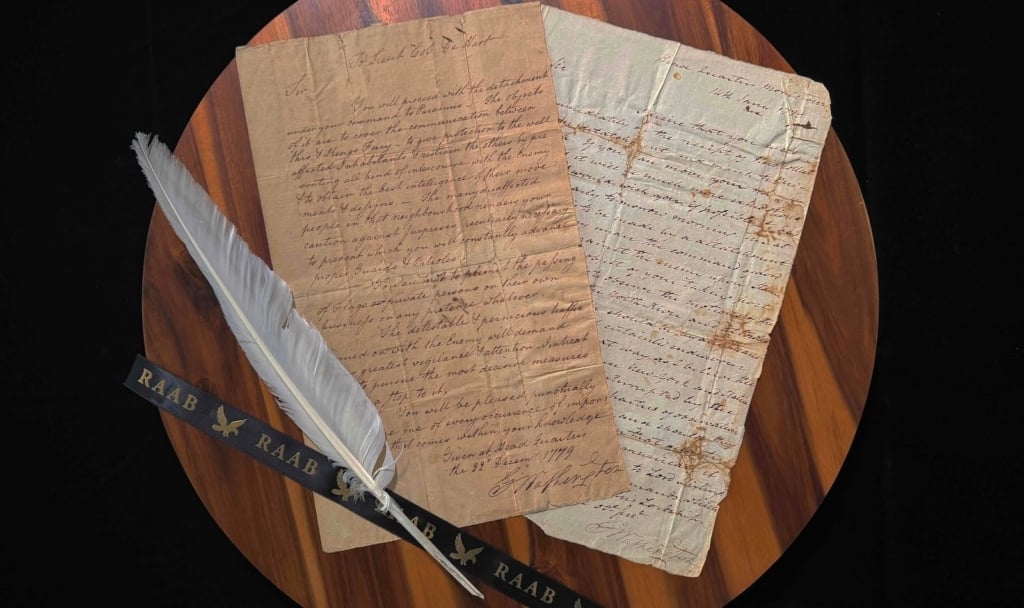
Letter signed, Jacamiah Smith, Lt. Col., to Captain Townley in Elizabethtown, NJ, June 30, 1776, the day after the arrival of the British fleet in NY harbor, calling up the men of the militia to come to the aid of New York and of George Washington. “Sir, His excellency General Washington being empowered by the Provincial Convention of this province to call out the militia on any special emergency has by letter from the Adjutant General to General Livingston directed him to call out the militia under his command, in consequence of Gen. Howe’s arrival at the Hook, and in expectation that an immediate attack will be made to oppose which will require the utmost force that can be conveniently collected. I do therefore agreeable to an order received from General Livingston (Col. Thomas being absent) hereby direct you to attend with the company under your command tomorrow morning by 7 O’Clock on the parade at Elizabethtown without fail, each man provided with good arms, accoutrements, a blanket, knapsack, two days provisions and as many camp kettles as can be procured in order to process immediately to New York. General Washington urges that as the fate of America, the success of our own present struggle, our lives, liberty and property, will in all human probability depend on our exertions in the course of a few days, we will cheerfully turn out, on the present occasion and show the world that American bravery does not consist in empty boasts and ostentatious parade, but in persevering, steady firmness and fortitude, ready to meet every danger for our preservation.”
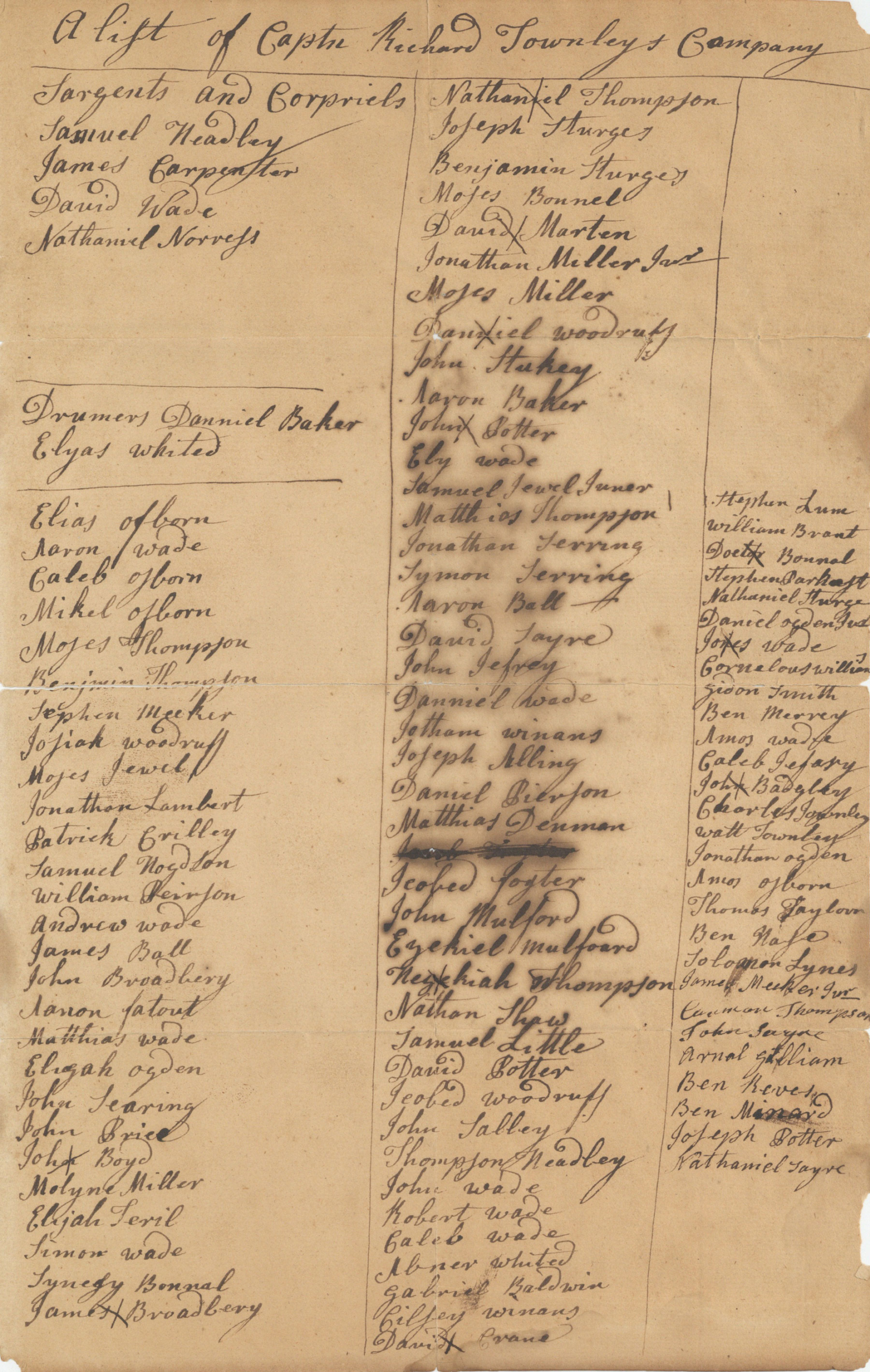
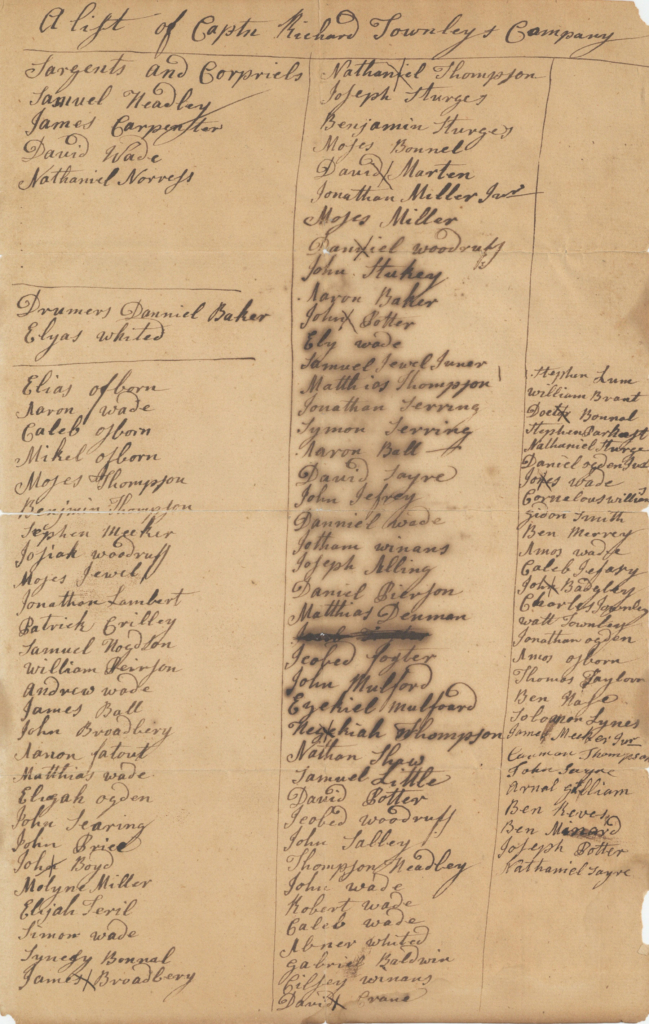
A second document is included, a list of the men in the militia unit, likely in the hand of Captain Richard Townley.
This document was passed down in the family of the recipient, the commander of one of Elias Dayton’s company, and was acquired by us from his direct descendant.

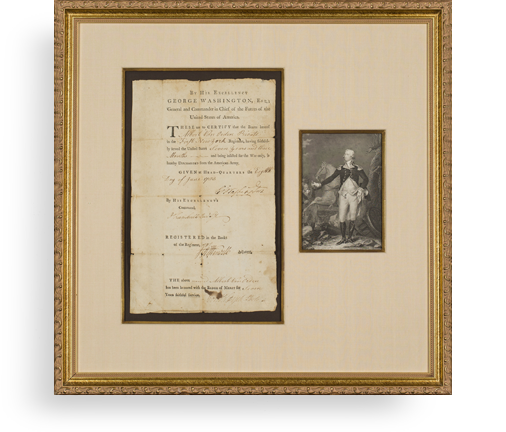
Frame, Display, Preserve
Each frame is custom constructed, using only proper museum archival materials. This includes:The finest frames, tailored to match the document you have chosen. These can period style, antiqued, gilded, wood, etc. Fabric mats, including silk and satin, as well as museum mat board with hand painted bevels. Attachment of the document to the matting to ensure its protection. This "hinging" is done according to archival standards. Protective "glass," or Tru Vue Optium Acrylic glazing, which is shatter resistant, 99% UV protective, and anti-reflective. You benefit from our decades of experience in designing and creating beautiful, compelling, and protective framed historical documents.
Learn more about our Framing Services