






In the Lead-up to the Great Sioux War, Which Would End at Little Bighorn for Him, Lt. Col. George Armstrong Custer Readies His Troops and Conducts an Equipment Survey
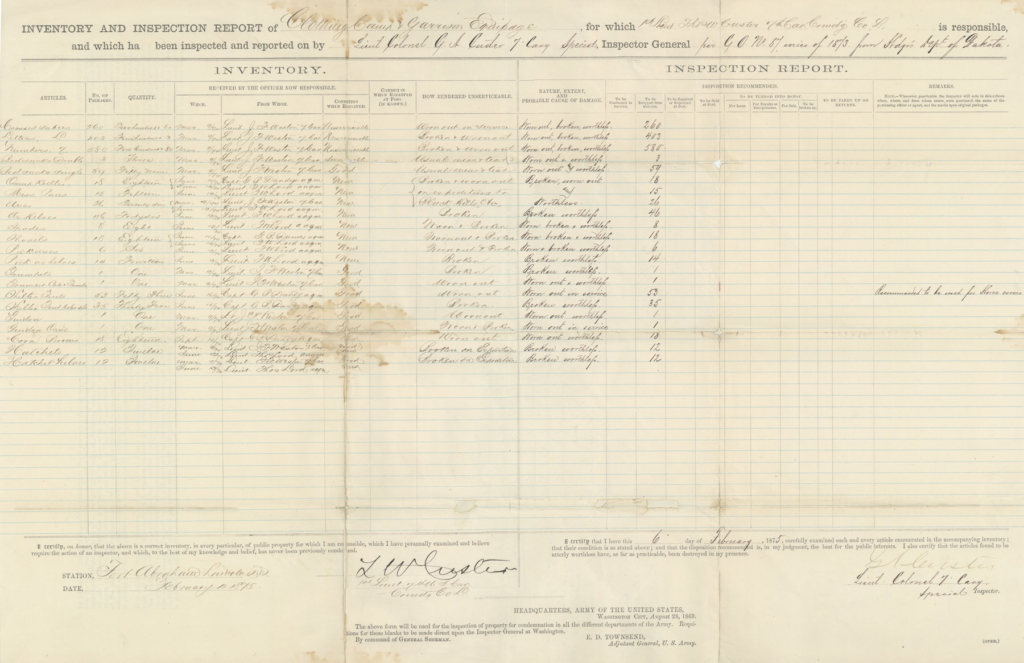

An oversized document, signed with war effectively inevitable, seeking to assess the status of his equipment, including crossed sabers, the iconic symbol still associated with U.S. Cavalry today
- Currency:
- USD
- GBP
- JPY
- EUR
- CNY
 This currency selector is for viewing only.
The Raab Collection only accepts USD payments at checkout.
Exchange rates are updated hourly. Rates may be inaccurate.
Every member of this Company died, including both Custer men who signed this document
By 1875, the U.S. government had decided—quietly but decisively—to seize the Black Hills, despite the protections guaranteed to the Lakota in the Treaty of Fort Laramie (1868). The trigger was the discovery of gold in the Black Hills...


Every member of this Company died, including both Custer men who signed this document
By 1875, the U.S. government had decided—quietly but decisively—to seize the Black Hills, despite the protections guaranteed to the Lakota in the Treaty of Fort Laramie (1868). The trigger was the discovery of gold in the Black Hills that started the Black Hills Gold Rush, which followed George Armstrong Custer’s 1874 expedition there.
In April 1875, Custer and Brig. General Alfred Terry began preparing for war with the Sioux. Full inspections and arms inventories were ordered. In July and August, the political point of no return was passed, when every Native leader rejected the terms. In November–December 1875, the U.S. government issued an ultimatum: All Lakota bands living outside reservations must report to agencies by January 31, 1876, or be treated as hostile. This order was logistically impossible in winter and was understood—by both sides—as a deliberate pretext for war.
The Great Sioux War actually broke into open fighting on March 17, 1876 with the Battle of Powder River.
In 1875, Custer was stationed at Fort Abraham Lincoln as commanding officer of the 7th Cavalry Regiment. Custer lived at the fort with his wife Elizabeth Bacon Custer, hosted social events, drilled troops, and conducted patrols across the northern Plains. In 1875, Company L was part of the routine garrison rotation at the fort—conducting drills, mounted patrols along the Missouri River region, and preparing for potential operations against Lakota and Cheyenne groups amid rising tensions on the northern Plains. When the regiment marched out of Fort Abraham Lincoln in May 1876 for the Great Sioux War, Company L went with it. On June 25, 1876, at the Battle of the Little Bighorn, George Armstrong Custer personally led a battalion of five companies of the 7th Cavalry Regiment:
Company C, 7th Cavalry
Company E, 7th Cavalry
Company F, 7th Cavalry
Company L, 7th Cavalry
Company I, 7th Cavalry
All five of these companies were annihilated with Custer on what is now called “Last Stand Hill” and the surrounding ridges.
Company L formed part of the southern defensive line along what is now called Calhoun Hill, where it was overwhelmed early in the final phase of the fight. Every officer and enlisted man in Company L was killed.
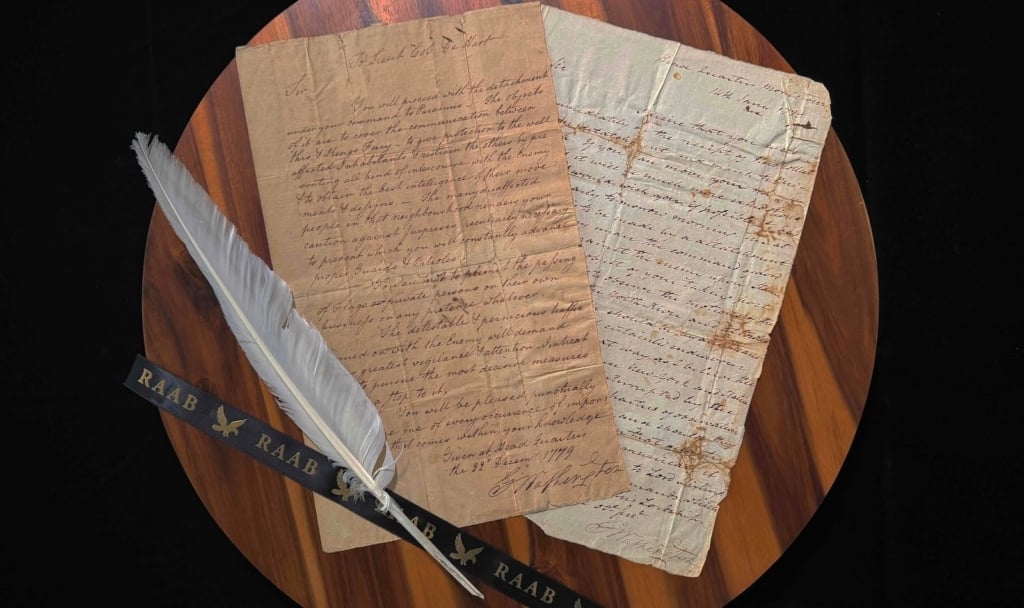
Document Signed, 24 x 15.75 inches, Fort Abraham Lincoln, February 4, 1875, “Inventory and Inspection Report of Clothing, Camp and Garrison Equipage” for Company L, testifying that it has been inspected and reported on by “Lt. Colonel GA Custer”. Signed by George Armstrong Custer and brother Thomas. Among the things listed are Crossed Sabers, camp kettles, axes, pickaxes, hatchets.
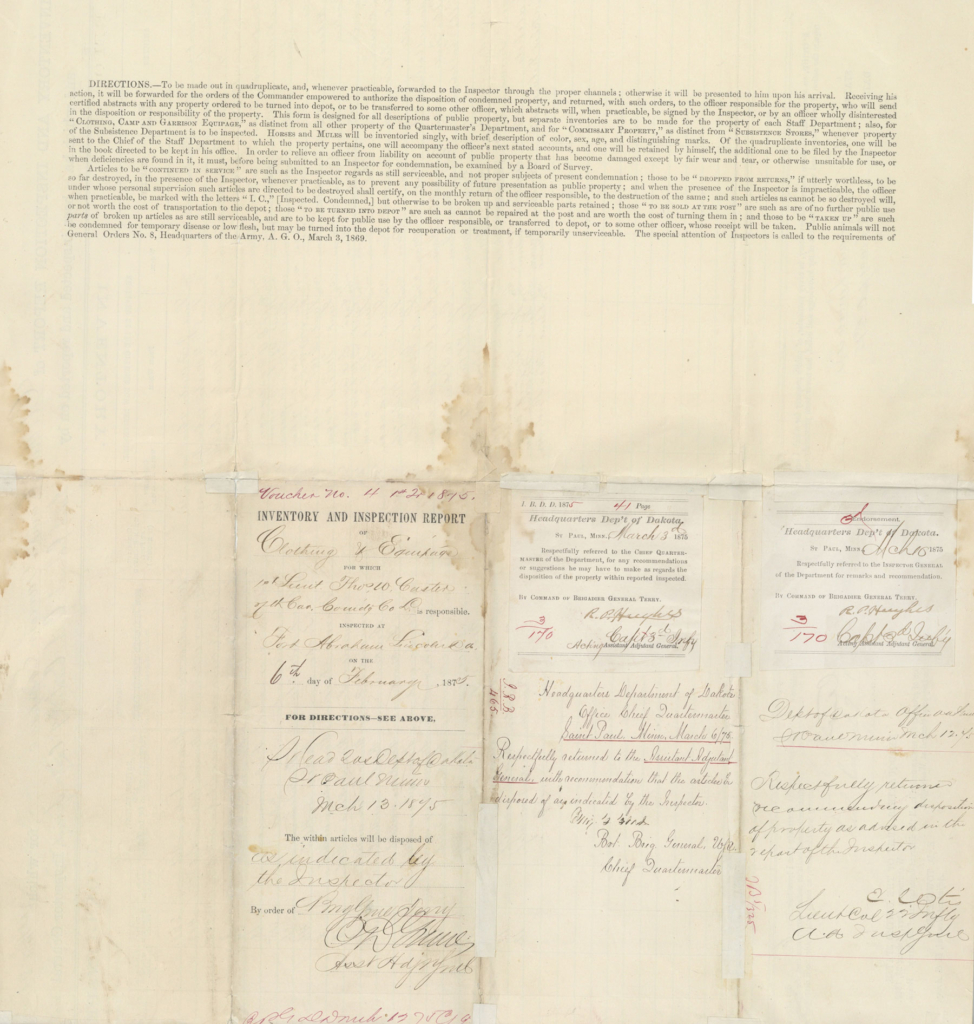
The verso is signed by others involved in war planning, including Brig. General Terry. Terry was a general in the Civil War who had the confidence of U.S. Grant, and whose victory at the Battle of Fort Fisher led to his promotion to major general of volunteers in 1865. He was military commander of the Dakota Territory from 1866 to 1869, and again from 1872 to 1886. Some separation at folds repaired.
The Battle of the Little Bighorn, in present-day southeastern Montana, was the most famous engagement of the Great Sioux War and one of the most devastating defeats in U.S. Army history. Lieutenant Colonel Custer fought against a massive gathering of Lakota, Northern Cheyenne, and Arapaho warriors led by figures such as Sitting Bull and Crazy Horse. Separating his command from the rest of the regiment, Custer was overwhelmed by superior numbers and killed along with more than 210 of his men, including his brothers Thomas Custer and Boston Custer. While the Native victory was total on the battlefield, it triggered an overwhelming military response that ultimately led to the defeat of the Lakota and Cheyenne resistance and their permanent loss of the Black Hills.

Frame, Display, Preserve
Each frame is custom constructed, using only proper museum archival materials. This includes:The finest frames, tailored to match the document you have chosen. These can period style, antiqued, gilded, wood, etc. Fabric mats, including silk and satin, as well as museum mat board with hand painted bevels. Attachment of the document to the matting to ensure its protection. This "hinging" is done according to archival standards. Protective "glass," or Tru Vue Optium Acrylic glazing, which is shatter resistant, 99% UV protective, and anti-reflective. You benefit from our decades of experience in designing and creating beautiful, compelling, and protective framed historical documents.
Learn more about our Framing Services

